
Pulling up to a gas station for a refill has become, well, unsettling, thanks to the U.S.-Israeli war with Iran.
The U.S. national average pump price, now at $3.198 a gallon, up nine cents from March 3, according to AAA data.
It’s risen 7.2% just since Feb. 27, less than a week ago. The price, in fact, is now up 12.65% year-to-date.
By many accounts, the United States and Israel have the upper hand in the campaign, but there have been no signs Iran will agree to demands it stop its nuclear research or that it halts being a belligerent in the Persian Gulf region.
For one thing, no one is sure yet who is leading Iran, following the Israeli attack that killed Supreme Leader Ali Khameinei on Feb. 28. And it’s even less clear how Iran will be governed going forward. It has been ruled by Shiite clerics since 1980.
So, motorists filling up and hoping for a reprieve will have to be patient.
A conflict that was slow to bubble up
Very few experts expected this situation when 2025 ended. The world was awash in crude oil, and crude prices had dropped nearly 53% since peaking in the summer of 2022.
Gasoline prices had dropped all the way through the summer.
Related: Crude, natural gas prices jump on Iranian news
Better, there was confidence the situation would get better for consumers in 2026 and maybe not so good for the companies that produce the fuel that fill the tanks of cars, SUVS, minivans, pickup trucks and big trucks that haul freight hither and yon.
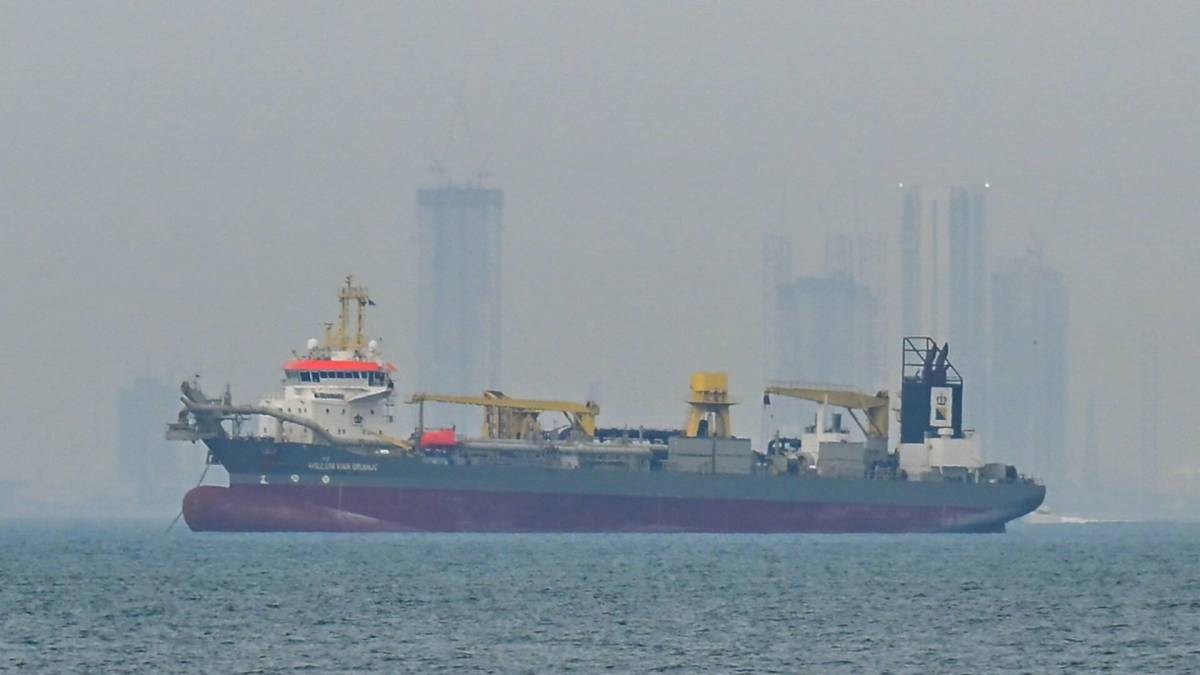 Tanker at anchor off Dubai, United Arab Emirates.
Getty Images
Crises with Iran and allies blow up the scenario
Alas , it didn’t happen. And it’s not clear it will happen in the next few weeks. Maybe it will by the end of the year.
The problem facing motorists has been this: The business of producing oil and gas products is global. And 20% of the oil and a similar proportion of the world’s liquid natural gas is produced in and around the Persian Gulf.
That supply is at risk because all that oil and gas must pass through the Strait of Hormuz. Iran is on the north side of the strait. The other side of the strait is the Musandam Peninsula, controlled by the United Arab Emirates and the Musandam Governate. The governate is part of Oman.
Iran, mostly by threats, has largely closed the strait to traffic because it can attack ships with missiles, drones, long-range artillery and other weapons, energy consultant Bob McNally told CNBC.
McNally is the founder of the Rapidan Energy Group, based in Washington, D.C. McNally was a senior director for International Energy during President George W. Bush’s first term.
Much of Iran’s armed forces are controlled by the Islamic Revolutionary Guard Corps, who also controls much of the Iranian economy, and McNally and others believe they won’t give up their influence/power willingly.
So, Iran will be dangerous for the near term at least.
There was hope oil prices were done rising. Light sweet crude, the U.S. benchmark, was up slightly at $74.66 a barrel on March 4.
But investors seemed more interested in what’s head and pushed energy stocks lower.
The Energy Select Sector SPDR exchange-traded fund was down 0.6% to $56.19. Exxon Mobil, Chevron, Halliburton, SLB (formerly Schlumberger) and ConocoPhillips were fell by 1% or more.
- U.S. government warns against travel to a European country as Iran war edges in
- Iranian strike hits major airport, injuries reported
- Top energy stocks to buy amid Venezuela chaos
Why the tankers won’t move
The danger affects motorists this way: Maritime insurers are simply reluctant to insure ships going through the strait.
So, perhaps 150 tankers and more than 100 container ships are anchored in the Persian Gulf. Meanwhile, another 100 tankers are anchored outside the strait along dozens of cargo ships, according to DTN, a Minnesota company that tracks shipping, weather and financial patterns.
To combat the problem, President Trump promised Monday that U.S. naval forces could act as escorts to get ships in and out, and he said the U.S. International Development Finance Corp. could act as a backstop for maritime insurers.
But it wasn’t clear how fast the plans could be put in place. Which means there is continued risk for all concerned.
Defense Secretary Pete Hegseth announced on March 4 that a U.S. submarine sank an Irani warship off the coast of Sri Lanka. The Guardian newspaper said 87 Iranian sailors were killed in the torpedo attack. The ship had been engaged in a naval exercise organized by India.
Related: Big Oil supermajor stuns with blunt Venezuela message