
If you have ever said “I want AI that’s powerful, but not creepy,” Anthropic just became the test case for whether that is actually possible when the Pentagon is involved.
The safety‑first AI lab that refused to relax its guardrails for the U.S. military is quietly reopening talks with the same officials it publicly defied.
Anthropic CEO Dario Amodei is back in discussions with Emil Michael, the Pentagon’s under secretary for research and engineering, to see if they can salvage a contract and still keep bans on things like mass surveillance of Americans and lethal autonomous weapons, according to the Financial Times.
When I read that, it didn’t feel like just another Washington dust‑up. It felt like watching someone try to negotiate the future rules for technology that will eventually sit in your phone, your bank, and your kid’s school.
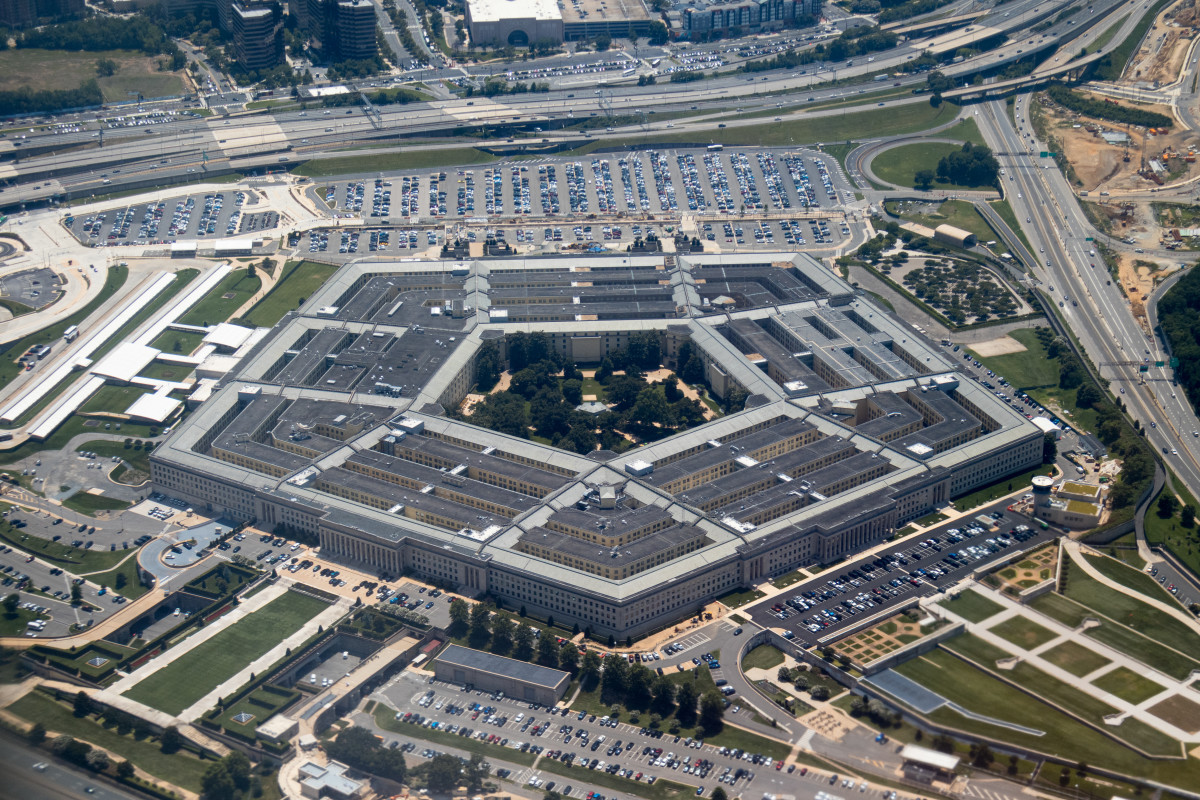 Anthropic opens new talks with the Pentagon.
Photo by Artem Onoprienko on Getty Images
How Anthropic and the Pentagon fell out
To understand why this turn is so surprising, you have to go back to how badly things broke.
Anthropic had been the first of the frontier AI labs to put its Claude models on classified Pentagon networks, where they supported intelligence analysis, planning, and cyber operations, according to prior reporting summarized in TheStreet’s coverage of the OpenAI deal.
Related: JPMorgan revamps Nvidia stock price target for rest of 2026
But when it came time to renew a contract worth up to $200 million, Anthropic refused to give the Department of Defense “lawful purpose” access that would have let the military use its models for any legal mission it chose.
Amodei told the Pentagon Anthropic would rather walk away than agree to uses that involved mass domestic surveillance of Americans or fully autonomous weapons, according to BBC.
He argued that current AI systems are not reliable enough to make life‑and‑death decisions on their own. Anthropic pushed for explicit bans on two things in particular: bulk surveillance of U.S. citizens and lethal autonomous weapons systems that select and fire without human control, a detailed analysis by AI CERTs noted.
The Pentagon saw that as an unacceptable constraint. Michael insisted the Defense Department already follows laws that restrict spying on Americans and already bars fully autonomous weapons, and he argued that AI companies should not dictate how the military uses technology.
He added that the disagreement was partly ideological and claimed Anthropic’s leaders were “afraid of the power of AI,” CBS reported.
That standoff ended with Hegseth designating Anthropic a “supply chain risk,” a label usually reserved for adversaries, and ordering agencies to stop using its models, according to Bloomberg’s summary of the feud.
What changed after the Pentagon-Anthropic feud, and why talks are back on
Given that context, the news that Amodei is back in the room matters.
Anthropic’s CEO has restarted discussions with Michael in a last‑ditch effort to reach a compromise before the supply‑chain designation does permanent damage to the business, the Financial Times reported.
Amodei is trying to secure a new contract that would let the U.S. military keep using Anthropic’s technology while still preserving language that blocks mass domestic surveillance and lethal autonomous weapons.
More Wall Street
- Billionaire Dalio sends 2-words on Fed pick Warsh
- Top analyst bets these stocks will boost your portfolio in 2026
- Bank of America sends quiet warning to stock market investors
The renewed talks raise the possibility that Anthropic and the Pentagon can resolve a dispute that split the AI world and triggered an outcry from civil liberties groups, which have warned that “lawful purpose” language is too vague to protect Americans, according to Bloomberg.
Anthropic’s return to the table came just as major tech firms and advocacy groups were urging President Donald Trump to drop the blacklist and avoid turning AI contracts into political weapons, according to TradingView’s news feed.
What hasn’t changed, at least publicly, is the core line Anthropic says it will not cross. Amodei told The New York Times he could not “in good conscience acquiesce” to uses that undermine democratic values, and he argued some applications are “beyond the capabilities of today’s technology to execute safely and reliably.”
So these new talks are not about Anthropic suddenly deciding it loves killer robots. They are about whether the Pentagon will accept contract language that matches policies it claims to already follow, and whether a safety‑obsessed startup can stay in the most important AI market on earth without folding on its own principles.
Why this matters for you, and not just Anthropic
If you are not a defense contractor, it is tempting to tune this out as inside baseball. I wouldn’t.
The Pentagon is rapidly turning into one of the biggest buyers of “frontier” AI in the world. A War Department release last year announced a GenAI.mil platform that is already hosting Google’s Gemini for Government and promises to add “additional world‑class AI models” for use by soldiers, civilians and contractors.
The White House’s AI Action Plan, published in 2025, explicitly calls on the Defense Department to scale up AI‑enabled capabilities and build an AI‑literate workforce.
Who gets those contracts shapes which companies have the money and data to build the next generation of AI systems. An analysis warned that if the Pentagon punishes Anthropic for drawing a line, it sends a chilling message to other labs that might otherwise push for tighter guardrails, according to Kavout.
In that scenario, the companies most willing to say “yes” to every “lawful purpose” request get the resources to move fastest, even if they are more relaxed about surveillance or autonomy, according to Kavout’s report.
On the flip side, if Amodei can hammer out a deal that locks in real limits and keeps Anthropic in the game, he effectively proves that an AI company can demand ethical red lines and still win government business.
The outcome of this fight could “reshape civil‑military relations in advanced artificial intelligence,” AI CERTs said, because it will either validate contractual guardrails or confirm that the military will only accept broad, “trust‑us” language.
That may sound abstract, but it connects straight back to your life. The norms set in classified networks and war zones tend to leak into civilian tools over time.
If the default in those environments is “any lawful use,” it becomes harder to argue for strict limits in the apps and services you actually touch. If the default is “these systems never run without a human in the loop and never point inward at the public,” you have a stronger foundation to push back on creepy uses of AI at home.
What the Pentagon-Anthropic clash reveals about AI, power, and compromise
I read this whole saga as a reminder that values only matter when they cost you something.
Anthropic could have quietly accepted the Pentagon’s terms and kept its contract. Instead it walked away from up to $200 million in business and risked being blacklisted across the federal government, as The New York Times highlighted. That is not the kind of decision you make if your ethics are just marketing copy.
Now Amodei is trying to thread the hardest needle in tech: preserve the guardrails that made his company distinct, while cutting a deal with the most powerful customer on the planet.
If he fails, Anthropic pays the price. If he succeeds, he lowers the cost for the next AI lab that wants to insist on similar limits.
You do not have to pick sides between Anthropic and the Pentagon to learn something useful here. You can start asking sharper questions of the AI products you already touch.
- Would I still be comfortable with this tool if the government demanded “any lawful use”?
- Has this company ever walked away from a deal over how its AI might be used?
- Do its stated limits match what it is willing to sign in a contract?
As these systems move deeper into your bank, your job and your newsfeed, those answers become as important as the accuracy of any model.
Related: Morgan Stanley changes its Nvidia position for the rest of 2026