
After a turbulent year of store closures and shifting consumer habits, Kohl’s is entering 2026 at a crossroads. With more than a thousand locations still in operation, investors and shoppers alike have been watching closely for updates on the retailer’s plans for its remaining physical footprint.
Amid intensifying competition from e-commerce giants and discount chains, Kohl’s is now revealing how it plans to stabilize performance, improve profitability, and adapt to a rapidly evolving retail market, with its stores playing an important role in this major decision.
Kohl’s confirms no additional store closures
Kohl’s (KSS) CEO Michael Bender stated during a recent earnings call that the company does not currently plan to close any additional stores from its remaining fleet of approximately 1,150 locations.
The decision follows internal improvements, with more than 90% of stores now operating profitably. This signals that the large-scale closures have already addressed the weakest locations, shifting focus from contraction to operational efficiency.
Instead of downsizing further, Kohl’s will prioritize optimizing its existing footprint. That includes improving store productivity, refining operations, and making selective adjustments when necessary.
“We will look at stores like we do on an annual basis,” said Bender. “There are opportunities for us to either relocate, those are opportunities for us. We can do that. But no major change in the store base expectation at this point.”
He also confirmed that Kohl’s is not planning to open new stores, reinforcing a shift toward efficiency rather than expansion.
Kohl’s 2025 store closures
The update follows the closure of 27 stores across 15 states in 2025, as well as one e-commerce distribution center, which was part of a broader effort to cut costs and streamline operations.
According to commercial real estate investor Jason Miller, those closures may have revealed an underlying strength in Kohl’s property portfolio.
“All 27 of the Kohl’s stores that closed last year were leased,” said Miller on Substack. “So Kohl’s did not obtain any economic benefit from the sale, re-tenanting or redevelopment of the real estate.”
However, he added that strong demand from replacement tenants suggests those locations remain attractive. It’s an indicator that Kohl’s real estate assets could carry more value than reflected in its retail performance alone, an encouraging sign for stakeholders evaluating the company’s long-term position.
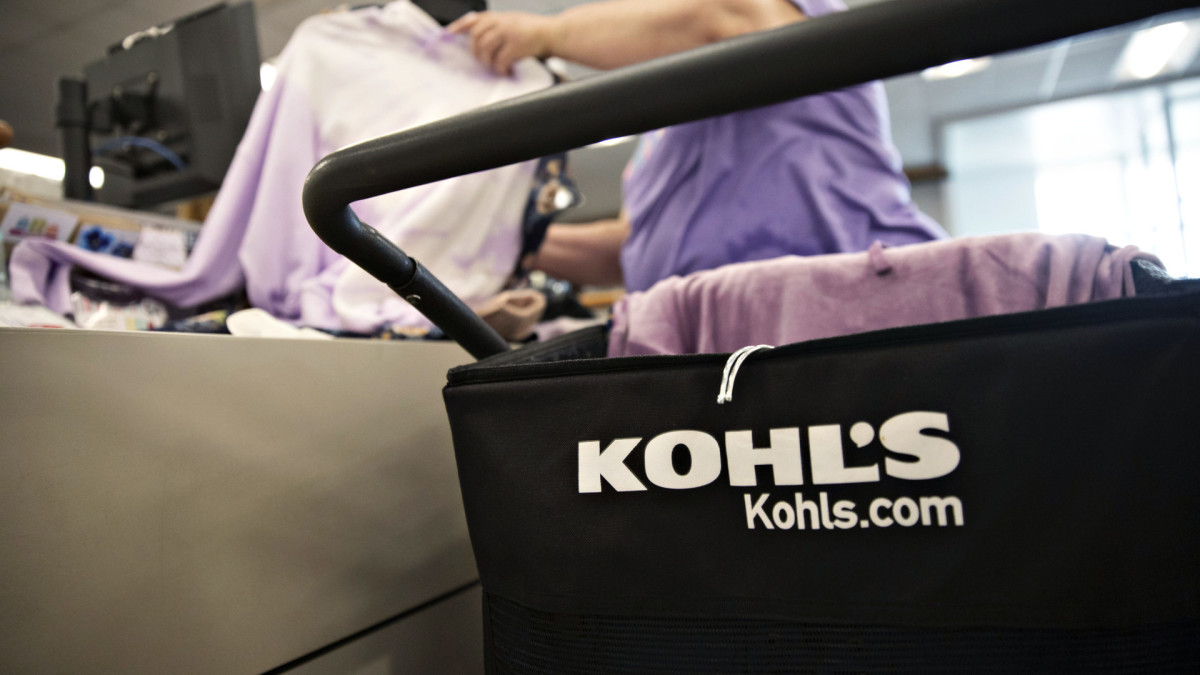 Kohl’s confirms there will be no additional store closures in 2026.
Daniel Acker/Bloomberg via Getty Images
Competitive pressures continue to weigh on Kohl’s performance
Like many traditional department stores, Kohl’s is navigating intensifying competition from both digital and value-focused retailers. E-commerce rivals such as Amazon, Temu, and Shein continue to capture online shopping demand, while off-price chains including Ross Stores and TJMaxx attract budget-conscious consumers with lower pricing.
At the same time, macroeconomic uncertainty has reshaped consumer behavior, with shoppers increasingly prioritizing value and limiting discretionary spending.
Kohl’s earnings results show ongoing challenges
Kohl’s latest financial results highlight the challenges it faces on its path to regaining momentum.
According to its fourth-quarter fiscal 2025 earnings report, net sales decreased 3.9% year over year, while comparable sales fell 2.8%.
The company expects full-year 2026 net sales to remain flat or decline by up to 2%, indicating that a near-term rebound is unlikely.
Nonetheless, Kohl’s remains optimistic for the future of its business.
“In 2026, we are committed to further strengthening our foundation by addressing operational opportunities, building on our strengths, and modernizing our processes,” said Bender in the company’s Q4 earnings report.
“We are confident that the work we are investing in now is essential for Kohl’s long-term benefit.”
Kohl’s operational missteps and new strategy
Kohl’s acknowledged that inconsistent inventory execution has been a major contributor to underperformance. The company didn’t always have the right products in the right quantities at the right time, resulting in missed opportunities that directly impacted sales.
However, its proprietary brands showed progress. While proprietary apparel was flat, juniors grew 8% during the quarter, men’s and kids posted positive comparable sales, and women’s increased 26%.
Overall performance in proprietary brands declined 3%, largely due to weakness in its home category.
More Retail Business News:
- 39-year-old mattress retailer shares Chapter 11 bankruptcy warning
- Controversial founder steps up fight for Lululemon
- 106-year-old retail brand operator selling 170 stores in bankruptcy
To address these imbalances, Kohl’s is prioritizing better inventory management, stronger merchandising strategies, and clearer value positioning.
“We know consumers are more value conscious and there is opportunity for us to regain share during these windows through strong promotional statements that better align to our customer needs and priorities,” said Bender in the earnings call.
“Consistent and differentiated value statements across marketing, in-store, and online will be a catalyst to improve our performance.”
Analysts remain split on Kohl’s outlook
Kohl’s stock has declined more than 37% year to date as of March 20, reflecting ongoing investor skepticism.
Analysts remain divided on the company’s outlook.
Some analysts warn that macroeconomic volatility, combined with heavier promotional activity, could continue to pressure margins and limit earnings growth, according to Simply Wall St.
Other analysts argue that Kohl’s still has additional strategic initiatives that could improve sales trends and profitability if executed effectively.
Firm ratings
- UBS Group and The Goldman Sachs Group: “Sell,” according to MarketBeat
- Robert W. Baird and Citigroup: “Neutral,” according to MarketBeat
The mixed ratings highlight uncertainty around Kohl’s turnaround timeline.
Industry-wide store closures
Kohl’s is not alone in reassessing its physical footprint. Several major retailers are rethinking their store portfolios as e-commerce grows and cost pressures reshape the industry.
Other major retail closures
- Macy’s: Closed around 150 underperforming stores by 2026, according to TheStreet.
- JCPenney: Shuttered seven stores in 2025 and had a failed ownership deal to transfer 119 locations, per Today.
- Claire’s: Closed nearly 300 U.S. stores after filing for Chapter 11 bankruptcy in 2025, Retail Dive reported.
- Victoria’s Secret: Closed 30 U.S. stores in 2025, according to the company’s earnings report.
Kohl’s bottom line
While Kohl’s has paused store closures for now, the company’s future will depend less on its physical footprint and more on execution, particularly in pricing, inventory management, and brand positioning.
With profitability improving but sales still under pressure, 2026 will be a defining year that reveals whether Kohl’s can translate operational fixes into sustained growth.
Related: 106-year-old retail brand operator closing all stores in bankruptcy