
Small-town independent grocers have long served as the backbone of local communities, shaping regional identities and fostering customer loyalty that national chains often struggle to replicate.
But today, the U.S. grocery landscape is undergoing a structural shift.
Changing consumer behavior, persistent economic pressure, and intensifying competition from large-scale and non-traditional retailers are redefining how and where Americans buy food.
Retail giants such as Walmart, Costco, Kroger, and Albertsons continue to expand their dominance through scale, pricing power, and extensive product assortments.
The top four grocery retailers now account for 69% of total U.S. grocery spending, with Walmart alone contributing nearly 35%, according to Farm Action.
For independent operators, the pressure is mounting. Many are being forced to adapt, consolidate, or exit the market altogether.
However, one fast-growing regional grocery chain is finding opportunity in that disruption.
Harps Food Stores expands with major acquisition
Founded in 1930, Harps Food Stores has quietly built a scalable growth model centered on acquiring independent grocers in underserved markets.
The company, which currently operates 160 locations across five states, has entered into an agreement to acquire 18 stores from Dyer Foods, an independent grocery operator owned by the Hays family.
Financial terms were not disclosed, but the transaction is expected to close by summer 2026.
Once completed, Harps will expand to 178 locations across eight states, marking its entry into two new states and representing its largest acquisition in nearly six years.
The deal includes 17 stores in western Tennessee and one in Kentucky.
Acquired store locations
- Alamo
- Bells
- Brownsville
- Covington
- Dyersburg
- Halls
- Henderson
- Humboldt
- Jackson
- Millington
- Newbern
- Somerville
- Tiptonville
- Trenton
Most of the 18 stores being acquired are Dyer-operated Food Rite locations, but one is a Piggly Wiggly, four are Save-A-Lots, and two are Cash Saver stores, according to Supermarket News.
Harps also stated that store operations and employment will continue with minimal disruption during the transition and that the Food Rite, Save-A-Lot, and Piggly Wiggly stores will all continue to operate under their current banners.
This move allows the company to maintain local brand identity through a unified operating model.
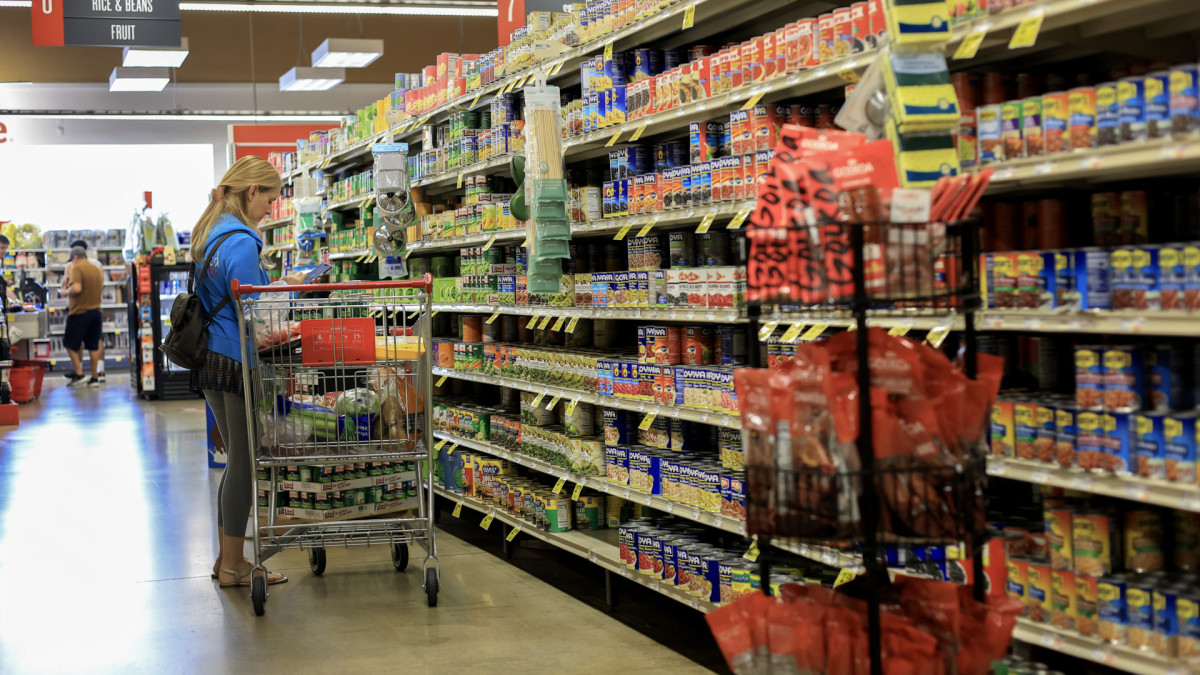 Harps Food Stores acquires 18 locations from Dyer Foods.
Harps Food Stores’ small-town grocery expansion strategy
This latest acquisition aligns with Harps’ strategy of acquiring independent grocers in small markets where competition from larger chains is less saturated, but operational challenges remain.
With this model, the company has more than doubled its footprint over the past six years.
“We love small stores in small towns and these stores fit our strategy perfectly,” said Harps Food Stores CEO Kim Eskew in a statement. “We have the greatest respect for what the Hays family and their staff have been able to accomplish and look forward to having this great group of people join our company.”
Recent acquisitions
- July 2025: Acquired a James Super Save Foods location in Mena, Arkansas, according to The Shelby Report.
- May 2025: Acquired 10 Doc’s Food Stores locations in Oklahoma, according to the Northwest Arkansas Democrat-Gazette.
- April 2025: Acquired a Craven Foods location in Fairfield Bay, Arkansas, according to Talk Business & Politics.
- 2020: Acquired 20 Town & Country Grocers locations across northeastern Arkansas and Missouri, according to Grocery Dive.
This approach allows Harps to scale efficiently while avoiding the higher costs of building new stores.
Industry pressures continue to reshape local retail
Harps’ growth comes as the broader retail environment is becoming increasingly challenging, especially for independent businesses.
Economic uncertainty, rising operational costs, evolving consumer preferences, and intensifying competition from large-format and non-traditional retailers are forcing many grocers to rethink their business models.
U.S. retailers are expected to close around 7,900 stores in 2026, down 4.5% from 2025, while 5,500 locations are projected to open, up 4.4%, according to Coresight’s U.S. Store Tracker 2026 Outlook.
Although the pace of closures has slowed slightly compared to the previous year, the net loss of physical stores continues to disproportionately affect lower-income and rural communities.
Approximately 17.1 million Americans, or 5.6% of the population, live in low-income, low-access census tracts, meaning they are located more than one mile or 20 miles from the nearest supermarket, according to the USDA’s Food Access Research Atlas.
“For consumers, the fallout means fewer choices, diminished access to in-person shopping, and, in some cases, higher prices due to reduced competition,” said Approved Funding President and Chief Lending Officer Shmuel Shayowitz.
More Retail Business News:
- 111-year-old grocery chain closing more stores in 2026
- 106-year-old retail brand operator closing all stores in bankruptcy
- Walmart moves to solve a major store frustration
Scott Moses, partner and head of the grocery, pharmacy, and restaurants advisory group at New York-based Solomon Partners, spoke about rising competition from non-traditional grocers, Supermarket News reported.
“For many years, I’ve been sounding the alarm about the rise of national/discount grocers— Walmart, Target, Costco, Amazon, Dollar General, Family Dollar, and Dollar Tree — and the existential threat that they pose to supermarket grocers, just as we’ve all seen over the last 20 years how department stores have been marginalized,” said Moses.
What it means for the future of grocery retail
Harps’ latest acquisition highlights a growing trend in grocery retail where consolidation is no longer optional; it’s a survival strategy.
While regional players can still expand by acquiring local operators, the broader industry continues to lean in favor of large, well-capitalized chains, reshaping the future of food access in small towns across the U.S.
Related: 106-year-old retail brand operator selling 170 stores in bankruptcy