
If you’ve ever searched for a reliable dividend stock that pays you every single month, Realty Income probably came up.
And for good reason.
The San Diego-based real estate investment trust, or REIT, has built a 31-year track record of raising its dividend without missing a beat.
But past performance doesn’t automatically make it a buy today.
So let’s dig into what’s actually happening at the company right now and whether it still deserves a spot in your portfolio.
The dividend stock has a 31-year streak
Realty Income (O) owns more than15,500 properties across the U.S., the U.K., and eight other European countries.
Its tenants include major retailers, restaurants, convenience stores, and industrial operators—names most people recognize and shop at regularly.
The business model is straightforward. The company buys properties and leases them to tenants on long-term net leases, meaning the tenants pay most operating costs.
That structure generates predictable, recurring cash flow: the kind that supports a monthly dividend.
More on dividend stocks:
- UPS CFO issues stark warning to dividend investors
- Oracle stock dividend under threat amid massive AI push
- How much to invest in Ford stock for $1,000 in 2026 dividends
Since listing on the New York Stock Exchange in 1994, Realty Income has logged 133 dividend increases.
It’s a member of the S&P 500 Dividend Aristocrats index, which is reserved for companies that have grown their dividends for at least 25 consecutive years.
According to data from Fiscal.ai, Realty Income has an annualized dividend of $3.24 per share in March 2026, up from $1.40 per share in 2006.
Analysts tracking the REIT forecast the AFFO per share to increase from $4.28 in 2025 to $5.10 per share in 2030.
Realty income has a payout ratio of roughly 74% which is not too high compared to peers.
Realty Income dividend stock ratios at a glance
Here’s a snapshot of the key dividend metrics for Realty Income (O):
- Dividend yield: ~5.4% (as of early 2026)
- Annual dividend per share: approximately $3.24
- Payment frequency: Monthly
- AFFO payout ratio: approximately 74% (based on $4.28 AFFO per share in 2025)
- Dividend growth streak: 31+ consecutive years
- Dividend Aristocrat status: Yes
- 2025 AFFO per share: $4.28
- 2026 AFFO guidance: $4.38 to $4.42 per share
- Occupancy rate: 98.9% (full year 2025)
- Rent recapture rate: 103.9% (full year 2025)
A focus on growth
For a while, Realty Income’s growth was sluggish. AFFO per share grew just 2% in 2025. That’s not what long-term shareholders signed up for.
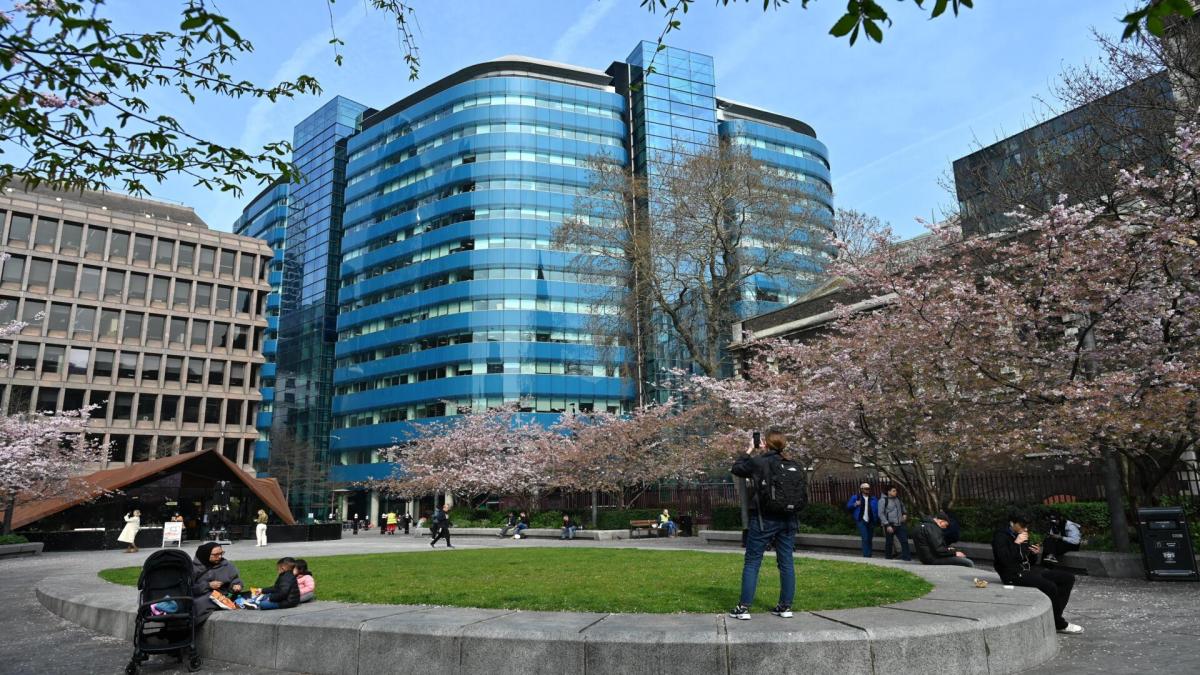 Realty Income is focused on steady expansion
John Keeble / Getty Images
Historically, the company has averaged around 5% annual growth.
But here’s what changed.
Realty Income CEO Sumit Roy identified a core problem: the firm was entirely dependent on public equity markets to fund its expansion. When the stock traded at low multiples, the whole machine slowed down.
The fix? Build new capital channels.
- In 2025, Realty Income launched its first U.S. open-end private fund, raising more than$1.5 billion from over 40 institutional investors—including pension funds, sovereign wealth funds, and asset managers.
- It also locked in a programmatic joint venture with GIC, Singapore’s sovereign wealth fund, to develop industrial properties in the U.S. and Mexico.
- And it struck an $800 million preferred equity deal with Blackstone on Las Vegas CityCenter, one of the most iconic real estate assets on the Strip.
These are recurring, compounding capital channels that didn’t exist two years ago.
2026 outlook for the dividend stock
Realty Income entered 2026 with roughly $4.1 billion in liquidity, a net debt-to-EBITDA ratio of 5.4x, and $8 billion in planned investments for the year. Of that, $7 billion will directly hit the balance sheet.
Related: Wall Street sees 57% upside for iconic tech dividend stock
Management is guidingAFFO per share to $4.38 to $4.42, representing meaningful acceleration from last year.
The company is also projecting $30 million to $40 million in lease termination income for 2026. These terminations are a sign of active asset management.
The company uses artificial intelligence and machine learning tools to flag underperforming store locations years ahead of lease expiration.
When a location starts to look risky, management proactively works with the tenant to resolve it. That creates a better outcome for both sides.
Credit loss guidance of 40 to 50 basis points is also down significantly from the 70 basis points seen in 2025, another positive signal.
The upside for the monthly dividend stock
There’s no single “best” dividend stock for everyone. But for investors who want monthly income, a fortress balance sheet, and a management team that has clearly done the hard work of future-proofing the business, Realty Income makes a compelling case.
The dividend is well-covered. The portfolio is 98.9% occupied. And the growth channels that were missing two years ago are now in place and scaling.
Roy put it plainly on the company’s Q4 2025 earnings call:
“Trust, reliability and growth, those are the reasons why we are doing everything we are doing.”
Out of the 13 analysts covering Realty Income stock, five recommend “Buy”, and eight recommend “Hold”. The average price target for the monthly dividend stock is $67, indicating an upside potential over 10% from current levels.
If we adjust for dividends, cumulative returns could be closer to 16%. For dividend stock investors who share that philosophy, Realty Income still looks like one of the stronger names in real estate.
Related: Down 23%, is this Warren Buffett dividend stock undervalued?