
Truck lovers showed a lot of resilience in 2025, buying up pickups despite tariffs, supply chain issues, and even a couple of giant fires at an aluminum supplier plant that disrupted production, depleted inventory, and raised prices.
Now General Motors is responding to those consumers by increasing its heavy-duty truck output.
GM, America’s most popular brand, reported transmission issues, V8 recalls, and diesel concerns. Stellantis underwent a product reorganization and leadership changes at its RAM pickup brand, but Car and Driver reported that the company brought back its popular 5.7-liter V-8 for the 2026 model after abandoning it for 2025.
U.S. 2025 new-vehicle sales
- GM: 2.83 million vehicles (+5.1% year over year); 17.3% market share
- Toyota: 2.52 million vehicles (+8.4% YoY); 15.5% market share
- Ford: 2.18 million vehicles (+5.6% YoY); 13.4% market share
- Hyundai: 1.84 million vehicles (+7.9% YoY); 11.3% market share
- Honda: 1.42 million vehicles (+0.6% YoY); 8.8% market share Source: Cox Automotive
Ford F-150, the most popular truck in America for 44 years running, probably had the biggest setback following the September fire at the Novelis plant in Oswego, New York, which supplies much of the aluminum used in the F-150.
It took about 175 firefighters from 26 different area fire departments to extinguish the blaze, and Ford estimates the fire at its supplier’s plant cost it between $1.5 billion and $2 billion in EBIT in the fourth quarter.
Then, on Nov. 20, a second fire broke out. The company said it expects up to $2 bilion in temporary costs due to aluminum tariffs and premium freight expenses this year as it scrambles to keep inventory for the popular vehicle high.
But despite the Big 3 automakers’ differing struggles, full-sized trucks remained some of their best sellers, per AOL.
The Chevrolet Silverado sold more than 569,000 units alone, while the GMC Sierra moved another 348,000 units. GM sold more than 917,000 full-size trucks across the two brands.
Meanwhile, Ford reported sales of more than 828,000 across its F-Series lineup, from the F-150 to the F-450, and an 8% year-over-year increase in sales despite supply challenges stemming from last year’s fire.
Even Japanese automaker Toyota, which isn’t known for its pickup trucks, saw its popular Tacoma vehicle increase sales more than 43% to 274,638.
It seems like Americans can’t get enough of pickup trucks, and General Motors is shifting its strategy to capitalize on the craze.
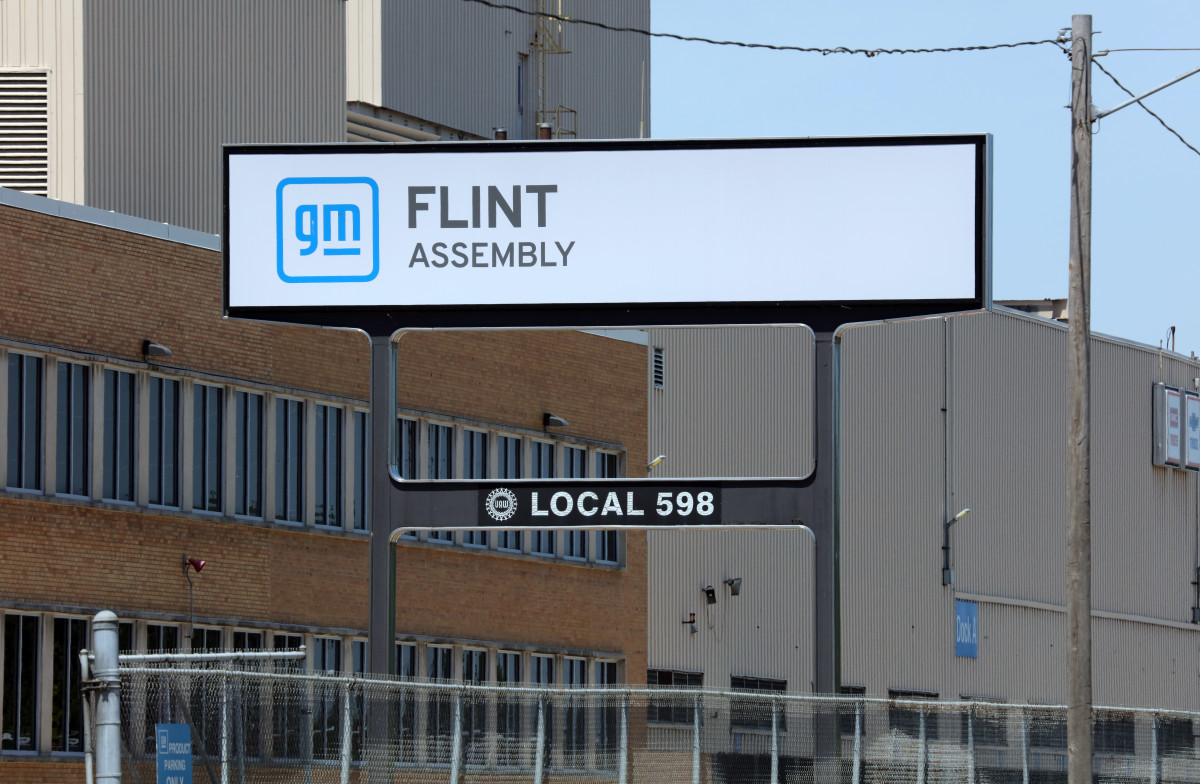 GM’s Flint Assembly plant is the oldest active car assembly plant in America.
wellesenterprises/Getty Images
General Motors increases heavy-duty truck production to meet demand
For General Motors, nearly a million pickups sold is not enough. The automaker wants more, so it is deciding to run its heavy-duty truck Flint Assembly plant six days a week starting in June to meet demand, the Wall Street Journal reported Monday, March 30.
The Flint plant currently runs around the clock on three shifts, five days a week. But a GM spokesperson confirmed that it will add a sixth day of production this summer, to allow the plant to produce more Silverados and Sierras.
Related: GM rewards shareholders following fourth-quarter results
The plant produces about 1,100 of the heavy-duty, 2500 and 3500, versions of those vehicles daily.
“General Motors is making strategic adjustments to Flint Assembly’s production schedule to align with strong customer demand,” a GM spokesman told the journal.
After opening in 1947, the Flint Assembly is GM’s longest-running assembly site and employs about 4,200 hourly workers who will be mandated to work overtime hours to cover the additional production day.
GM’s heavy-duty lineup starts in the $50,000 range, but can cost more than six figures with all the bells and whistles added.
Rising gas prices aren’t likely to dampen American appetite for large vehicles
With the war in Iran heading into its second month, elevated gas prices are likely to stay with us for some time. But despite the poorer fuel efficiency that trucks, especially the heavy-duty versions, display compared to sedans, Americans don’t seem to want to buy smaller.
Iran has already closed the Strait of Hormuz, through which about 20% of the world’s oil flows, and has now also threatened to close the Strait of Mandeb, according to The Hill. The latter connects the Red Sea to the Gulf of Aden and accounts for another 11% of global oil flows.
“Escalating conflict in the Middle East is increasing risk across the global auto supply chain. Tensions around the Strait of Hormuz have heightened energy price volatility and raised concerns about shipping disruptions in oil and aluminum, among other upstream raw materials,” Morgan Stanley analyst Andrew Percoco said in a recent note.
According to Morgan Stanley, every $1-per-gallon increase in gas prices results in a $450-per-year increase in fuel costs for gas-powered vehicles, assuming 27 mpg and 12,000 miles driven per year.
Electric vehicles really become a much more cost-effective option if gas prices rise to $4 per gallon. At that point, EV fuel costs are 60% lower annually than those of their internal combustion engine brethren, so consumers looking to buy a new car may opt for an EV rather than a fuel-guzzling SUV or pickup.
However, analysts at BNP Paribas say the U.S. economy is well-positioned to withstand oil shocks.
“We see the U.S. economy as well-positioned to absorb the shock, as it is now the world’s largest producer of crude and a net energy exporter. The sensitivity of the economy to changes in oil prices has fallen, while monetary and fiscal policies, excluding tariffs, appear stimulative,” Husby said.
BNP has had an above-consensus view of the U.S. economy for some time, taking a “glass-half-full” approach to the job market and expecting the unemployment rate to remain at current levels.
GM is betting the same thing.
The Journal report cites a quote from GM finance chief Paul Jacobson, offering insight into the company’s thinking on the issue.
“If you look at the historical models, usually it takes four to six months of sustained, high oil prices before people start to think, ‘Well, maybe I should go for less mileage or maybe I should buy down,’” Jacobson said.
Related: General Motors makes harsh decision affecting over 1,000 workers