
BigBear.ai (BBAI) stock is down about 46% year-to-date and down 24% in the past month alone.
That decline has reset expectations just as the company cleared a major financing overhang and cleaned up its balance sheet. With that risk out of the way, attention shifts back to the business itself.
Management is pointing to a return to growth in 2026. If revenue starts to recover and margins improve, the stock has room to meaningfully rebound from its current depressed levels.
If not, the recent decline may reflect deeper issues with the business rather than just a temporary setback.
BigBear valuation snapshot
For those unfamiliar with BigBear.ai, the company provides AI and data analytics software, primarily to government and defense customers. It helps agencies make better decisions using data, with applications in areas like national security, logistics, and intelligence.
BigBear makes money through a mix of software and services contracts, with higher-margin revenue coming from its proprietary software products.
- Market cap: $1.5 billion
- Enterprise value: $1.3 billion
- Share price: $3.13
- Analysts’ avg target price: $5.33 (70% implied upside)
- 2-Year expected annual revenue growth: 11.7%
- Forward EV/revenue ratio: 9.3x
Source:TIKR.com
FY2026 rebound is driving the thesis
BigBear.ai reported $27.3 million in Q4 2025 revenue, down 38% year over year, and finished the full year at $128 million.
After a sharp slowdown in 2025 due to weaker Army program volume and the absence of prior-year work, management is now guiding FY2026 revenue to $135 million to $165 million.
The guidance range implies roughly 5% to 29% growth in FY2026, which is a wide spread for a company coming off a 38% decline.
As CEO Kevin McAleenan said, “At the start of 2025, we set out to transform our financial foundations to establish a base from which to accelerate in 2026.”
Management has pointed to three growth drivers:
- An Army demand recovery
- Conversion of bookings into revenue
- And product contributions from Ask Sage and CargoSeer.
Army recovery depends on customer activity, bookings conversion depends on execution, and product revenue matters most because it’s the clearest path to improving the revenue mix and driving higher-quality growth.
More Tech Stocks:
- Morgan Stanley sets jaw-dropping Micron price target after event
- Nvidia’s China chip problem isn’t what most investors think
- Quantum Computing makes $110 million move nobody saw coming
If quarterly revenue improves quickly and tracks toward the $150 million midpoint of guidance, investors might start to underwrite a real rebound for the business.
Margin collapse exposed fragile earnings power
The bigger issue in Q4 wasn’t just lower revenue. Profitability broke down. Gross margin fell from 37.4% to 20.3%, and adjusted EBITDA dropped to negative $10.3 million.
That shows how sensitive BigBear.ai’s earnings are to its revenue mix, which is the type of work the company is doing. Some contracts, like software, carry higher margins.
Q4 shifted toward lower-margin work. The company lost higher-margin contracts from the prior year, and as a result, earnings weakened even more than revenue.
If software like Ask Sage becomes a larger part of revenue, margins should improve, and earnings can scale. If not, higher revenue alone won’t fix the model. Another weak-margin quarter may suggest that the business is still too reliant on lower-margin contract work.
Federal AI spending is getting more selective
The broader government AI market remains active, but capital is flowing toward companies with proven platforms, deeper procurement ties, and more software-heavy models.
Palantir has reinforced that demand exists for mission-focused AI in defense and government, while Leidos and Booz Allen Hamilton continue to benefit from scale and embedded agency relationships.
Leidos’s CTO Ted Tanner expanded on the opportunity, saying, “Leidos and OpenAI are harnessing the transformative power of AI to help improve how federal agencies operate.”
BigBear’s weak Q4 points to a company that is behind better-positioned peers on execution, procurement depth, or mix.
That makes 2026 a referendum on whether BigBear.ai can close part of that gap through better Army demand, stronger bookings conversion, and rising software contribution.
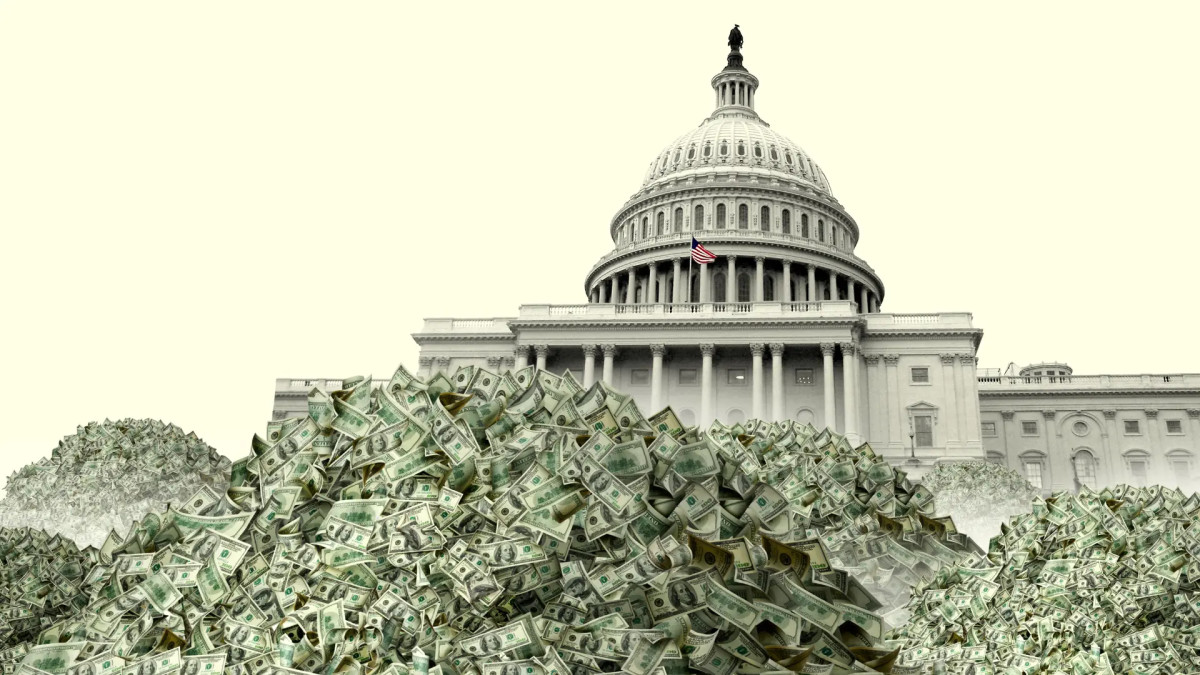 Federal AI budgets are still growing, but capital is concentrating around scale, software, and procurement strength.
With federal AI demand still advancing and the debt overhang reduced, BigBear.ai has a cleaner setup to prove its products can translate into revenue growth and better margins. It also has fewer excuses if that does not happen.
What could drive BigBear.ai higher
- Stronger federal contract wins improve revenue visibility and validate demand
- Higher software mix lifts margins and reduces reliance on lower-margin services
- Faster backlog conversion turns bookings into revenue and improves cash flow
- Expanded defense and intelligence use cases deepen relationships with key agencies
- Improved execution narrows the gap with better-positioned peers
- Rising demand for mission-focused AI supports long-term growth
What could pressure the stock
- Federal AI spending concentrates with larger, better-established players
- Contract delays slow revenue growth while costs remain elevated
- Services-heavy mix keeps margins under pressure
- Execution issues limit backlog conversion and weaken investor confidence
- Competition from firms like Palantir, Leidos, and Booz Allen intensifies
- New AI projects fail to scale into meaningful revenue drivers
Key takeaways for BigBear
BigBear.ai starts 2026 with one major problem removed and another now exposed.
Growth needs to return, margins need to improve, and software needs to make up a larger share of the business.
If that happens, the stock can recover from depressed levels. If not, the reset may reflect deeper issues with the model rather than just a temporary setback.