
Dunkin’ has long owned the American coffee-and-breakfast conversation. One Canadian chain has been watching from across the border, and it has been getting closer.
Tim Hortons, the Canadian chain with more than 5,700 restaurants globally, has spent years trying and failing to build meaningful momentum in the U.S. market. The latest data from QSR Magazine suggests something has changed.
In 2025, the brand posted its highest level of new U.S. restaurant openings in more than a decade, expanded into new states, and hit record highs across guest satisfaction, digital sales, and cold beverage performance.
Restaurant Brands International CEO Josh Kobza described 2025 as a year of “strength” and “durability” for Tim Hortons.
What drove the Tim Hortons U.S. breakthrough
The growth did not come from chasing trends. Tim Hortons leaned back into its core identity: coffee, breakfast, and fast, affordable service.
That focus appears to be what finally resonated with American franchisees and customers after years of slower progress.
More Restaurants
- McDonald’s latest menu missteps could have a major domino effect
- 76-year-old comfort food chain closes most of its restaurants
- Fast food giant is coming for Starbucks with fan-approved launch
The brand’s franchise development filing projected approximately 50 new U.S. outlets in 2025, and it landed close to that target, according to QSR Magazine. New markets now in the pipeline for 2026 include Maryland, Washington D.C., Philadelphia, and San Antonio.
The brand also has expansion plans for Texas, Georgia, Tennessee, Virginia, New Jersey, Delaware, and North Carolina, according to QSR Magazine.
A Manhattan walk-up venue in midtown New York City also opened as part of the 2025 push.
The numbers behind Tim Hortons’ momentum
Several key metrics improved meaningfully for the coffee chain in 2025. Breakfast food sales rose 3.5% in Q4, QSR Magazine notes, driven partly by freshly cracked scrambled eggs and the Farmer’s Wrap, according to QSR Magazine.
Cold beverage sales grew 8.6% in Q4 and represented nearly 27% of total beverage sales, the highest Q4 mix on record, QSR Magazine indicated. That growth was fueled by iced espresso drinks, including iced chai lattes and protein lattes.
Digital sales hit all-time highs in Q4. The loyalty program now accounts for approximately 33% of sales, backed by 7 million active members who are spending 50% more than they did before joining the program and visiting stores more frequently, according to QSR Magazine. Guest satisfaction also reached record levels in 2025, and speed of service improved across every daypart.
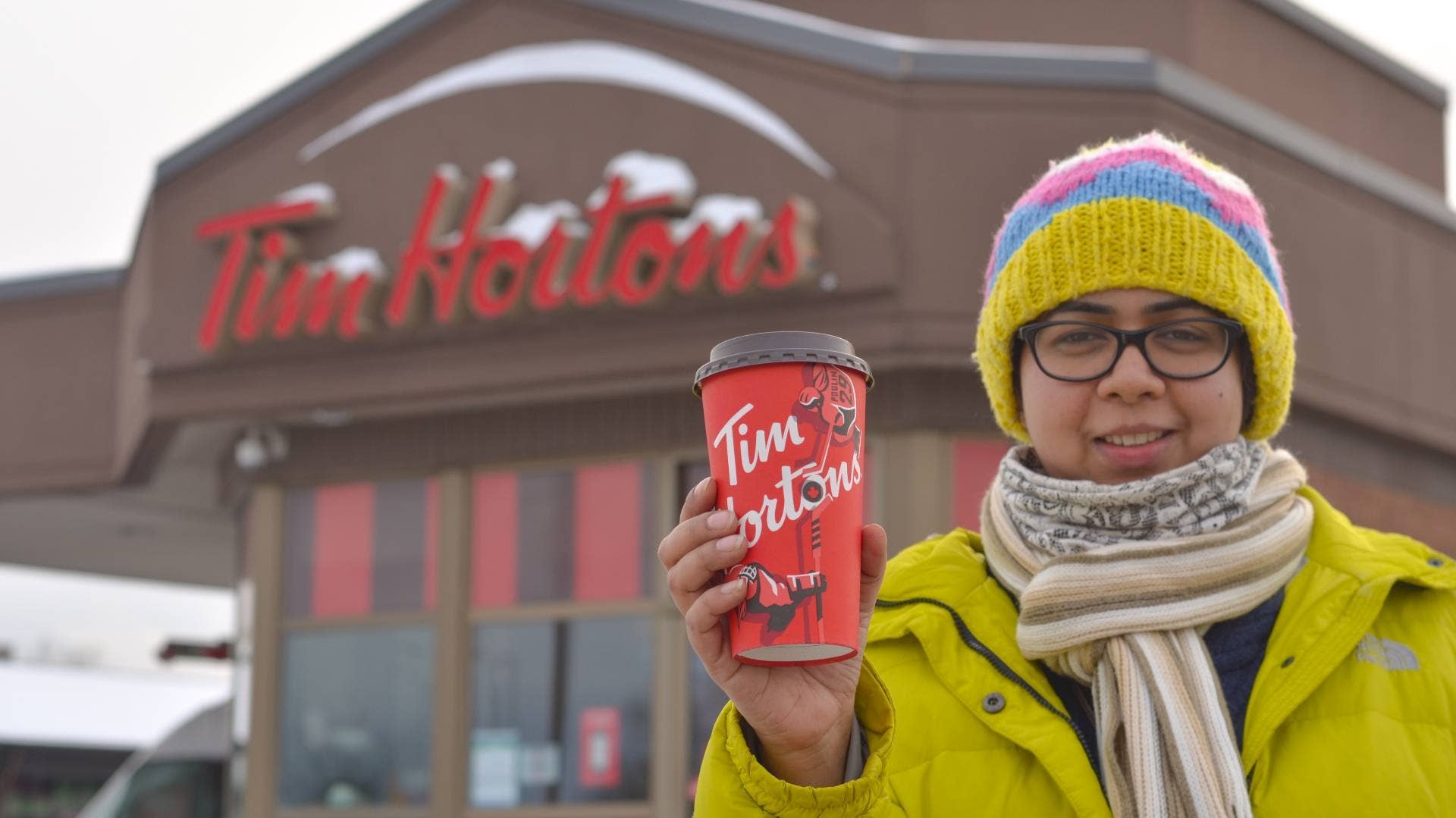 Canadian coffee chain Tim Hortons just had its first major breakthrough in the U.S.
How Tim Hortons is competing with Dunkin’ and Starbucks
Dunkin’ and Starbucks remain far larger in the U.S. market. But Tim Hortons is competing directly in the same category: coffee, breakfast, and affordable beverages. Its cold beverage push, including iced lattes and espresso-based drinks, puts it in the same afternoon daypart where both rivals generate significant revenue.
The brand is also rolling out new espresso machines across its network to improve quality and consistency, according to Retail Insider. Speed-of-service improvements give it a stronger drive-thru proposition, which is central to competing with Dunkin’ in particular.
RBI’s long-term target is to reach 1,000 U.S. Tim Hortons restaurants by 2028, according to a Restaurant Brands International press release. The chain currently has 683 U.S. locations, meaning it would need to roughly add 317 more over the next two years to hit that goal.
Key Tim Hortons U.S. figures from 2025:
- U.S. restaurant count at end of 2025: 683, QSR Magazine indicated
- New U.S. openings in 2025: Highest in over a decade
- Q4 breakfast sales growth:3.5%
- Q4 cold beverage sales growth:8.6%, highest Q4 mix on record
- Loyalty program mix: Approximately 33% of sales
- Active loyalty members: 7 million, spending 50% more than pre-enrollment
- 2026 new markets: Maryland, Washington D.C., Philadelphia, San Antonio
- 2028 U.S. restaurant target: 1,000 locations, RBI shared
- Total Tim Hortons revenue in 2024: $4 billion, according to WTOP
Why franchisees are the real signal
The clearest indicator that the Time Hortons turnaround is real? Franchise activity. Operators sign development agreements when they believe the unit economics work. The chain signed what QSR described as “a lot of deals” over the past few years, with more markets coming on board in 2026.
RBI executive chairman Patrick Doyle acknowledged that 2025 was broadly “challenging” for restaurant operators given rising costs and cautious consumers, according to Retail Insider.
Tim Hortons raised coffee prices by approximately 3 to 5 cents per cup in 2025, its first price adjustment in nearly three years. The fact that the brand still delivered record openings and satisfaction scores in that environment makes the results more notable, not less.
For investors watching the restaurant sector, Tim Hortons’ U.S. progress is a reminder that brand recoveries do not always announce themselves loudly. After years of false starts below the border, the chain is building the kind of quiet, consistent momentum that tends to compound over time.
Related: Starbucks brings back two viral drinks not seen in nearly a decade