
Microsoft (MSFT) has found itself in unfamiliar territory.
For a stock that spent much of the past decade as Wall Street’s darling, 2026 has been anything but.
According to Seeking Alpha, the stock has tanked roughly 17% year-to-date, its worst quarterly showing since the 2008 financial crisis.
However, top bank BNP Paribas just cut through the noise with one of the sharpest calls on Wall Street.
The bank said that the ingredients for a rebound are simmering, but that the near-term pain isn’t going away quietly.
BNP analyst Stefan Slowinski didn’t mince words about the frustration, saying that,
“The ‘SaaS Smash’ has not spared Microsoft, which is the largest SaaS vendor, mainly through its 365 Commercial Cloud products.”
However, Slowinski believes there isn’t a broken core business here.
Azure continues to generate a ton of cash, and the enterprise moat is massive to say the least. The conundrum is whether the tech giant can convert its massive AI investments into real top-line growth in a relatively short period.
This, in turn, is a twofold problem: Copilot traction and Azure capacity allocation.
Slowinski argues that investors have grown too impatient with Copilot’s lack of clear momentum, potentially overlooking future growth from Anthropic’s Cowork product.
In fact, Microsoft CEO Satya Nadella is reportedly working to fix Copilot, with a clear focus on improving user experience and performance.
At the same time, the company is tackling another issue in Azure capacity.
BNP Paribas estimates that nearly one-third of Microsoft’s new AI capacity last quarter was used internally, supporting its internal apps and training AI models, rather than being sold to customers.
According to Microsoft’s latest earnings transcript (Q2 2025), if the capacity had been directed to external clients, growth might have topped 40%, rather than the 38% reported.
The fear here is that Microsoft is being drawn into a relentless and incredibly expensive superintelligence race with its own partner OpenAI, which happens to be Azure’s share of the collateral damage.
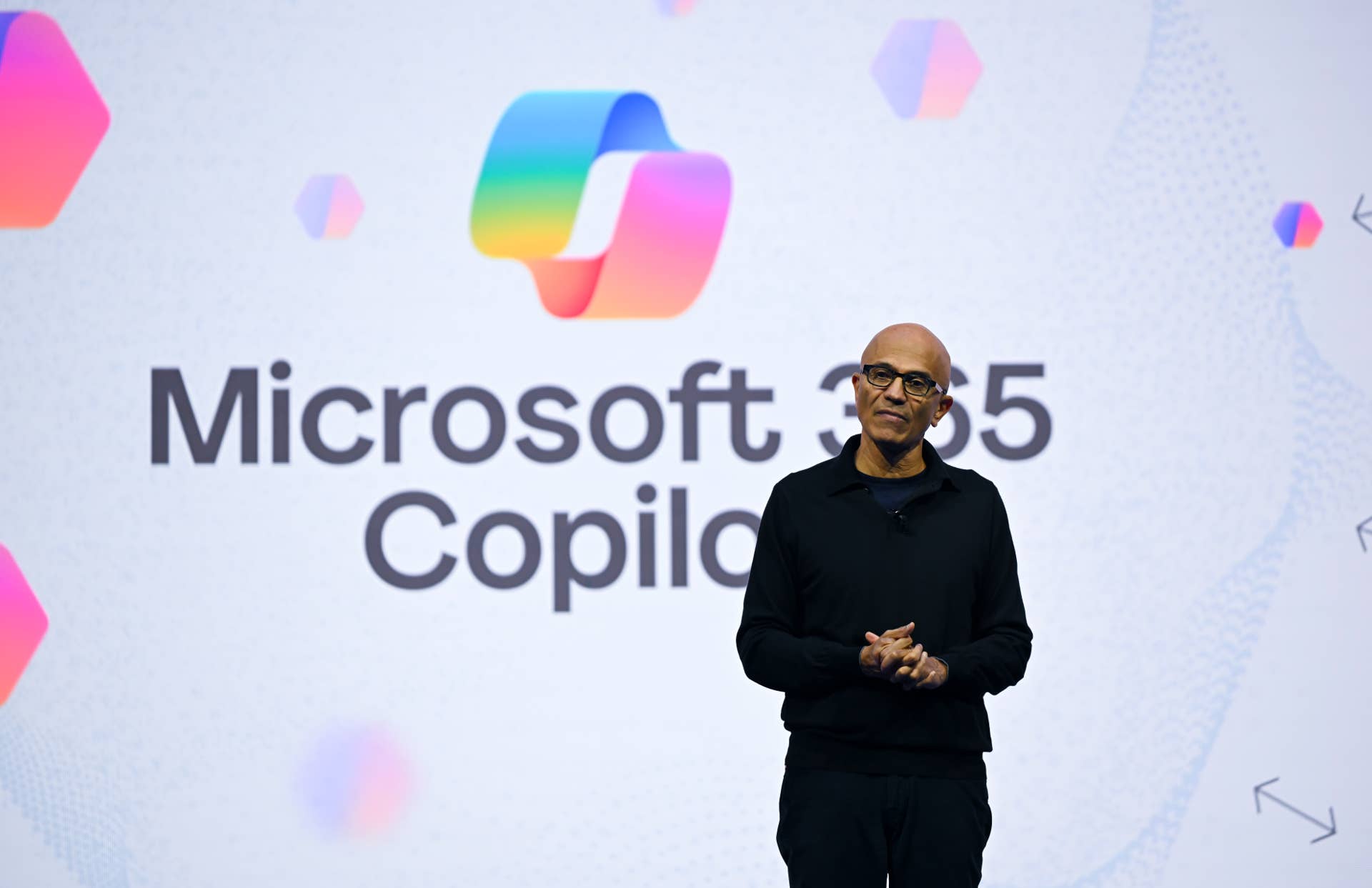 Strong fundamentals remain intact, though Copilot traction and capex concerns weigh on sentiment
Getty Images 	picture alliance / Contributor
Microsoft stock returns compared to the S&P 500
- Over the past week, Microsoft returned 15.23%, compared with the S&P 500’s 4.46%.
- Over the past month, Microsoft returned 7.49%, compared with the S&P 500’s 6.41%.
- Over the past six months, Microsoft returned -15.97%, compared with the S&P 500’s 7.54%.
- Year to date, Microsoft returned -11.11%, compared with the S&P 500’s 4.14%.
- Over the past year, Microsoft returned 15.69%, compared with the S&P 500’s 35.13%.
- Over the past three years, Microsoft returned 50.24%, compared with the S&P 500’s 72.30%. Source: Seeking Alpha.
Microsoft’s fiscal Q2 2026 Highlights
Microsoft’s most recent earnings report suggests the company is far from broken. Revenue is growing at a double-digit clip, while margins remain the envy of the software world.
- Revenue: $81.3 billion, up 17% year-over-year. Comfortably ahead of consensus.
- Azure Growth: 38% in constant currency. Solid, but below the “over 40%” whisper number.
- Productivity and Business Processes: $31.2 billion, up 14%.
- Intelligent Cloud: $29.1 billion, up 19%.
- Commercial Remaining Performance Obligation: $625 billion. A backlog roughly the size of Switzerland’s GDP.
- Copilot Seats: 15 million paid seats. Impressive, but still just 3.3% of Microsoft’s 450 million commercial M365 base. Source: Investor Relations Microsoft.
BNP’s formula for a Microsoft rebound
BNP’s Slowinski outlined a potential formula that could kickstart Microsoft’s recovery on the stock market.
More AI Stocks:
- Morgan Stanley sets jaw-dropping Micron price target after event
- Bank of America updates Palantir stock forecast after private meeting
- Morgan Stanley drops eye-popping Broadcom price target
He sees three primary catalysts, which include:
- Renewed confidence in Copilot
- Azure’s consistent revenue beats
- A clear path to moderating capex growth.
The capex narrative is particularly crucial.
Microsoft’s capex is on track to hit $120 billion this fiscal year, and it’s expected to start leveraging aging “neocloud” partner capacity next year.
In fact, a report from Futurum Group says AI capital spending will reach $690 billion this year.
“With Microsoft leveraging neocloud partner capacity next year, we may start to see capex growth slow,” Slowinski concluded.
Layered with attractive free cash flow margins north of 20%, renewed confidence in Copilot, and consistent top-line beats on the cloud side, this creates a winning formula for Microsoft’s stock to get back on track.
It’s worth noting that other analysts have a similar view.
For instance, according to Tipranks, Bernstein’s Mark Moerdler recently reiterated an Outperform rating and $641 price target on Microsoft stock, arguing the disconnect between capex and revenue is “timing rather than any fundamental problem with the business.”
Wall Street price targets for Microsoft stock
Wall Street’s average price target for Microsoft is about $579.57, which implies roughly 34.68% upside from the current share price.
It’s important to note that analyst targets vary widely, though, with the low-end estimate at $392 and the high-end target at $730.
That spread shows there’s still a ton of upside in Microsoft stock, even as analysts differ on just how far it can run.
- Truist Securities: $675 — Buy.
- Bernstein: $641 — Outperform.
- Morgan Stanley: $650 — Overweight.
- Goldman Sachs: $600 — Buy.
- Mizuho: $515 — Outperform.
- Benchmark: $450 — Buy.
- BNP Paribas: $556—Outperform.
Related: Goldman Sachs just found a reason to like Nvidia stock again