
McDonald’s is navigating a more challenging operating environment, as slowing customer traffic, softening sales, rising food costs, and increasingly cautious consumer spending weigh on the fast-food sector.
According to the latest data from the U.S. Bureau of Labor Statistics, prices for food away from home rose 3.8% in the 12 months ended March 2026, continuing to outpace grocery inflation and reinforcing consumer sensitivity to dining-out costs.
That dynamic is forcing quick-service chains to compete more aggressively on both value and engagement.
Since launching the Happy Meal in 1977, McDonald’s has consistently used pop culture partnerships to drive foot traffic and maintain relevance across generations. Today, those partnerships are evolving into something more strategic.
Rather than serving standalone promotions, collaborations are increasingly designed to feed into a broader digital ecosystem, one that captures repeat visits, app engagement, and loyalty participation.
Most recently, McDonald’s expanded its partnership with Netflix through a new Happy Meal following the release of the “KPop Demon Hunters” themed promotion in March.
McDonald’s launches the new “Stranger Things” Happy Meal
McDonald’s (MCD) is launching a Happy Meal inspired by “Stranger Things: Tales from ’85,” a newly released spin-off series on Netflix, created after the original “Stranger Things” show.
The Happy Meal includes:
- Custom “Stranger Things: Tales From ’85-inspired” design
- 12 collectible character toys (availability varies by market)
- A Stranger Things activity book
- A QR code unlocking an interactive digital game
Each Happy Meal comes with one collectible toy, featuring fan-favorite characters and themed locations, with two new characters revealed weekly:
- Eleven – Hopper Cabin
- Dustin – Snack n’ Go
- Will – Happy Meal
- Max – Arcade
- Lucas – Eugene’s
- Mike – Weekly Watcher
- Nikki – Iconic Restaurant
- Ground Horde – Hawkins Lab
- Snowshark – Hawkins School
- Creeping Vine – McDonald’s Restaurant
- Additional characters to be revealed
The promotion will be available at all participating U.S. restaurants beginning May 5, according to Netflix, with a phased global rollout already underway across Latin America and Europe.
While collectible toys have long served as a traffic driver, the addition of QR-enabled experiences reflects a shift in which promotions are now designed to extend engagement beyond the initial purchase.
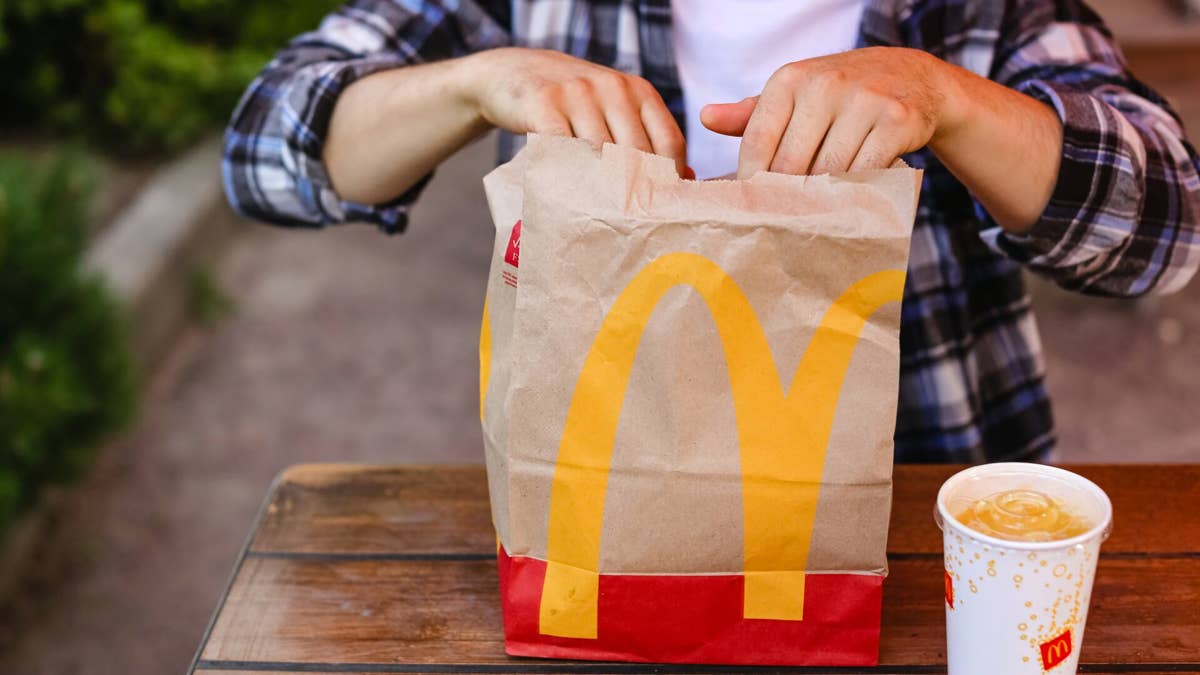 McDonald’s partners with Netflix to launch the new “Stranger Things: Tales from 85′” Happy Meal.
Digital integration becomes a major growth driver
Over the past decade, McDonald’s has steadily expanded its digital capabilities, integrating features like QR codes, mobile ordering, and app-based rewards into the customer experience.
Since launching its U.S. mobile app in 2015, the company has built a platform that supports:
- Personalized promotions
- Loyalty rewards
- Push notifications
- Digital ordering
These tools are no longer incremental; they are central to how McDonald’s drives frequency and retention, particularly among younger consumers.
In effect, products like the Happy Meal are evolving into entry points for a broader digital funnel, turning one-time transactions into ongoing engagement.
McDonald’s financial results highlight digital impact
According to McDonald’s fiscal 2025 earnings release, the company’s digital strategy is delivering measurable results.
Key highlights include:
- Digital platforms now reach nearly 210 million90-day active users across 70 markets, increasing 19% year over year.
- Loyalty customers generated about $37 billion in systemwide sales in 2025, up 20%.
- Global comparable sales rose 5.7% in the fourth quarter of 2025, with U.S. comparable sales climbing 6.8%.
- In the full year of 2025, global comparable sales increased 3.1%, with U.S. comparable sales rising 2.1%.
The scale of loyalty-driven sales underscores how digital engagement directly translates into revenue, positioning McDonald’s among the most advanced operators in the quick-service sector.
McDonald’s CEO Chris Kempczinski attributed the performance to stronger customer engagement and improved value perception.
“By listening to customers and taking action, we have improved traffic and strengthened our value and affordability scores,” said Kempczinski in the company’s fourth-quarter 2025 earnings release.
Industry pressure persists despite McDonald’s strategic gains
Even as McDonald’s executes on its digital and marketing initiatives, broader industry headwinds remain.
Foodservice traffic declined 1% in the quarter ending June 2025, as consumers dined out less frequently, according to Circana.
More McDonald’s business coverage:
- McDonald’s revives two popular collaborations in new Happy Meal
- McDonald’s unveils 2 new adult Happy Meals, 5 menu items
- McDonald’s revives 36-year-old fan-favorite Happy Meal toy collab
At the same time, competition is intensifying. Rivals such as Wendy’s and Burger King continue to emphasize value-focused offerings, while McDonald’s is increasingly differentiating through digital integration and entertainment-driven marketing.
Analysts at MarketBeat say that strategy could support long-term growth, particularly as loyalty programs and personalized offers drive repeat visits. However, they also caution that sustained investment in digital infrastructure and rewards programs may pressure margins in the near term.
What it means for McDonald’s
McDonald’s is balancing near-term economic pressure with long-term strategic investments in digital engagement and brand relevance.
By combining pop culture partnerships with a rapidly expanding digital ecosystem, the company is repositioning core products like the Happy Meal as ongoing engagement tools rather than one-time purchases.
That shift not only supports customer retention but also helps defend McDonald’s competitive position in an increasingly crowded, value-driven market.
Related: Dunkin’ could exit an entire market in 2026 after 14 years