
Most household budgets are built on a few boring assumptions. Mortgage or rent is the biggest line. Groceries and utilities come next. The car payment is supposed to be the known quantity, the predictable line you plan around for five or six years.
For a long time, that math more or less held. A new vehicle was a stretch, but a manageable one. You put money down, signed the paperwork, and watched the loan slowly dwindle. Eventually, the car in your driveway turned into something you actually owned.
That arithmetic is breaking down faster than most drivers realize. A fresh batch of first-quarter 2026 numbers from car-shopping site Edmunds spells out exactly how, and the headline finding is the kind of thing that lands like a body blow to the monthly budget.
One in five new-car buyers who financed a vehicle in the first three months of this year now writes a check of $1,000 or more, every month, just to keep that car in the driveway, according to Edmunds. That ratio climbed from 17% to 20% in a single year, an unusually sharp move for a category this large.
How Edmunds quantified the auto debt squeeze
The new-car payment is no longer a predictable expense. Buyers paying $1,000 or more a month made up 20% of all financed new-vehicle purchases in the first quarter of 2026, up from 17% a year earlier, according to Edmunds.
Interest rates are doing their share of the damage. The average annual percentage rate on a new-vehicle loan rose to 6.9% in the first quarter, up from 6.7% at the end of 2025, Edmunds notes. Buyers with credit scores below 580 are now paying interest rates above 18%, according to a joint analysis from The Century Foundation and Protect Borrowers shared with CNBC.
Related: Pandemic car bubble delivers harsh reckoning to U.S. buyers
That credit gap is brutal at the register. A $30,000 car financed at 18% over six years can cost roughly $14,000 in interest alone.
The squeeze shows up in the loan size itself, too.
- The average new-vehicle origination balance climbed to $33,519 by the end of 2025, up from $24,782 in late 2018.
- The typical monthly auto-loan payment rose to more than $680 from $506 over that same window.
- Total U.S. auto debt hit $1.68 trillion at the end of 2025, a 37% jump since late 2018. Source: The Century Foundation and Protect Borrowers, via CNBC
What makes the move alarming is where the money is now coming from.
“That extra money has to come from somewhere, which could be groceries, rent, savings, the emergency fund,” said Ivan Drury, director of insights at Edmunds, in remarks to CNBC.
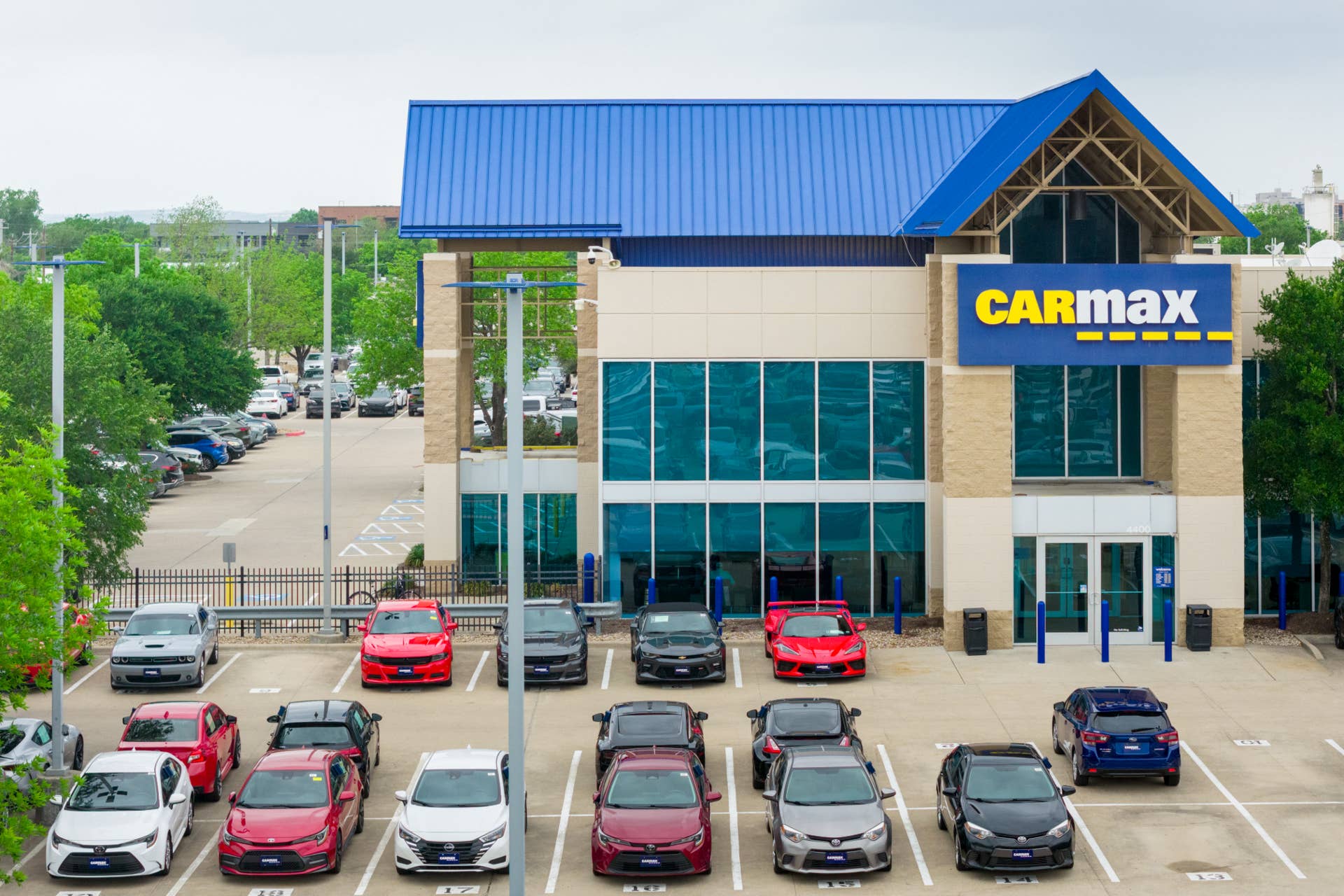 Edmunds first-quarter report flags an auto debt trend hitting U.S. drivers.
Photo by Brandon Bell on Getty Images
Why the auto debt trend keeps spiraling
A bigger sticker price is doing most of the lifting. The average price of a new vehicle crossed $50,000 for the first time in September 2025, fueled by larger trucks and EVs loaded with technology buyers do not always need, according to Kelley Blue Book.
Loans have stretched longer to keep monthly payments tolerable. The average new-car loan term now sits at 70 months, or close to six years, Edmunds indicates. The average financed amount per loan rose to $42,332 in the third quarter of 2025, with a typical monthly payment of $748, according to credit bureau Experian.
More Automotive:
- Hyundai admits deadly defect caused more injuries than previously known
- Consumer Reports names 5 popular EVs with the best real-world range
- Uber targets 50,000 robotaxis in major Rivian, Nvidia deals
Then there is the pandemic hangover, which keeps dragging buyers further underwater. Roughly 30.9% of trade-ins toward new vehicles in the first quarter of 2026 carried negative equity, the highest first-quarter share on record, Edmunds says. Average underwater trade-ins now sit on $7,183 in negative equity, up 42% from the same quarter five years ago.
When that hole gets rolled into a new loan, the math turns ugly fast. The typical buyer rolling negative equity is now financing $55,970 and writing a $932 monthly check, $159 more than the average new-car payment.
What the Edmunds findings mean for your wallet
I ran my own back-of-envelope math against the household-debt numbers, and what struck me is how quickly auto debt has elbowed its way into the front row of American household balance sheets. Auto loans now make up the largest source of nonhousing debt for U.S. consumers, larger than student loans, according to the Federal Reserve Bank of New York.
That has not been true for most of my reporting career covering household finance. My analysis showed that the car payment has quietly graduated from a budgeting nuisance into a category that can sink a household’s ability to save, invest, or even pay rent on time.
The fix, when one is available, almost always starts with the trade-in line. If you owe more than your car is worth, rolling that gap into a new loan is the fastest way to lock yourself into a four-figure payment for the rest of the decade. Edmunds flagged the same trap in its Q1 release, noting that consumers who rolled debt into their last purchase often have no easy exit.
There is also a credit-score lever most buyers underuse. Pulling a free credit report, fixing reporting errors, and waiting six months before walking into a showroom can shave hundreds of basis points off a loan offer, according to consumer guidance from Experian. On a $30,000 car, that gap is the difference between a manageable payment and a budget-killer.
Where the auto debt picture goes next
For households already balancing higher rent, stubborn grocery bills, and credit-card balances that refuse to budge, the next wave of auto-loan stress is the storm cloud worth watching. Wall Street will see it first in subprime auto-loan delinquencies. Main Street will feel it on the dealership lot, where buyers with thin credit get steered toward longer terms and worse rates.
The playbook, for now, is unglamorous. Drive what you have for as long as it runs. Pull a trade-in quote before you ever step into a showroom. Treat any monthly payment north of $700 as a budget red flag worth pushing back on, not a number to swallow because the salesperson framed it as standard.
The Edmunds report is not predicting a crash. But it is making one thing clear. The car payment is no longer the predictable, boring line at the bottom of the household budget.
For a growing share of U.S. drivers, it is now the line that bends everything else out of shape.
Related: Edmunds reveals surprising used EV outlook for 2026