
Coming off a year where the company posted its first-ever annual revenue loss, 2026 was always going to be pivotal for Tesla. While CEO Elon Musk told investors that the company would focus on autonomy and humanoid robots this year, car sales account for 73% of Tesla’s revenue.
When combined with its leasing department, automotive accounts for between 85% and 87% of Tesla’s revenue. Meanwhile, Tesla’s overall Full Self-Driving (Supervised) adoption rate is climbing, but is still only about 14% with 1.28 million active subs.
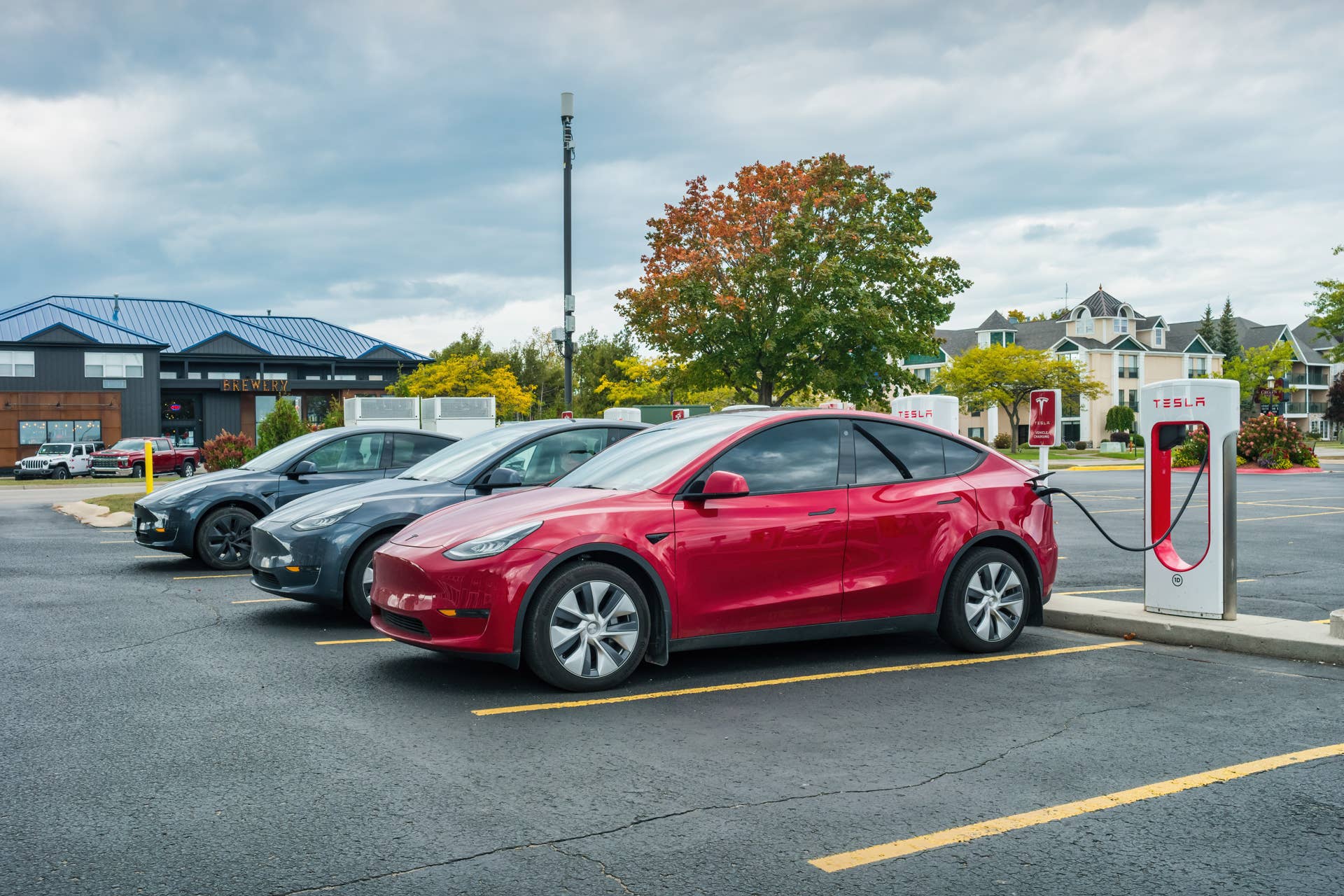
So to bolster its biggest moneymaker, Tesla is raising the price of its popular Model Y in the U.S., Reuters reported. The Model Y premium all-wheel drive and Model Y premium rear-wheel drive had their prices increased by $1,000 each to $49,990 and $45,990, respectively. Tesla also raised the price of the Model Y Performance all-wheel drive by $500 to $57,990.
This is the second time in two years that Tesla has raised the price of the Model Y, following a $1,000 increase in 2024.
Tesla has had a rocky 2026 start after dismal 2025 deliveries
Tesla overall has faced demand issues for a while, as falling EV sales in the U.S. and China have combined with Elon Musk’s deteriorating personal brand.
Tesla’s annual revenue declined in 2025 for the first time ever, as deliveries also fell for the second consecutive year. Tesla says it is much more than a car company, and that its future lies in artificial intelligence and autonomous driving.
But as much as Tesla likes to say it is not just a car company, more than 70% of its revenue ($69.5 billion in 2025) comes from automotive sales, which includes leasing, regulatory credits, and vehicle sales.
Service revenue from its vehicles (including supercharging, vehicle insurance, and repairs) totaled another $12.7 billion.
Auto sales already aren’t a high-margin business, and its automotive gross margin (excluding regulatory credits) actually dipped into the red for the first time in 2025, according to Reuters.
In the first quarter this year, Tesla’s Model 3 and Model Y accounted for 341,893 deliveries, while the “other models,” like the Model S and Model X (which will officially end production forever later this year) and the Cybertruck, accounted for the remaining 16,000+ deliveries.
Tesla reported first-quarter production of 408,386 vehicles and deliveries of 358,023, well short of analyst expectations of 370,000 and its internal consensus estimate of 365,000.
It wasn’t all bad news: deliveries actually improved 6% year over year, but the increase is somewhat skewed since 2025’s Q1 total was 13% lower than 2024’s. So the company’s comps were favorable.
Related: History of Tesla & its stock: Timeline, facts & milestones
Stakes for Tesla “could not be higher,” analysts say
Earlier this year, Tesla indicated it was pulling the plug on the Model S and Model X and would replace that production capacity with Optimus humanoid robots as part of the company’s plan to build 1 million of them per year.
That plan may worry investors, since there is currently no discernible market for humanoid robots, and selling 10,000 of them in a year would be impressive. But the vehicle models the company is getting rid of haven’t sold, either, so that it may be a wash in the end.
However, analysts at BNP Paribas aren’t taking this Tesla experiment lightly, since the company is also spending heavily to make it happen.
“Given Tesla’s sizable cash burn this year ($7 billion estimate by BNPP) and indications for massive multi-year investments on the horizon tied to a TeraFab and 100 GW solar capacity, the ‘stakes’ of TSLA’s demonstrated robotaxi and Optimus progress could not be higher,” analysts said in a recent note.
According to BNP, the other models that combined for 16,000 vehicles in the quarter benefited from artificially inflated demand, so, once again, moving off of them makes sense. Still, Musk has made some pretty big promises about what Optimus and Robotaxi can do, and the firm says it’s time for Tesla to “put up or shut up” in 2026.
“A critical factor for this year is the Co.’s progress rate in its active Robotaxi fleet, which is climbing yet still limited to just two cities,” BNPP analysts said. “The core catalysts for TSLA center on its ability to show meaningful progress toward its AI-defined future, inclusive of Robotaxi fleet expansion (targeting 7 new cities in 1H26) and commercialized production of Optimus by year-end.”
