
Almost every hipster neighborhood in the world starts as a factory district that has been abandoned in the modern age.
Such is the story of Williamsburg in New York, Lawrenceville in Pittsburgh, Shoreditch in London and Shimokitazawa in Tokyo, along with countless other neighborhoods in countries around the world associated with youth counterculture. Along with the newfound popularity and coolness come the subsequently skyrocketing property values.
For those making a trip out to the Norwegian capital of Oslo, the Grünerløkka neighborhood in the eastern side of the Akerselva river fits all the parameters for those looking for a vibrant alternative to the sleek luxury of downtown Oslo.
The Grünerløkka neighborhood in Oslo should be on your travel radar
The river has traditionally always served as a divide between the east and west of the city, while, in the nineteenth century, the Grünerløkka neighborhood started springing up tenement houses to meet the growing number of people working in the nearby textile and mechanical parts factories.
By the second half of the twentieth century, artists and students started moving eastward to Grünerløkka in the search for cheaper accommodation as a post-oil Norwegian capital transformed into a major economic and diplomatic powerhouse.
Related: This Texas city is a seriously underrated foodie destination
Today, Grünerløkka is a trendy neighborhood built around the Sofienberg and Birkelunden parks and known for its high concentration of vintage and independent shops, international restaurants, and the Mathallen food hall, as well as music venues like the Blå nightclub hosting various independent indie, rock, and jazz bands from around the world.
Particularly popular restaurants include 200 Oslo, a dog-friendly gastropub with various forms of canine-inspired pop art on the walls and a seasonal menu of Norwegian and international dishes, and the new Nordic fine-dining restaurant Arakataka.
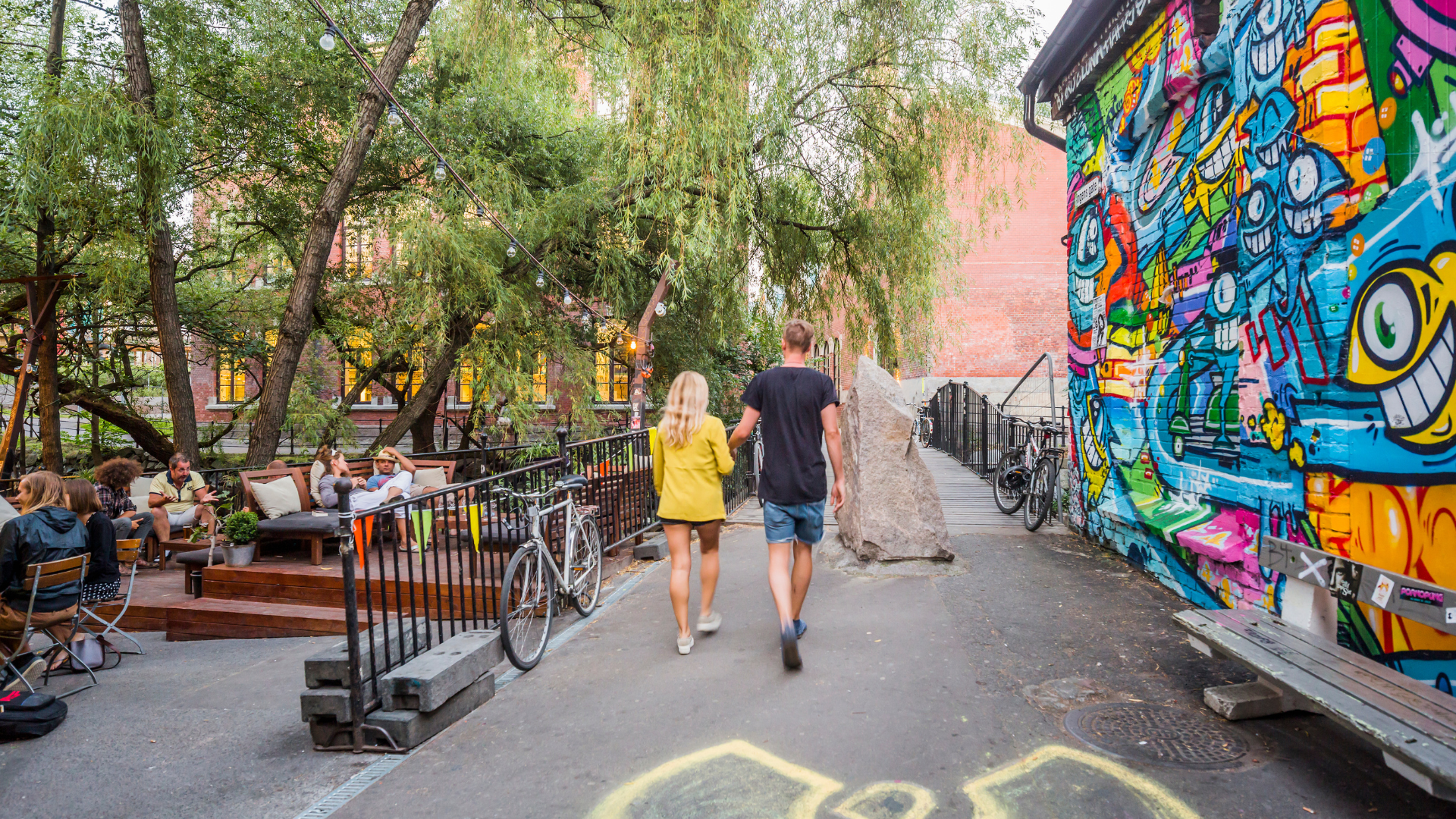 Grünerløkka is known for its diverse street art on every corner.
Getty
What to do in Grünerløkka, Oslo’s hippest district
Must-do cultural stops, meanwhile, are the Botanical Garden and the Norwegian Natural History Museum, while colorful street art will greet visitors in almost every hidden and not-so-hidden corner of this part of town.
More Travel News:
- Airline to launch unusual new flight to Cayman Islands from the U.S.
- What you can expect at Disneyland’s new ‘World of Frozen’
- Unexpected country is most luxurious travel destination for 2026
- U.S. government issues strange warning on Ireland travel
While one of the main joys of street art is coming across it impromptu on a stroll, those on the hunt for something particularly special can seek out works by artists such as Bella Fasmer, Dolk, Thomas Bliss, Pastel and Rustam QBi.
Traditional art can also be purchased from local art galleries lining the Grüners Gate and Københavngata streets. Those without the pockets for a purchase can also make a day out of peeking in and admiring the work like one would at a museum.
In its curated visitor itineraries for Oslo and Norway, local travel agency Up Norway offers tailored tours in which one can experience the neighborhood on a wider tour of the country.
While known by almost every Norwegian as a cool and younger side of Oslo, what is affectionally known as “Løkka” sometimes gets missed by international tourists who usually stick to the downtown area encompassing the Munch Museum, the Nobel Peace Center and the harbor on short visits.
But for those looking for an alternatively artistic vibe on the next visit to Oslo, Grünerløkka is very easily accessible by tram, bus or a scenic 30-minute walk from the main Sentrum district.
Related: What exactly is a very British spa? London is about to get one
