
Not every retail closure happens abruptly.
Some chains do have public mass closures, or even abrupt shutdowns of hundreds of locations, but in many cases, stores close in a trickle. Many brands, like Macy’s and Starbucks might announce a large shutdown, but actually close the stores as leases expire.
Retailers often time store closures around lease expirations or breakpoints because exiting early can trigger costly lease obligations, while waiting allows them to renegotiate or simply let contracts run out, according to retail real estate analysts and industry research.
“When a tenant goes dark outside bankruptcy, the lease usually stays active. Many tenants look for an early exit through a lease buyout, often settling at 40 to 65% of the remaining obligation,” according to Northmarq.
That’s a strategy Dick’s Sporting Goods has been using as it has slowly closed over 150 locations of the Champs Sports brand.
Champs has been closing stores for years
Champs was owned by Foot Locker, which was acquired by Dick’s Sporting Goods in September 2025 for $2.4 billion
Former Foot Locker CEO Mary Dillon touched on the company’s ongoing efforts to streamline its store portfolio during its fourth quarter 2024 earnings call.
“Since 2019, we’ve closed over 20% of our global doors, including the exiting of non-core banners and the exit or conversion of select international markets. In the last two years alone, we’ve also pared back our store exposure at the Champs Sports banner as part of its repositioning,” she said.
Those shutdowns, however, have not only continued, but accelerated since Dick’s took over.
At the time of the deal closure, Dick’s said it planned to shut down at least 125 Champs stores. A final total has not been publicly disclosed.
Champs, at its peak, had 539 stores, according to a Foot Locker 10-K filing. That number had dropped to 339, according to data from ScrapeHero.
That means the chain has actually closed about 200 stores.
Dick’s does not break out Champs as a brand in its earnings call. Instead, its results are part of the broader Foot Locker brand.
Executive Chairman Edward Stack noted that more closures were coming but that some stores could be remodeled and rebranded during his comments as part of Dick’s fourth-quarter earnings call.
“We continue to assess underperforming locations, but we anticipate our closure list is now much smaller than we initially estimated. We’ve identified opportunities to reposition and improve profitability in a meaningful number of stores, informed in large part by the success we’re seeing in our Fast Break locations,” he added.
Most of the stores being removed from the closure list, which has not been made public by the company, have been Foot Locker-branded locations.
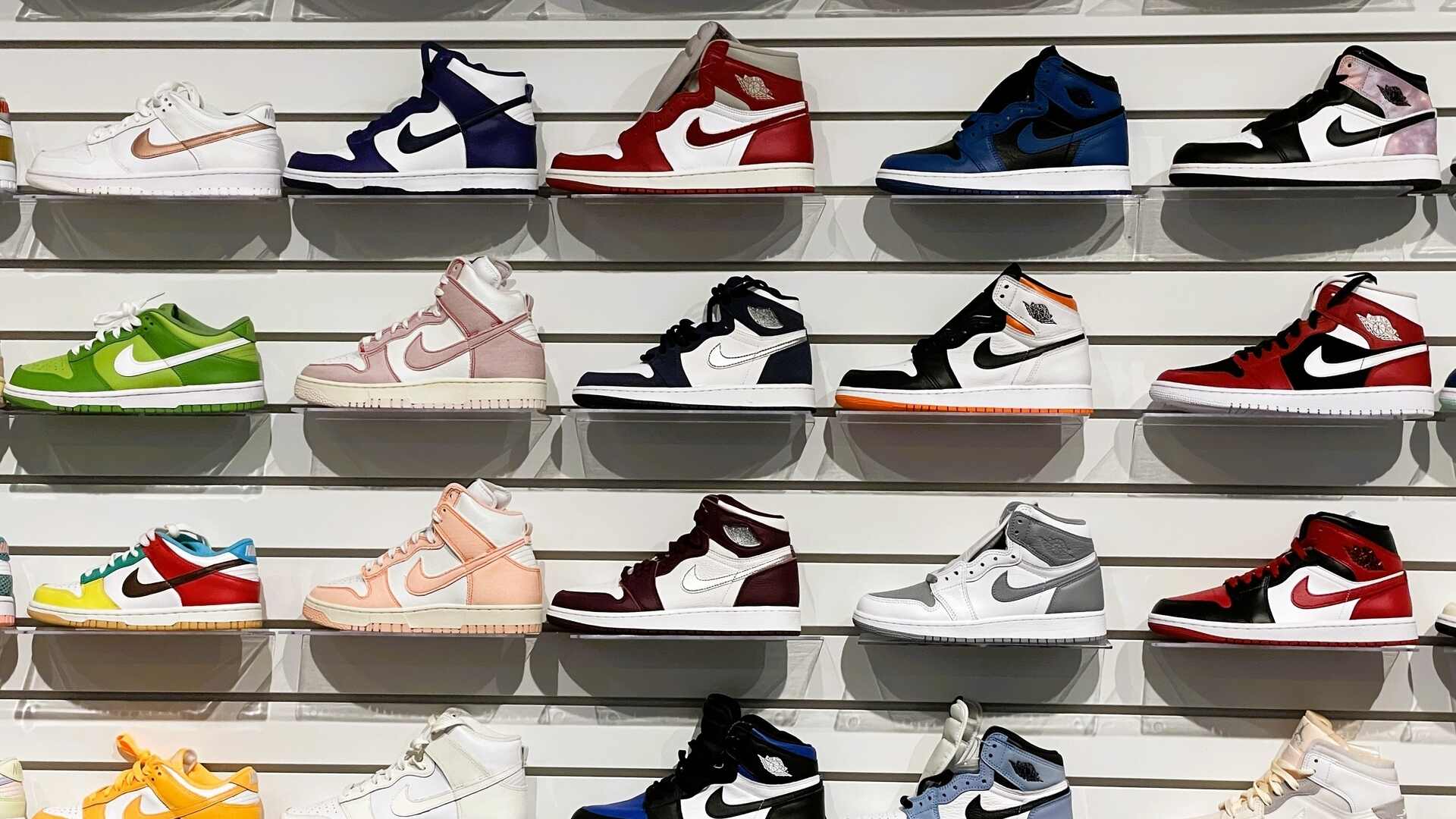 Foot Locker is now owned by Dick’s, which has worked to reinvent the brand.
Shutterstock
Direct-to-consumer has hurt sporting goods and sneaker stores
Foot Locker began closing Champs locations in 2023, well before the chain was acquired, partially because Nike was only allotting the entire company so much product.
Adidas CEO Kasper Rorsted laid out in a 2021 letter to shareholders.
“Our operating model is evolving to build direct relationships with consumers and offer them best-in-class experiences in our stores and online. As a result, our company’s direct-to-consumer business is projected to account for around half of the company’s total net sales by 2025 and generate more than 80% of the targeted top-line growth. Our e-commerce revenues are forecast to double to between € 8 billion and € 9 billion,” he shared.
Nike has also moved some of its business to a DTC model.
Retailers and industry analysts have noted that Nike’s shift toward direct-to-consumer sales has reduced the company’s reliance on wholesale partners, reshaping inventory allocation across third-party retailers.
“In 2010, DTC made up just 15% of Nike’s total revenue. By 2020, the athletics retailer had grown that number to 35%, as it stepped back from wholesale partners and focused on sales through its own stores and digital channels. At the end of its most recent fiscal year, Nike raked in $44.5 billion on the back of a 40% DTC business, with plans to make $50 billion in 2022,” Marketing Dive reported.
The change reflects a wider retail shift toward direct-to-consumer models.
Dick’s has helped stabilize Foot Locker
Since Dick’s purchased Foot Locker, Nike has recommitted to its partnership with both brands and has alloted them more inventory.
Jefferies analyst Randal Konik shared a note on his bullish feelings about this relationship for both Nike and Dick’s.
“We view this as further confirmation that Nike’s wholesale reset is gaining traction with key partners that are leaning in, not pulling back,” Konik said. He also said management’s callout of Nike’s running innovation supports a product-led recovery narrative, while signature basketball remained strong across both the Dick’s and Foot Locker banners. WWD reported.
GlobalData Managing Director Neil Saunders thinks that buying Foot Locker is a positive for Dick’s, simply by giving it more clout with suppliers.
“At present, Dick’s is the largest specialist player in the U.S. sporting goods market with an 11.1% share. It has some headroom for growth, but there are limits. Acquiring Foot Locker gives it an additional 4.3% and exposure to international markets. There will be opportunities for synergistic savings and for better negotiating power with brands like Nike,” he wrote on RetailWire.
Related: Forget chicken fingers, Costco quietly adds new food court item