
Rocket Lab (RKLB) added roughly $5 billion in market value, with the stock up nearly 6% on May 26 as space stocks rallied. This came following reports that SpaceX had publicly filed for what could become the largest IPO in history, with a valuation approaching $2 trillion.
Investors quickly repriced the space sector amid the possibility that SpaceX‘s valuation will reset how space companies are valued more broadly.
Rocket Lab in particular stands out because the company recently booked five Neutron contracts ahead of its first flight, pushed backlog to roughly $2.2 billion, and expanded GAAP gross margin to 38.2%. Investors are now trying to determine how large the opportunity could be for Rocket Lab ahead of SpaceX’s IPO.
Neutron demand strengthened ahead of rocket’s first flight
Rocket Lab’s first-quarter results marked an important turning point for Neutron, with the company starting to book real customer commitments ahead of the rocket’s debut launch.
During Q1, Rocket Lab signed five Neutron contracts alongside 31 Electron and HASTE launches, pushing total backlog to roughly $2.2 billion, up 108% year over year.
Management still expects Neutron’s first mission to take place later in 2026. Management said the Neutron contracts were signed at normal commercial pricing, and management reaffirmed that they will not be “discounting flights just to fill up a manifest.”
Preflight demand at standard pricing materially strengthens the case for future launch profitability. Investors have historically viewed Rocket Lab as a small-launch company with a promising development program. However, booking five Neutron wins before the first flight meaningfully strengthens the narrative.
If Rocket Lab continues adding Neutron contracts at similar pricing while successfully reaching its first-flight target in 2026, investors will have a much stronger basis for valuing Neutron as a funded launch platform.
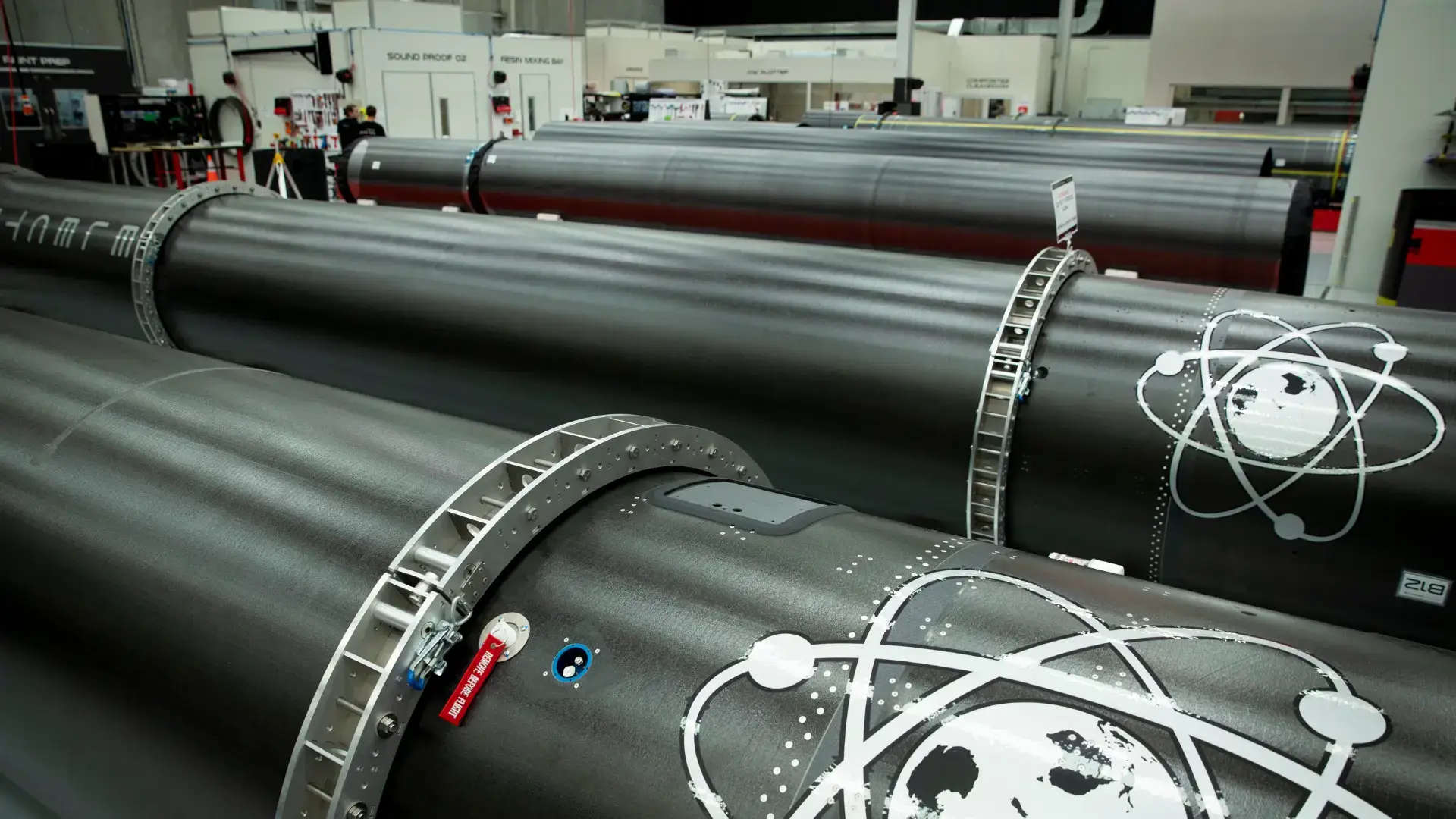 Rocket Lab’s growing Neutron backlog suggests customer demand is strengthening well ahead of the rocket’s first launch.
The New Zealand Herald via Getty Images
Rocket Lab’s revenue mix showed broader operating strength
Rocket Lab’s quarter also showed that the existing business is strengthening before Neutron contributes any launch revenue. First-quarter revenue rose 63.5% year over year to $200.3 million, marking the company’s first quarter above the $200 million threshold. GAAP gross margin reached 38.2%.
The results reflected strength across both launch services and Space Systems rather than a one-time spike in launch activity.
Trending Stock News:
- Morgan Stanley resets Take-Two stock price target before GTA VI release
- Analog Devices CEO drops bombshell message on exploding AI infrastructure demand
- Cisco CEO predicts AI will force multi-billion dollar infrastructure reset
That added weight to management’s argument that Space Systems is becoming a larger earnings driver within the company.
Launch revenue can swing quarter to quarter based on mission timing, while systems, components, and infrastructure services tend to produce steadier revenue and stronger margin visibility.
Cash cushion reduced near-term funding pressure
Rocket Lab also strengthened its balance sheet during the quarter, with the company ending Q1 with roughly $1.48 billion in cash, securities, and restricted cash after completing a $450.4 million at-the-market equity raise.
The raise brought dilution, but it also reduced concerns around whether Rocket Lab would need to raise capital under pressure while funding Neutron development.
The stronger cash position gives management more flexibility around supplier commitments, infrastructure spending, and launch execution heading into Neutron’s first flight, targeted for the fourth quarter of 2026.
That shifts the focus away from financing risk and toward execution, backlog conversion, and future margin expansion into 2026.
What could keep Rocket Lab flying
- Neutron wins at standard pricing improve confidence in future launch margins, not just backlog growth
- Continued acquisitions to drive vertical integration
- Space Systems grows faster than launch, supporting a more stable and diversified earnings profile
- Higher-margin revenue mix lifts profitability as Rocket Lab scales
- Defense and commercial demand deepen utilization across Electron, HASTE, and Neutron
- Strong liquidity reduces financing risk and funds development internally
What could break RKLB’s thesis
- Neutron delays push out backlog conversion and earnings growth
- Weak early missions damage customer confidence before Neutron builds flight heritage
- Lower-value Space Systems work compresses margins and weakens earnings quality
- Launch or supply chain disruptions pressure cadence and fixed-cost absorption
- Continued equity issuance limits per-share upside, despite business growth
Key takeaways for Rocket Lab
Rocket Lab rallied alongside the broader space sector after SpaceX’s IPO filing reignited investor interest in public space companies.
Unlike many speculative names in the rally, Rocket Lab already has a growing backlog, improving margins, and signed Neutron demand ahead of its first flight.
Investors now want to see whether that momentum can translate into sustained earnings growth.