
Grocery prices are rising, and shoppers are feeling it across the supermarket.
While value-price-driven stores are still attracting customers with discounts, the pressure is evident amid rising prices.
The US Department of Agriculture’s (USDA) Food Price Outlook said food prices were 3.2% higher in April 2026 than a year earlier. Grocery store prices, or food-at-home prices, were up 2.9% from April 2025.
USDA projects food-at-home prices to increase 3.2% in 2026, faster than their 20-year historical average of 2.6%.
Some everyday categories are rising even faster. The USDA said prices for nonalcoholic beverages were 5.1% higher in April 2026 than a year earlier and are expected to increase 5.8% for the full year.
Coca-Cola has proven resilient
Despite this, Coca-Cola reported solid results in its first quarter 2026 earnings.
Even as shoppers face higher food and beverage costs, this grocery cart staple in many households appears to be holding its place.
Coca-Cola CEO Henrique Braun acknowledged that not all consumers are behaving the same way.
On the company’s first quarter earnings call, Braun said that while “many consumers remain resilient, others are under pressure due ot persistent inflation, greater macroeconomic uncertainty, and volatility driven by the conflict in the Middle East.”
And yet, through the power of its brands and an “unmatched system,” Coca-Cola delivered 3% volume growth in the first quarter.
Bank of America also argues that Coca-Cola remains one of the consumer staples companies, best positioned to keep growing.
In a report shared with TheStreet, BofA called the company a “multi-year global consumer compounder,” and reiterated its Buy rating on the beverage manufacturer.
BofA says Coca-Cola can keep volumes while prices rise
Bank of America’s core argument in positioning Coca-Cola is that it is not relying solely on higher prices to grow.
Coca-Cola has a long runway as it uses its “all-weather strategy” to create new beverage occasions and drive global hydration, BofA said.
Bofa noted that the beverage company delivered a balanced growth model with a 7-year average of 2% shipment growth and about 6% price/mix growth.
More Retail:
- Another mall retailer quietly closed over 150 locations
- Ultra wealthy shoppers flock to this 63-year-old rugged retailer
- 72-year-old mall retailers to close more stores in 2026
This means an average organic sales growth of around 8%, outperforming its peers, which leaned more on prices while losing volume.
And in a consumer environment where shoppers are already pushing back against higher grocery bills, it is important not to raise prices significantly and to focus more on customer retention.
BofA said Coca-Cola is one of the few multinational companies able to sustain volumes while pricing, underscoring that consumers are still willing to pay for its brands even in a tougher inflation environment.
And the company’s latest earnings support this, as it reported global unit case volume frew 3% in Q1 and net revenues rose 12% to $12.5 billion, while organic revenues grew 10%.
In North America, unit case volume, a measure of how much finished beverages the company sells, increased 4%. This was driven by Trademark Coca-Cola, water, sports, coffee, and tea.
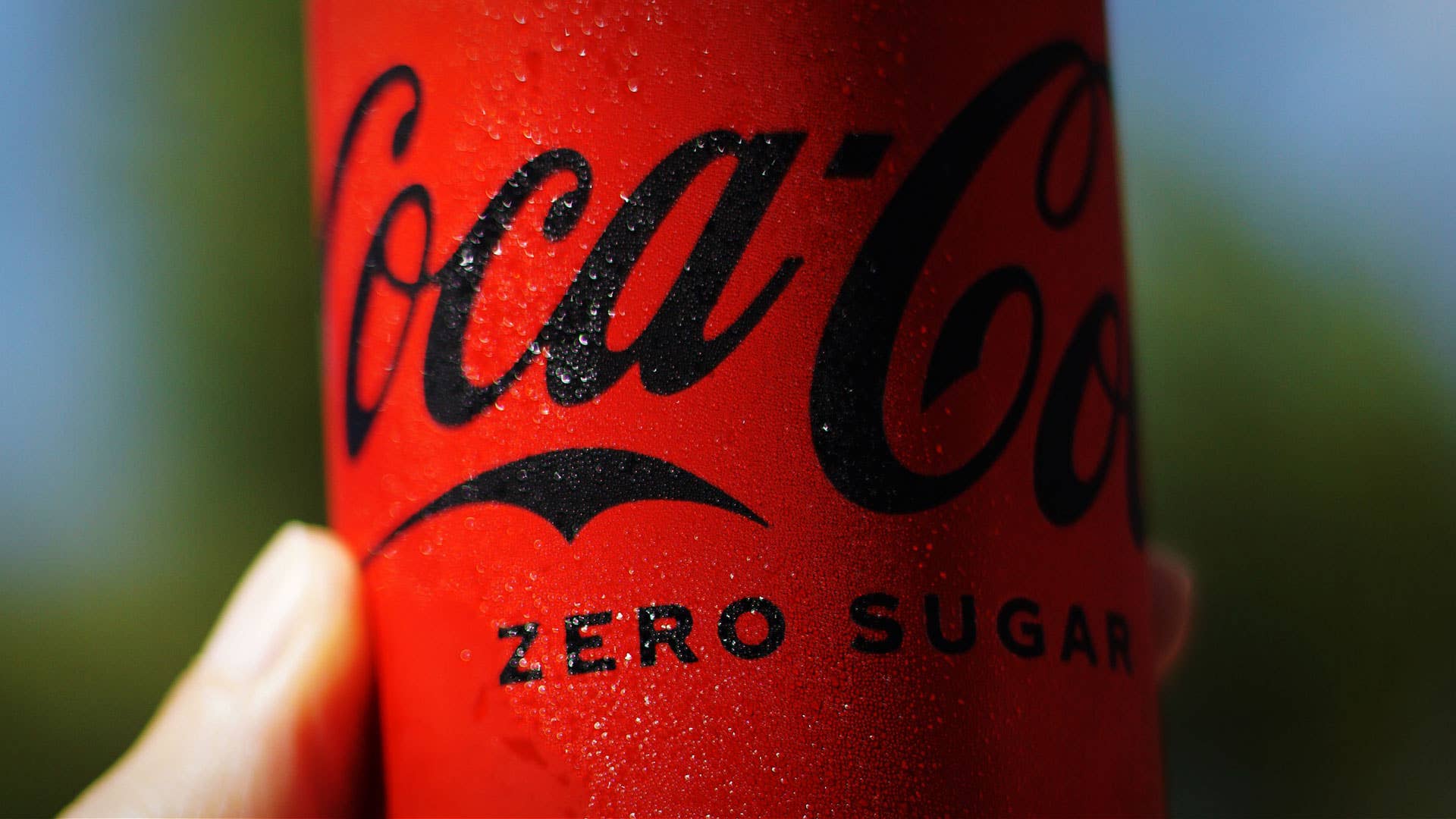 Coca-Cola Zero Sugar grew 13% in Q1 2026.
Shutterstock
Zero sugar becoming Coca-Cola’s retail advantage
A major reason for BofA’s bullish view is the shift towards zero-sugar drinks.
BofA said Coca-Cola is leading the shift to zero-sugar carbonated soft drinks, anchored by Coca-Cola Zero Sugar, which is outperforming legacy brands.
Coca-Cola holds leading positions across three of the four major US carbonated soft drink flavors, reinforcing the company’s strength and durability of its growth in the soda aisle, said BofA in its report.
The report said sugar-free carbonated soft drinks accounted for about 42% of category sales between 2022 and 2025.
Even after this growth, these products account for only about 30% of total carbonated soft drink sales, suggesting this category has room to grow.
This trend showed up in Coca-Cola’s quarterly report.
Coca-Cola Zero Sugar grew 13%, with growth across all geographic locations. Diet Coke/Coca-Cola Light grew 6%, driven primarily by North America.
Sparkling soft drinks grew 2%, and Trademark Coca-Cola grew 2%.
In the lemon-lime and citrus drink category, BofA said Coca-Cola is the second-largest player, with about 40% market share.
The report noted Sprite Zero Sugar is one of the largest, fastest-growing brands in the category, giving Coca-Cola another way to participate in the zero-sugar shift, beyond its flagship Coke brands.
But it’s not like Coca-Cola is winning every category. Ginger ale still remains a weak spot, with Keurig Dr Pepper dominating the category through its Canada Dry.
Why beverage costs still matter
The bullish Coca-Cola analyst report comes as BofA’s broader food-and-beverage inflation tracker shows renewed cost pressure across the industry.
In its report, BofA said that inflation across this industry jumped in April, driven by higher costs for diesel, transportation, aluminum, and cooking oils.
For beverage makers, this matters because packaging drinks becomes expensive, a price ultimately borne by the consumers.
For Coca-Cola, BofA estimated that near-term cost pressure remained high but was more manageable over the next 12 months than for other beverage companies.
This pressure can be more direct for bottlers, who handle manufacturing, packaging, and delivery work behind the scenes.
Coca-Cola CFO John Murphy told analysts in the earnings call that the company’s own basket looked manageable, but its “bottling partners have more exposure, particularly to aluminum and PET,” the plastic used in bottles.
However, for Coca-Cola, affordability is a key part of its revenue growth strategy, especially for lower-income consumers under pressure. In North America, Braun said the company added options in both single-serve and multi-serve entry packs to help keep those shoppers buying.
The strategy appears to be working as Coca-Cola mini-can volume growth in North America grew high single digits after the launch of single-serve mini cans in convenience retail stores.
This is what BofA sees as part of Coca-Cola’s broader advantage. The company has strong brands, growing zero-sugar options, real share gains, and enough pricing power to keep performing even when consumers are more cautious.
And while the company is not entirely immune to growing pressures in the retail sector, it has still been able to find ways to keep consumers buying.
Related: Kroger, Walmart, and Costco face a $6.5 billion problem