
When Warren Buffett builds a position in a company, Wall Street pays attention. His firm, Berkshire Hathaway, doesn’t typically accumulate an 8.3% stake in a business unless it believes deeply in what that company does and where it’s headed.
That’s what made Berkshire’s investment in Pool Corp so noteworthy and the exit equally striking.
Berkshire quietly unwound its entire position in Pool (POOL) during the first quarter of 2026.
The stake, which had been worth roughly $650 million, is now gone. And the stock itself tells a painful story: it’s sitting nearly 70% below its all-time highs.
Why did Warren Buffett invest in Pool stock?
Pool is the world’s largest wholesale distributor of swimming pool supplies, equipment, and related products.
Think of it like the middleman between manufacturers and the roughly 120,000 contractors, retailers, and service companies that keep America’s backyard pools running.
The business model is built around recurring, nondiscretionary spending on pool chemicals, filters, and pumps, which aren’t skipped just because the economy slows.
Related: Warren Buffett’s Berkshire dumps entire stake in iconic fintech giant
The business ticked most boxes for Warren Buffett, given predictable demand, pricing power, and a strong network that’s difficult to replicate.
Pool Corp also pays a dividend, which adds to its appeal for long-term income investors. Down almost 70% from all-time highs, POOL stock currently offers a yield of 2.8%.
New pool construction boomed during the COVID era as Americans poured money into their homes. That surge in demand eventually cooled, and new unit construction by pool builders fell sharply.
According to Pool Corp’s first-quarter 2026 earnings call, new pool units for 2025 totaled 58,000, a fraction of the pandemic-era peak.
Pool posted solid Q1 2026 results
For the first quarter of 2026, the company reported:
- Net sales growth of 6% compared to the same period last year.
- Operating income grew by 7% as the operating margin expanded by 10 basis points.
President and CEO Peter Arvan pointed to broad-based growth across product categories.
- Chemicals grew by 8%, driven in part by strong demand for the company’s private-label brands.
- Equipment grew by 7% and building materials were up 5%.
- Geographically, California grew 10%, and Texas grew 7%, boosted by favorable weather and strong maintenance demand.
During the earnings call, Arvan stated:
“We are off to a solid start in 2026, with net sales up 6% and operating income growing 7% year-over-year. Maintenance demand remained resilient, and we saw continued, though still gradual, recovery in discretionary categories.”
Management also confirmed full-year diluted earnings per share guidance of $10.87 to $11.17, representing 2-3% growth over the prior year.
The installed base is key for the dividend stock
One of the most important things to understand about Pool is where its revenue originates from.
There are about 5.5 million in-ground pools across the United States that require weekly chemical treatment.
Moreover, pumps and filters wear out and need replacing, and equipment gets upgraded. That installed base generates steady, recurring demand that does not depend on new construction.
“Our growth thesis does not require a recovery in new pool units,” Arvan said during the earnings call, according to a company statement.
The company operates 455 sales centers.
It has a digital ordering platform called POOL360, which now accounts for 13% of net sales, up from 12.5% a year ago.
It also runs the Pinch A Penny franchise network, which added seven new independently owned locations in the first quarter alone.
Pool Corp has been investing in private-label chemical products, including its Regal and E-Z Clor lines, which carry higher margins and have been gaining traction with independent retailers.
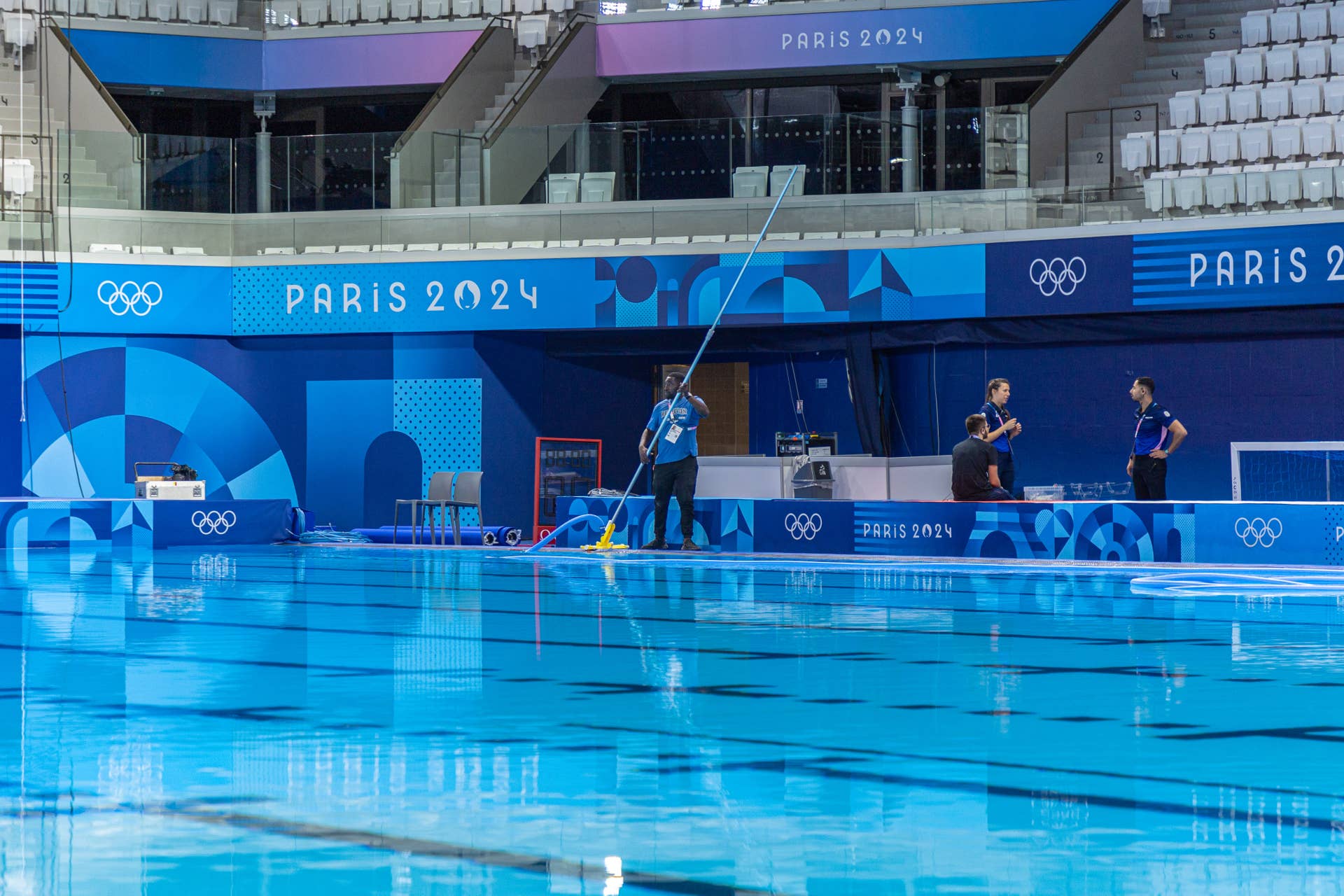 Pool Corp. has a robust business model
Victor LOCHON/Getty Images
A growing dividend with a sustainable payout
Pool has raised its annualized dividend from $0.56 per share in 2011 to $5 per share in 2026, indicating a compounded annual growth rate of 15.7% over the last 15 years.
The annual dividend expense for the mid-cap stock is around $182 million, while it is forecast to report a free cash flow of $354 million this year.
Given a payout ratio of 51%, POOL stock has enough room to grow its dividend while reinvesting in growth and acquisitions.
More dividend stocks:
- Costco quietly bumps its quarterly dividend by 13%
- Early SCHD ETF investors now earn a 12.5% dividend yield on cost
- S&P 500 index dividend yield hits nearly 50-year low
Berkshire’s decision to sell does not necessarily mean Pool Corp is a broken business. The fundamentals, as Q1 shows, remain intact.
But it does reflect a shift in conviction. When a position the size of Berkshire’s gets exited entirely, it suggests the expected return no longer meets the bar, at least for now.
For dividend investors still holding POOL, the core question is simpler: does the installed-base thesis hold, and can management continue to expand margins as new construction remains muted?
The first-quarter numbers suggest the answer leans yes. Whether that is enough to win back Buffett-sized confidence is another matter entirely.
Related: Down 63 percent, Warren Buffett dividend stock signals opportunity