
Nvidia (NVDA) is making a significant worldwide push as the artificial intelligence competition continues to accelerate across the computer industry.
Nvidia CEO Jensen Huang said on May 27 that the business aims to invest as much as $150 billion a year in Taiwan, highlighting the island’s growing significance to the chipmaker’s long-term AI strategy.
The news came during a launch party in Taipei for Nvidia’s proposed Taiwan headquarters, which Huang said is expected to begin construction this year and be operational by 2030.
The investment indicates a considerable leap from the levels at which Nvidia has been spending in Taiwan. A few years ago, before global demand for AI chips skyrocketed, the company was spending about $10 billion to $15 billion a year there, Huang said.
The decision also underscores Nvidia’s growing dependence on Taiwan’s semiconductor ecosystem as big cloud providers rush to construct AI infrastructure.
The current announcement is only the latest in a series of messages that Wall Street has heard from Nvidia over the past two years for investors: AI spending may be booming but it may just be getting started.
Nvidia deepens ties with Taiwan manufacturing giants
Taiwan is already the heart of the global semiconductor industry, but Nvidia’s new pledge solidifies the island’s vital role in the AI race.
The company’s new home will put it even closer to Taiwan Semiconductor Manufacturing Co. (TSM), the world’s largest contract chipmaker and one of its most essential suppliers.
TSMC is a critical supplier of the sophisticated semiconductors that drive Nvidia’s AI accelerators and next-generation computing systems.
Nvidia also has tight ties with Foxconn parent Hon Hai Precision Industry, one of the main firms helping to construct the AI servers and racks utilized in huge data centers.
“This is where the chips come, packaging comes, this is where the systems are made,” Huang said. “The number of partners we work with here in Taiwan, incredible.”
Huang claimed that Nvidia presently spends about $100 billion a year in Taiwan and that this may potentially reach $150 billion a year.
The executive did not say how long Nvidia expected expenditures to stay at such levels.
That’s important because Nvidia’s Taiwan gamble is no longer merely a matter of geography. It’s about securing the supply chain underpinning the company’s most critical business.
Related: Nvidia’s latest product is a game-changer
Why that supply chain is becoming ever more important is shown by Nvidia’s latest earnings.
The chipmaker reported first-quarter fiscal 2027 revenue of $81.6 billion, up 85% from a year earlier. Data Center revenue climbed 92% to $75.2 billion, reflecting continued demand from cloud providers, enterprises and AI infrastructure builders.
More AI:
- Micron sits at the center of a red-hot chip rally
- IBM CEO sends blunt message on AI and quantum computing
- Anthropic CEO makes shocking admission about AI
Nvidia also forecast second-quarter revenue of $91 billion, plus or minus 2%.
This projection is particularly interesting considering Nvidia claimed it is not including any Data Center computing revenue from China in its guidance.
That makes the company’s manufacturing partnerships in Taiwan all the more important as it strives to stay pace with global demand outside one of the world’s biggest technology marketplaces.
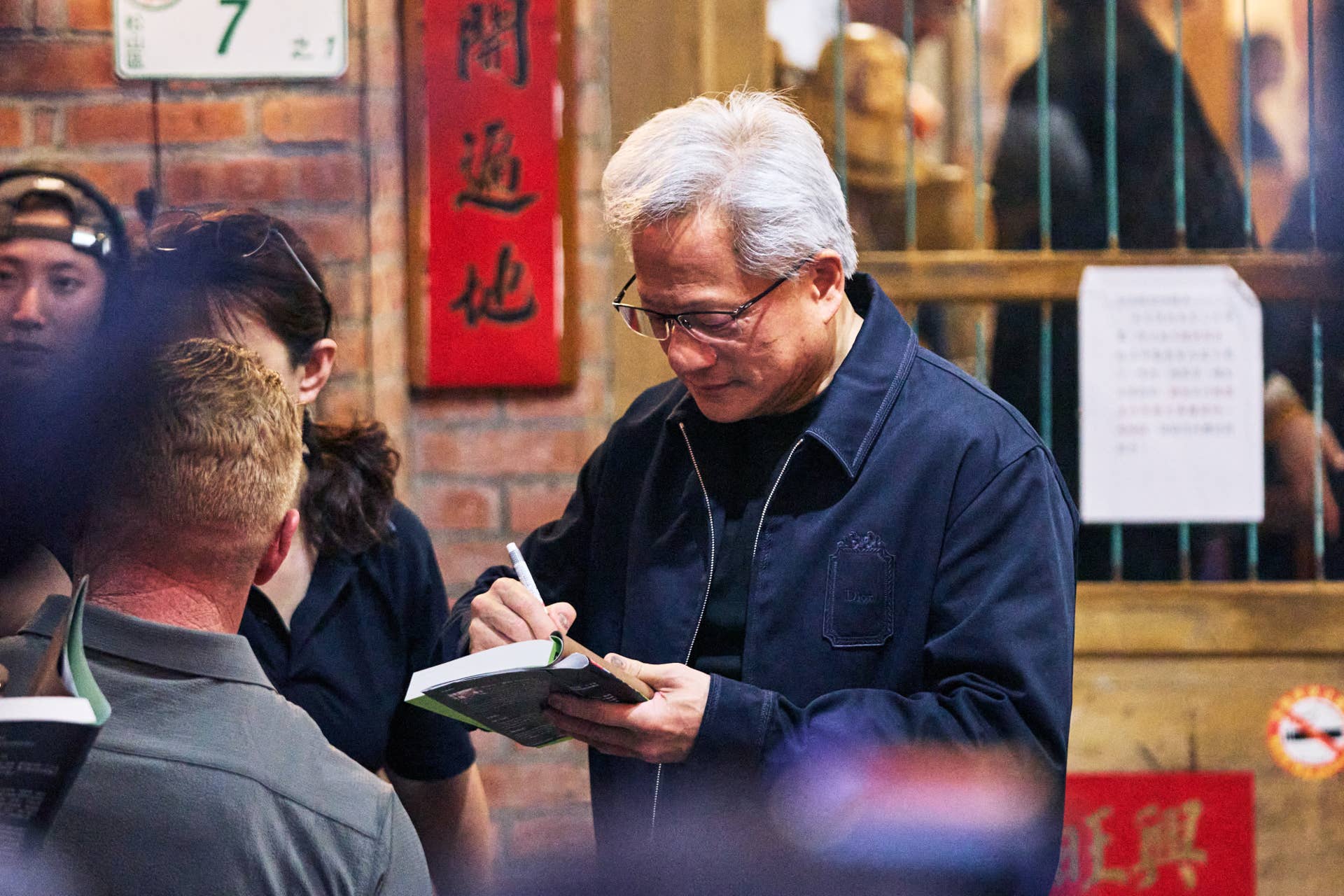 Nvidia’s Taiwan bet reveals a bigger AI power play
Photo by Bloomberg on Getty Images
Nvidia’s Taiwan bet follows TSMC’s AI surge
The same trend is emerging at TSMC.
The chipmaker posted revenue of $35.9 billion for the first quarter of 2026, and projected second-quarter revenue of $39 billion to $40.2 billion.
This view highlights the wide-ranging demand for AI across the semiconductor supply chain.
TSMC is particularly crucial to Nvidia since the business depends on the most modern chipmaking and packaging capability to produce the AI systems that power data centers across the world.
Those technologies are increasingly important to the expansion plans of Microsoft (MSFT), Amazon (AMZN), Alphabet (GOOGL) and other cloud-computing companies.
Nvidia is not the only one increasing its Taiwan exposure.
Advanced Micro Devices (AMD) announced more than $10 billion in Taiwan ecosystem investments tied to advanced packaging and next-generation AI infrastructure.
Foxconn has also been a key player in the AI explosion. The business said a $1.4 billion Taiwan supercomputing facility it is building with Nvidia will be ready in the first half of 2026.
Foxconn also stated it had the capacity to produce 1,000 AI racks weekly and anticipated that capacity to grow.
Those trends lead to the same conclusion: Taiwan is becoming more than a chip-making center. It is becoming one of the most important assembly hubs of the global AI economy.
Key takeaways from Nvidia’s Taiwan expansion
- Nvidia plans to spend up to$150 billion annually in Taiwan.
- The company’s planned Taiwan headquarters is expected to employ 4,000 people and open by 2030.
- Nvidia recently reported $81.6 billion in quarterly revenue, up 85% year over year.
- Nvidia guided for $91 billion in second-quarter fiscal 2027 revenue.
- Nvidia’s forecast does not assume any Data Center compute revenue from China.
- TSMC guided for second-quarter 2026 revenue of $39 billion to $40.2 billion.
- AMD and Foxconn are also expanding AI-related investments tied to Taiwan.
Nvidia’s AI dominance keeps growing
Under Huang’s leadership, Nvidia has evolved from a gaming graphics card manufacturer to the backbone of current AI computer infrastructure.
That move has led to tremendous financial growth for the company and helped make Nvidia one of Wall Street’s greatest winners during the AI boom.
Investors have been piling into AI-related equities, with Nvidia being the first business to reach a $5 trillion market capitalization late last year.
The chipmaker has huge pricing power and influence in the market as big cloud-computing firms continue to construct AI infrastructure using systems powered by Nvidia.
Huang also said Nvidia’s worth might soar over the next three to five years as AI usage expands into other industries.
The Taiwan expansion is a bet on robust demand for AI gear for years to come.
It also illustrates how tough it may be for rivals to close that gap.
AMD is pumping money into Taiwan, and other chipmakers are scrambling to provide alternatives to Nvidia’s dominant AI platform. But it already has the customers, software ecosystem and industrial alliances it needs to keep growing.
Born in Taiwan, Huang emigrated to the United States as a child. But his fame has spread beyond the region as Nvidia has rocketed to prominence amid the AI boom.
His new comments show he believes Nvidia views Taiwan as remaining essential to global technology production for the foreseeable future.
Nvidia’s newest disclosure is yet another strong signal to Wall Street investors that the business still sees significant runway ahead for AI infrastructure spending.
Nvidia’s Taiwan bet appears less like a regional expansion and more like a warning shot for rivals.
Related: 5-star analyst sets jaw-dropping Nvidia stock price target