
Most people never think about where their electricity comes from. You flip a switch, the lights turn on, and a bill shows up once a month. The whole system is built to fade into the background, and for two decades it mostly did.
That stretch of calm came with a quiet financial upside. American electricity demand barely grew.
Factories got more efficient, light bulbs went LED, and appliances learned to sip power instead of guzzle it. Utilities could plan a decade ahead because next year always looked a lot like this one.
Then a new kind of customer showed up. It runs day and night, never takes a holiday, and demands more power every year. It does not behave like anything the grid was built to handle.
That customer is the data center, the windowless warehouse of servers that trains and runs artificial intelligence. Those buildings are about to pull so much electricity that the United States power grid is heading for real strain, according to a new forecast from Goldman Sachs Research.
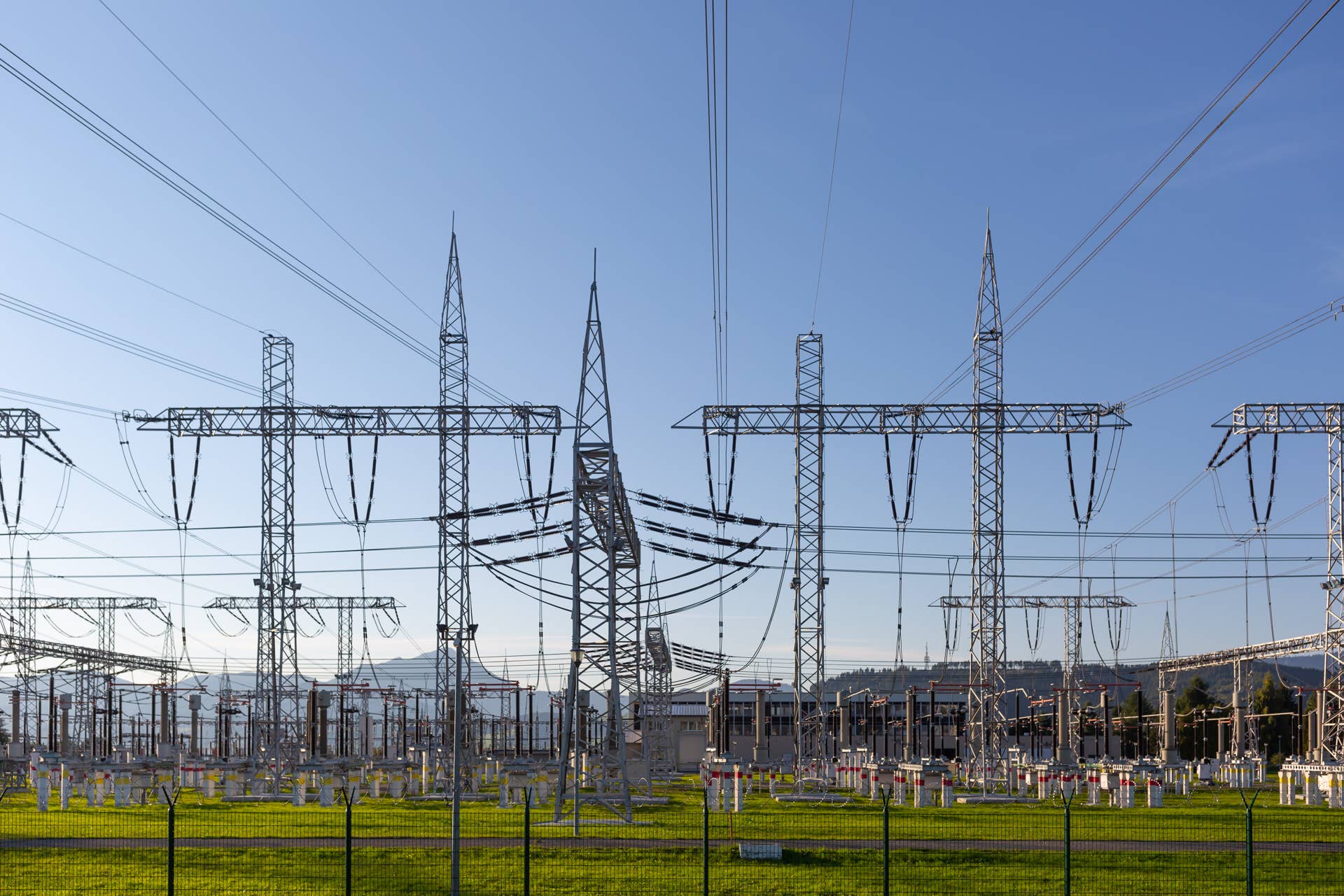 Goldman Sachs sees a costly electricity catch in the AI boom
Photo by SimpleImages on Getty Images
Why AI is rewriting the math on US power demand
For most of the past decade, the boring story about American electricity was that there wasn’t one. Demand was basically flat.
That changed the moment artificial intelligence went mainstream.
More AI:
- Micron sits at the center of a red-hot chip rally
- IBM CEO sends blunt message on AI and quantum computing
- Anthropic CEO makes shocking admission about AI
US data center power demand will climb from 31 gigawatts (GW) in 2025 to 41 GW in 2026 and 66 GW in 2027, more than doubling in two years, according to Goldman Sachs Research.
By 2027, data centers would eat up 8.5% of total US peak summer power demand, up from 4.1% in 2025, the firm’s commodities team of Hongcen Wei, Daan Struyven, and Samantha Dart found.
When I lined those numbers up against the past 20 years of US electricity data, the speed is what stands out. The grid is being asked to swallow in two years what normally takes a decade.
The federal government sees the same shift. Data centers used about 4.4% of all US electricity in 2023 and could draw 6.7% to 12% by 2028, according to the U.S. Department of Energy.
Behind that demand sits an extraordinary wave of capital. The four largest hyperscalers, Amazon (AMZN), Microsoft (MSFT), Alphabet (GOOGL), and Meta (META), are funneling hundreds of billions of dollars into AI infrastructure.
The longer bill runs higher. Companies could spend close to $7 trillion building data centers worldwide by 2030, according to McKinsey, a figure KKR has likened to the combined yearly output of Japan and Germany.
Here is how the ramp breaks down:
- US data center power demand: 31 GW in 2025, rising to 66 GW by 2027, per Goldman Sachs Research.
- Data centers’ share of US peak summer demand: 4.1% in 2025, climbing to 8.5% in 2027, per Goldman Sachs Research.
- New capacity added in 2027 alone: 36.3 GW, versus 8.5 GW added in 2025, per Goldman Sachs Research.
- US data center electricity use in 2023: 176 terawatt-hours, about 4.4% of the national total, per the U.S. Department of Energy.
Related: Uber CEO, COO sends stark message on AI spending in 2026
What the AI power crunch means for your electric bill
Here is the part that reaches past Wall Street and into your kitchen. The AI buildout is already landing on millions of power bills.
Consider PJM Interconnection, the grid operator that supplies electricity to roughly 65 million people across 13 states and Washington, D.C. The price PJM pays to guarantee enough generating capacity, a cost that flows directly onto customer bills, has rocketed from $28.92 per megawatt-day two years ago to $329.17 for the year that begins in June 2026.
Data centers caused roughly 63% of that increase in one recent auction, piling on $9.3 billion in costs that everyday customers must absorb, according to Monitoring Analytics, the grid’s independent market monitor.
The price impact on customers has been large and is “not reversible,” the monitor warned, according to E&E News.
The household math is stark. Unchecked data center growth could add $163 billion to regional power bills through 2033, or about $70 a month for the average family by 2028, according to the Natural Resources Defense Council (NRDC).
To picture that scale, the data centers proposed across PJM could one day pull more electricity than every home in New Jersey, Pennsylvania, Ohio, Virginia, and Maryland uses put together, the NRDC estimates.
What struck me digging through the PJM auction results is how lopsided the race has become. The region is on track to add far more data center demand each year than new power supply, which is exactly the kind of imbalance that keeps pushing prices up.
The servers training your chatbot are now bidding for the same electricity that cools your refrigerator. Right now, they are winning.
Why the AI spending boom could still backfire
None of this guarantees the AI boom pays off, and that is the risk hiding inside the power numbers.
Only about 50% to 60% of the data center capacity planned for the next year or two is likely to come online on schedule, with the rest delayed or canceled, Goldman Sachs Research has cautioned. Building power plants and transmission lines is slow, and demand forecasts keep changing.
The biggest companies are “almost living in fear of being disrupted,” which is part of why they keep spending, Goldman Sachs managing director Eric Sheridan has said, according to Data Center Dynamics..
For consumers, the takeaways are more concrete.
If you live in the mid-Atlantic or Midwest, the increases tied to this buildout are already baked into your bills for the next several years, so expect them to keep climbing.
State lawmakers from Virginia to Oregon are racing to push more of the cost onto data center owners rather than households, and how that fight plays out will shape what you ultimately pay.
For investors, the action may be shifting. The companies that produce electricity, move it across the grid, and cool the servers, namely utilities, natural gas producers, nuclear operators, and equipment makers, are now central to a story that used to be all about chips.
The AI revolution was always going to cost something. It turns out part of the bill lands on your kitchen counter, and the meter is already running.
Related: The AI bottleneck is no longer chips—it’s electricity. This company is solving it.