
TheStreet aims to feature only the best products and services. If you buy something via one of our links, we may earn a commission.
One of the things folks look forward to most when they’re stuck in the dead of winter, longing for the warmth of spring and summer, is the option to enjoy their outdoor area. Whether you have a deck, patio, pool area, or balcony, the opportunity to transform your outdoor space into an absolute oasis is always there, and come summertime, you best believe we’re sprawled out on a chaise enjoying the sunshine with a book, a drink, and maybe even a companion. But contrary to popular belief, you don’t have to wait for warm weather to enjoy your outdoor area.
Now that heaters and firepits have flooded the market plenty, you can easily invest in some sort of warming device that allows you to take advantage of your outdoor space all year long — well, for the most part. Firepits might conjure up images of summer fun and chilly fall nights, but they’re a great investment in all year comfort that allows you to make the most out of your space and potentially even make a bit more money when it comes time to sell.
According to a 2018 survey of realtors, a decently-sized firepit could increase the marketability of your home when it comes time to put it up for sale. Firepits and backyard fireplaces were at the top of the American Society of Landscape Architects list of the most popular outdoor design elements, beating out lighting, seating/dining, and landscaping. Although that’s primarily the case with models that use natural gas, even options that use alternative power sources set the stage for what’s possible to potential buyers.
But the market isn’t the only one who can benefit from a firepit. In fact, there are more than a handful of reasons to invest in one for your own enjoyment. For one thing, firepits can function as a centerpiece that instantly elevates the ambiance and decor of an outdoor area, acting as the central point to which your furniture is arranged around. They emit a remarkable amount of heat and a cozy, amber lighting that provides ambiance and comfort when temperatures get chilly. What’s even more fun? They double as an alternative cooking space perfect for roasting mini hot dogs, making s’mores, and other fun snacks, especially with some many extra accessories available to help you do just that.
The point is, whether you want a fire pit to potentially increase the value of your home or just want to enjoy a nice fire whether it’s September, February, or May, firepits are a fairly great investment and addition to your outdoor area, and although expensive, they can last you a great deal of time if taken care of correctly.
Fire tables
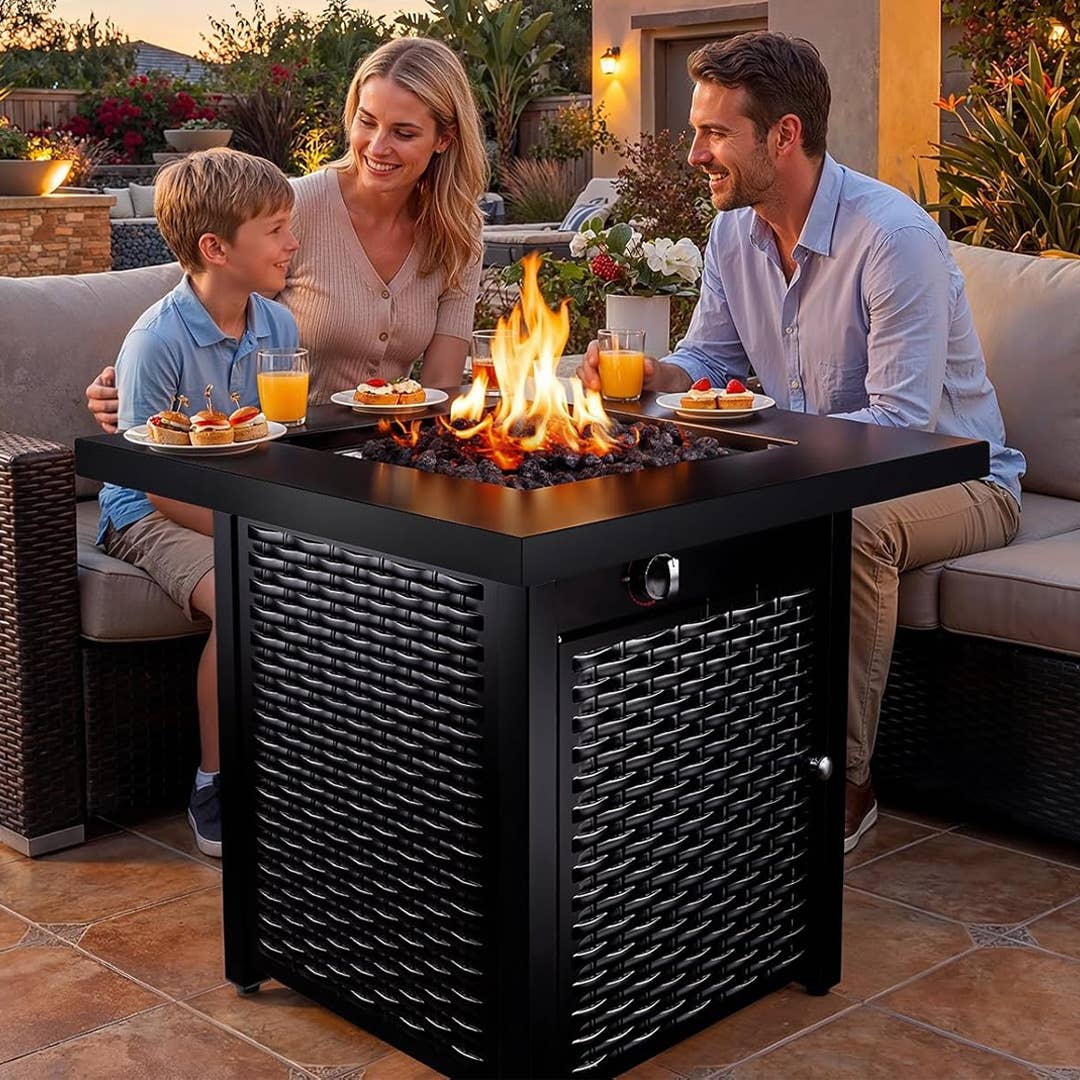
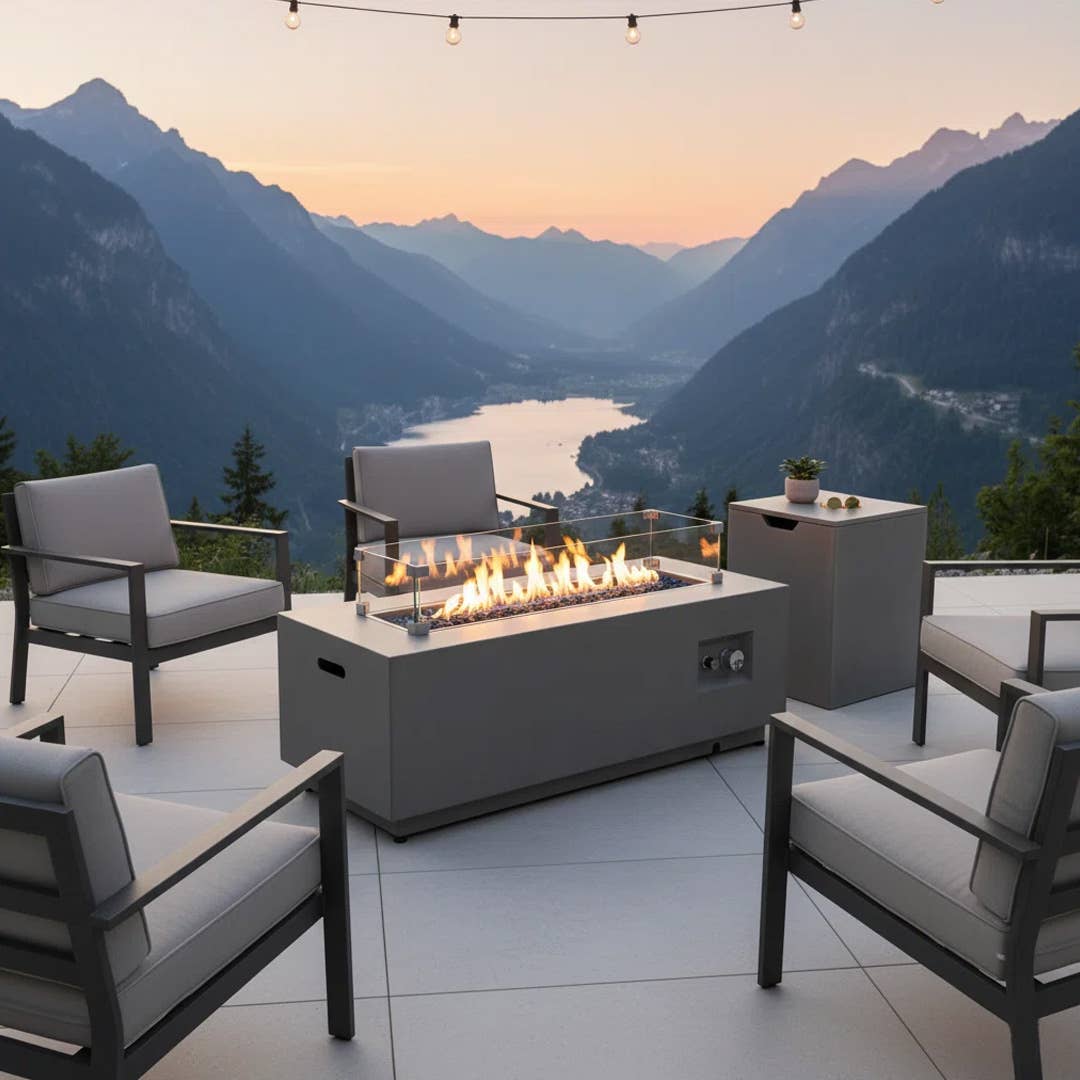
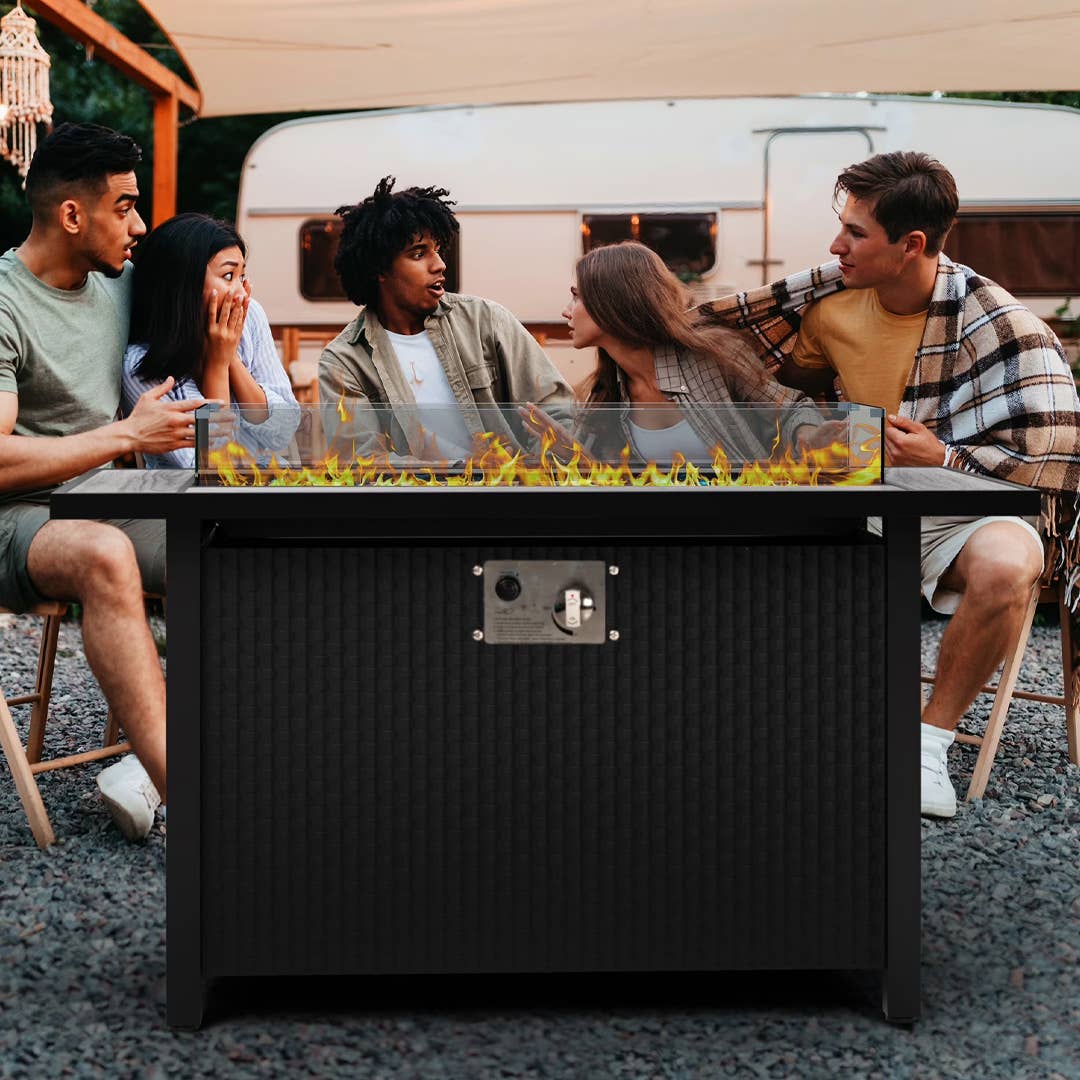
Fire tables function as furniture with a built in fire pit. The fire pit sits in the center of the table, and there’s surrounding surface space or a wide ledge designed for drinks and food. Typically, fire tables are powered with propane or natural gas, since wood would send soot, ash, and sparks all over your refreshments, and they power up and down with the simple push of a button. More often than not, they have adjustable flame heights so you can customize your blaze to be exactly what you want it to be. The multifunctional decorative piece provides a great amount of heat as well as an additional space for you or your guests to enjoy. Many models often come with a flat top that can be put on to cover the fire pit and convert the space into a larger table.
Ciays 28-Inch Propane Fire Pit
Latitude Run Rectangular Fire Pit Table
Walsunny Fire Pit Table
Fire bowls
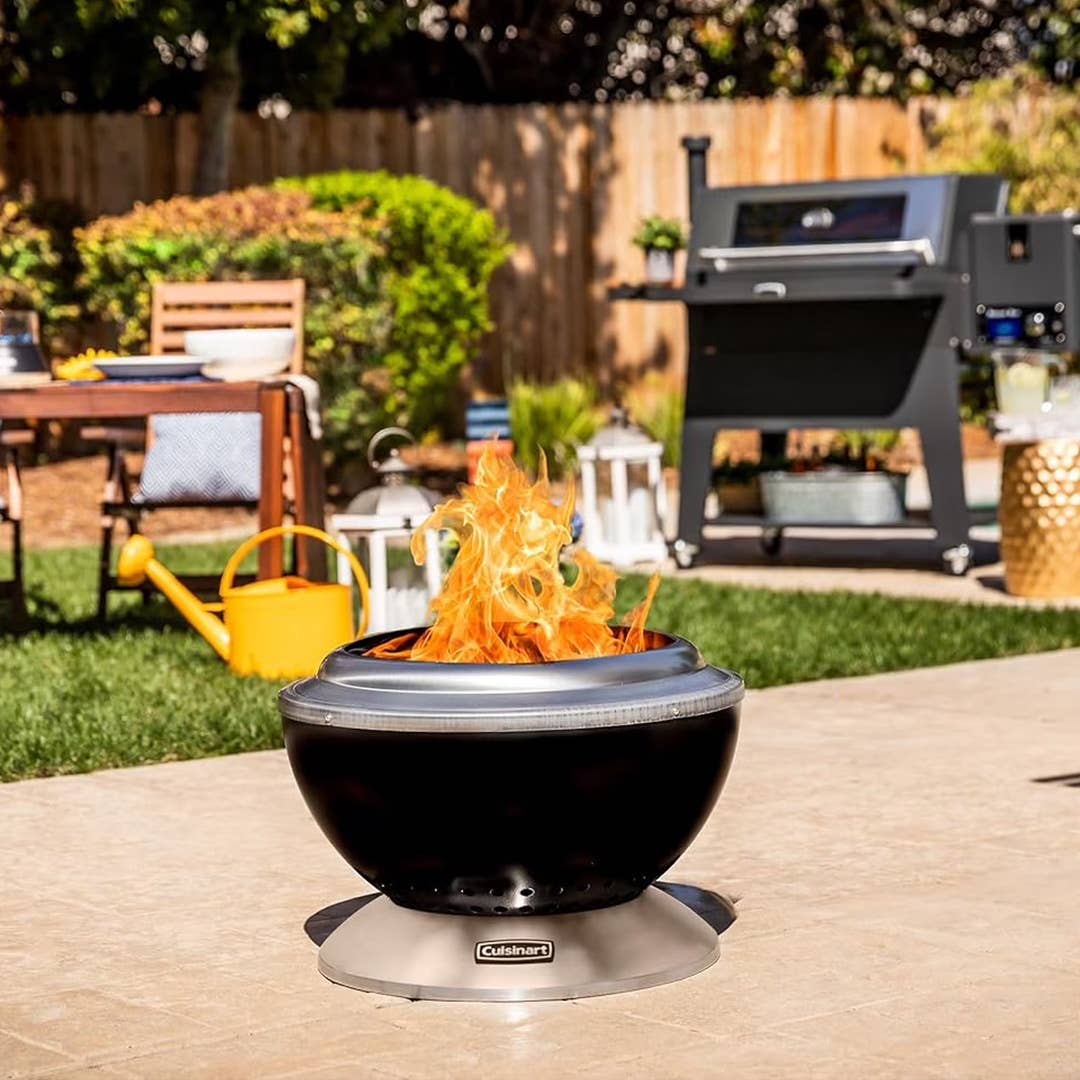
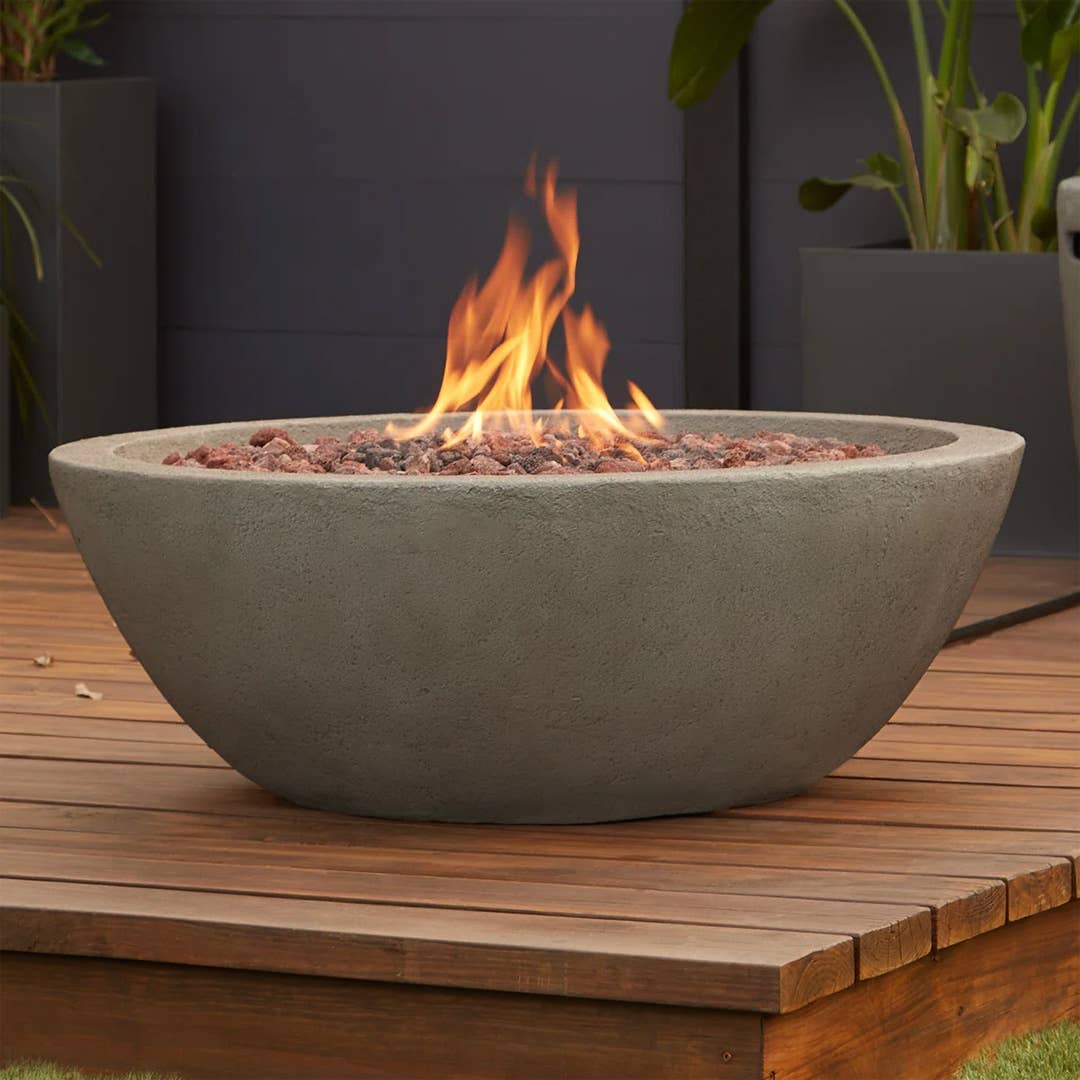
Due to their more petite size and elevated design, fire bowls offer a more controlled heat output. While they don’t provide the heat that a larger fire pit would, they emit a more concentrated flame that still warms a small area very well — and that’s what they’re perfect for. Not everyone’s outdoor space has the room for a massive fire pit, and a fire bowl is the ideal solution.
Many models are powered by natural gas, although there are propane, wood, and gel fuel models also available, and can ignite either via an automatic igniter or by opening the gas valve and lighting a match. What really sells for most folks is their sleeker, more chic design that often adds an elevated element of decor to an outside space.
Cuisinart Fire Pit
Riverside Fire Bowl
Sterno CandleLamp Tabletop Firepit
Chimineas
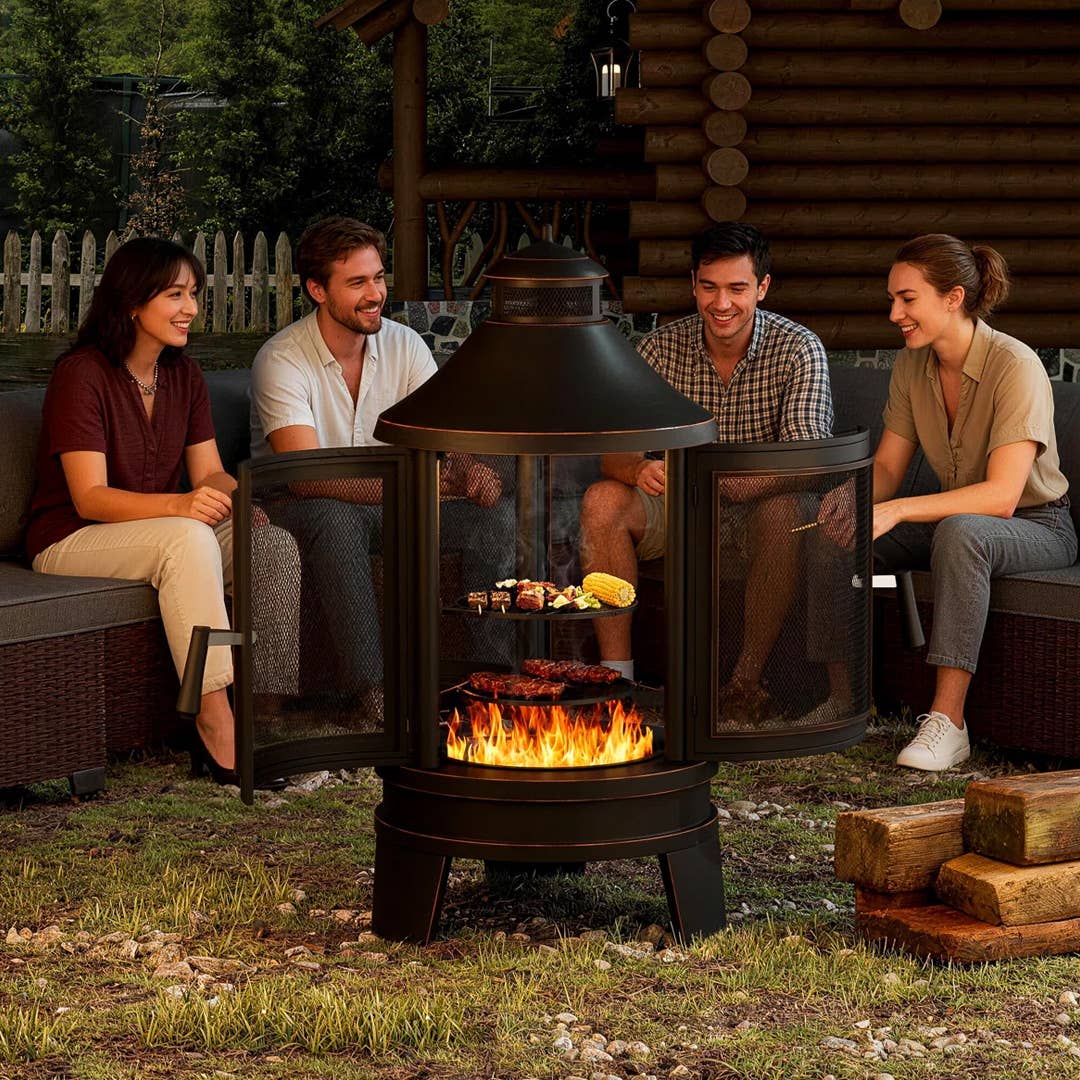
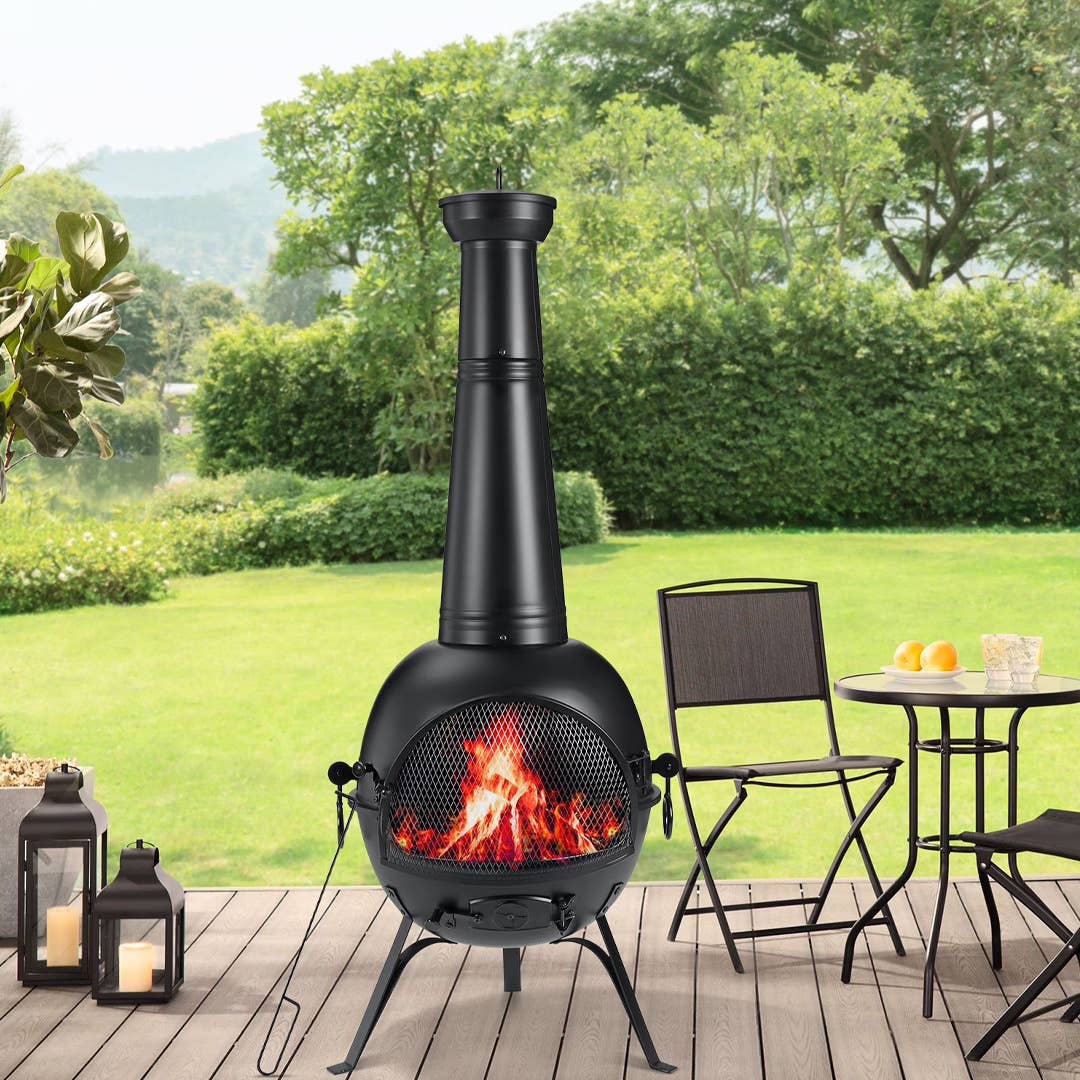
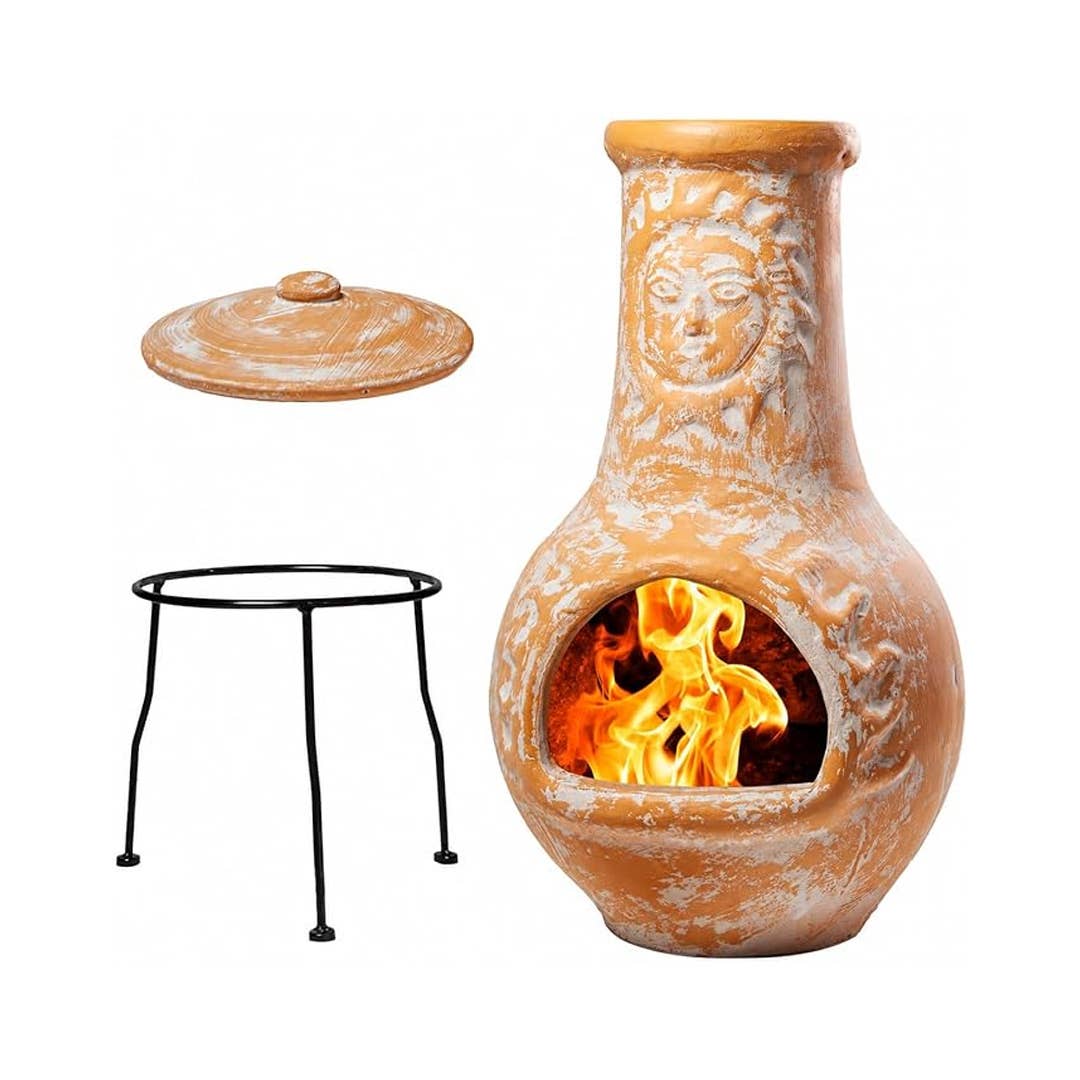
As an enclosed fire pit, chiminea’s rely on a draft to fuel the flames. Powered primarily by wood, the enclosed fire pit has a chimney where hot air escapes as it rises. The fire gets its power from the cold, dense air from the outside opening, drawing in fresh oxygen to fuel the flames, as the hot air rises and escapes through the chimney top.
Chimineas have a very classic, traditional design but they can also be quite big. The chiminea emits smoke, but effectively keeps it away from you because of the vertical chimney. However, because the firebox sits very specific and is enclosed almost entirely except around one focal entrance point, heat is emitted in a very special, directional way instead of 360 degrees like a fire pit or fire bowl. The enclosed wall, however, also makes a wonderful wind and weather shield so you can keep the fire burning brightly even when the breeze picks up. Praised for their safety since it has a smaller opening compared to the wide-open fire pit, the one big downside to chimineas is that because they are older, more traditional ones made from terracotta or clay can be more susceptible to damage after a few years. Meanwhile, the newer, metal ones can be prone to rust if not protected with a weatherproof coating so keep that in mind when shopping.
Red Barrel Studio Chiminea Outdoor Fireplace
Singlyfire Chiminea
Wiosi Clay Chimnea
Which one is right for me?
Fire tables, bowls, and chiminea’s all have their perks, but other than appearance, power source should certainly be one of the biggest things to consider when purchasing. If you’re someone who wants the woodsy, smoky scent of a bonfire, then something that uses wood as its primary power source is your ideal model. If you prefer convenience over everything, something that takes natural gas is right up your alley. Of course, the upfront costs are pricey but long term, the ease of use is worth it in spades. Propane-powered firepits are also a great option, but with the price of gas going for what it does these days, if you believe you’ll be using it frequently, you might want to opt for something a bit more affordable in the long term. However, if you plan to be more sporadic in your use, one or two standard propane tanks might get you through an entire season. And if you like something classic, a chiminea can do you no wrong. Consider what you priorities most and go from there when making your decision. For further guidance, don’t hesitate to ask a contractor or outdoor living specialist.
How do fire pits work?
When it comes to choosing the right fire pit for your home, you need to understand different ways they operate. There are four types of fuel sources that fire pits primarily use: wood-burning, propane gas, natural gas, and gel fuel.
Wood-burning
The traditional wood-burning models use kindling and dry wood to ignite a fire. Typically, logs are stacked on top of one another in a teepee or log cabin shape and, with the help of the open air surroundings, the fire is ignited and burns as long as you continually poke the coals and add more logs as they burn.
The upside to this option is that you get that traditional, authentic woodsy campfire smell, real crackling flames, and a very high heat output. However, these are harder to clean up because you’re dealing with ash and soot and sometimes the smoke can be overwhelming. These are super ideal for those on a budget, since they’re typically more affordable than other versions, and they’re perfect for those who want to roast marshmallows, hot dogs, or other foods over the fire. They’re also lightweight and fairly portable.
Propane gas
Just like a grill needs a propane tank to work, so does a propane gas-powered firepit. Propane gas firepits typically ignite with the simple push of a button as long as a tank is hooked up. Not only are they cleaner to use and maintain, but propane flames are easily adjustable — meaning if it seems super intense or hot you can easily turn it down. Another bonus? The fire is easily extinguished whenever you’re done using the pit. Just turn it off.
These models produce a steady, consistent flame with no smoke, ash, or flying sparks, but generally it’s a less intense heat than a wood-burning model would emit. It can also be inconvenient replacing the propane gas tank frequently if you use it a lot, and it can be a bit costly depending on your frequency of use. They are a great option for wooden decks, as are natural gas firepits, because they do not spark or spit so the risk of fire incidents is low.
Natural gas
Natural gas firepits are the ones that cost more upfront to set up but can offer a higher resale value for your home in the long run. They require a bit of work originally because they pull fuel directly from your home’s main gas line. That said, although the initial installation can be pricey, the convenience and ease of use that they offer is unmatched.
Not only do you not have to worry about lugging heavy propane tanks back and forth or prodding a wood-burning fire constantly, but natural gas-powered firepits give you an endless supply of fuel that produces 99% fewer emissions than wood and offers lower operating costs overall. There’s no soot or ash to make a mess or heavy smoke smells to deal with (if that’s something you don’t like) and because it’s a constant fuel supply, it’s much cheaper to run. They typically have lava rocks, ceramic logs, or tempered fire glass in the center to obscure the burner for aesthetic reasons and better distribute the gas evenly to create a natural looking flame. When you go to sell, the permanent fixture can be very attractive for potential buyers.
Gel fuel
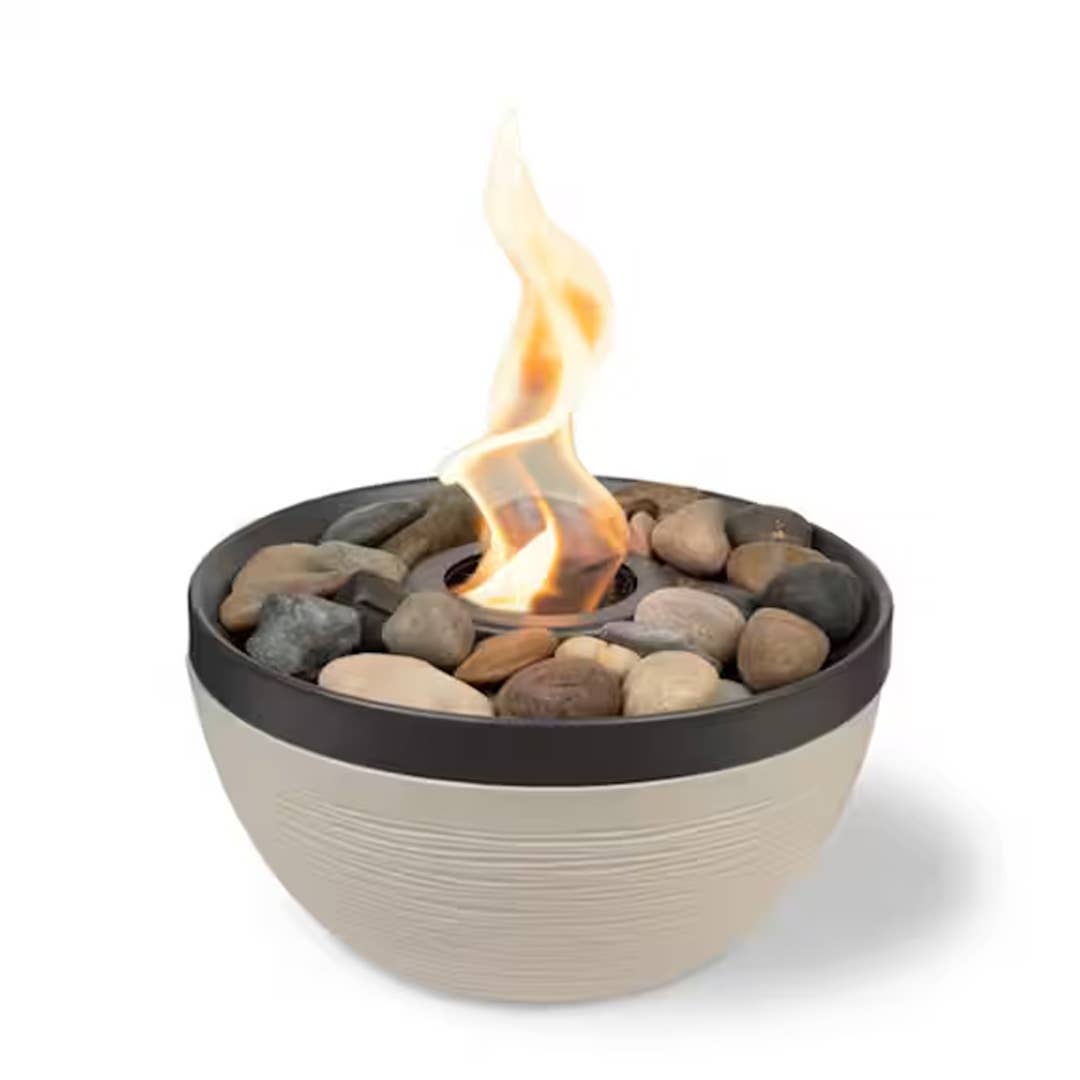
A popular choice for firepits on smaller patios and decks, the smokeless gel-fueled firepits use pre-packaged, alcohol-based gel canisters, rather than wood or gas, to power the fire. Typically made from a semi-solid gel that has isopropyl alcohol or ethanol with thickening agents, it comes in disposable metal or plastic cans and is placed into the firepit and ignited with a lighter.
It burns cleanly, producing no smoke or carbon monoxide, and because it doesn’t require vents, it’s ideal for smaller areas and even indoor — but we truly caution with the latter. Heatwise, they don’t emit as much warmth as the other options and they can be costly with the constant replacement of gel fuel cans. However, they are eco-friendly and spill-friendly, and you can even fire citronella-infused cans that help keep bugs away at the same time.
TheStreet Shopping is your guide for shopping insights and advice. We look beyond the price tag to find the best value in home, tech, and wellness gear based on product features and real-world use.