
Investors spent the better part of this year waiting for the stock market to finally crack in a big way.
Naturally, every pullback then feels a lot bigger than it actually is.
However, in a recent Bloomberg interview, Goldman Sachs’ John Flood said he isn’t ready to call the latest dip a warning sign.
For perspective, according to Reuters, on Friday, June 5, 2026, Wall Street was served a massive haymaker, with the S&P 500 plummeting 2.64%, the Nasdaq dropping 4.18%, and the Dow sliding 1.35%.
That tremendous carnage wiped away $1.8 trillion in value from the S&P 500, while the Nasdaq suffered the biggest one-day drop in its rich history.
The selling was driven primarily by a brutal chip stock rout, a stronger-than-expected May jobs report stoking rate-hike fears, and AI spending concerns.
Nevertheless, Flood feels that despite the market feeling overstretched, the positioning underneath doesn’t look reckless.
For some context, the S&P 500 has already reached 24 all-time highs, despite the tremendous concerns over inflation, Iran, private credit, and interest rates that continue to hang over Wall Street.
That sounds like a precarious backdrop, but Flood sees it quite differently.
Consequently, Goldman’s equity desk remains mostly constructive, with Flood saying the S&P 500 is expected to reach 8,000 and beyond this year.
That take is in line with Citibank’s team, which also raised the bank’s year-end 2026 S&P 500 target to 8,100.
Key S&P 500 record-close milestones in 2026
Adding to Flood’s comments, as he said, the S&P 500 notched 24 record closing highs in 2026, including its first finish above 7,600 on June 2, before the June 5 selloff.
- January: The index pushed further into record territory, extending its illustrious 2025 rally.
- April: The S&P 500 cleared the 7,000 level for the first time.
- May 14: The index closed above 7,500 for the first time, a major psychological milestone, according to Forbes.
- June 2: The S&P 500 closed at 7,609.78, its first finish above 7,600 and its 24th record high of 2026.
Goldman says the market still has room to run
Flood believes the latest market pullback isn’t the start of a deeper break, but more of a buying opportunity.
He feels the stock market remains “very healthy” as demand for stock offerings remains strong, especially from institutional investors.
According to a SIFMA report, U.S. stock issuance jumped to $122.4 billion through May 2026, up 34.3% year over year, while IPO issuance skyrocketed 172.8% to $34.2 billion.
More Wall Street:
- JPMorgan resets S&P 500 price target for the rest of 2026
- Vanguard challenges the S&P 500 as a one-stop strategy
- Goldman Sachs resets Broadcom stock forecast
Even with the S&P 500 logging double-digit all-time highs, Flood feels Goldman remains mostly constructive and expects further gains ahead.
Moreover, Flood doesn’t see investors acting with reckless FOMO and, in fact, sees discipline.
He links this to Goldman’s brokerage data, which shows hedge funds staying long on single stocks linked to AI and technology but also heavily hedged through shorter macro products.
That creates a much healthier setup.
There’s still plenty of skepticism, cash on the sidelines, and short exposure that can continue fueling another leg higher.
Magnificent 7 six-month and YTD returns
- Nvidia (NVDA): 6-month return 12.58%; YTD return 10.11%
- Tesla (TSLA): 6-month return -14.07%; YTD return -13.06%
- Apple (AAPL): 6-month return 10.45%; YTD return 13.26%
- Amazon (AMZN): 6-month return 7.19%; YTD return 6.59%
- Meta Platforms (META): 6-month return -11.79%; YTD return -10.09%
- Microsoft (MSFT): 6-month return -13.38%; YTD return -13.46%
- Alphabet (GOOG): 6-month return 13.64%; YTD return 16.57% Source: Seeking Alpha
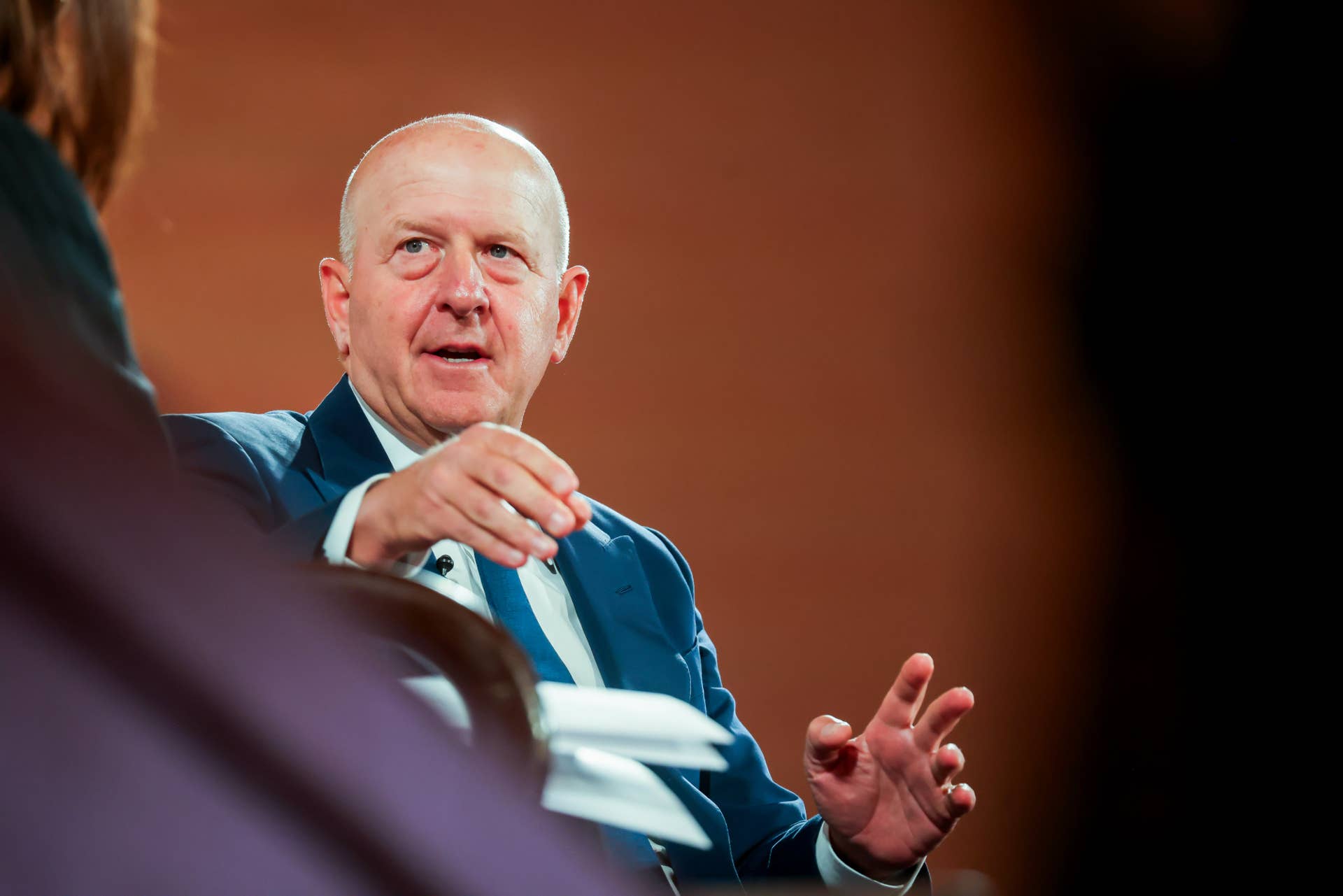 Goldman Sachs’ John Flood says recent stock market weakness may create opportunities for investors.
Jobs and earnings are the real warning signs
Flood’s big concern, though, is centered around the labor market and earnings potentially cracking.
He argued that retail investors will continue scooping up stocks, especially with the big IPOS coming before the year-end.
“So really, you have to watch employment, you have to watch jobs. And until we start to see job destruction, that retail bid will likely remain a healthy constant in the marketplace.”
Additionally, Goldman’s data shows the last time retail investors were net sellers of U.S. stocks for over a week was in March 2020, during Covid.
That makes the employment situation critical to watch, because without job destruction, the retail bid is likely to remain steady.
The other big concern is earnings.
Flood makes the case that broad disappointment across the S&P 500 will likely be “highly concerning,” but added that Goldman hasn’t seen much evidence of that.
For perspective, I covered Citibank’s S&P 500 reset, where the analysts’ case was built entirely on the strength of earnings, with the team expecting S&P 500 index-level earnings to jump to an eye-popping $350 in 2026.
That’s why Flood feels fundamentals still justify the rally, and Goldman sees a strong path for the S&P 500 to reach 8,000 and beyond this year.