
Jim Cramer feels the market’s setup has taken a turn for the worse, and the latest surge in oil prices is part of the problem.
The “Mad Money” host, in a recent segment, warned its viewers that higher energy costs are landing at the worst possible time for lower-income Americans, reeling from inflation, tariff-related price increases, and cuts to food stamps.
He summed it up in a succinct seven-word verdict, calling high oil prices “the straw that broke the underclass’ back.”
Apart from the obvious, Cramer is alluding to something a lot broader.
Cramer has been bullish because he felt the market could benefit from one or two interest-rate cuts this year.
In fact, as I covered in a recent article, Cramer went back and forth with President Donald Trump’s top economic adviser, Kevin Hassett, over how the administration’s policies are crippling working-class Americans.
However, after a stronger-than-expected jobs report, he said that the case weakened sharply. Cramer even said investors may now have to consider the possibility of a rate hike, not a cut, to cool the economy.
Similarly, Bank of America analysts are urging investors to take profits, arguing that the easy part of the rally is clearly over.
That leaves the market in a precarious situation, where consumers are stretched, oil prices are rising, and Cramer’s “biggest bullish prop” is gone.
Oil prices add pressure where it hurts
Cramer’s concern is well taken, as energy costs don’t just hang around on Wall Street.
They move through gas pumps, grocery bills, and delivery costs and eventually cut through household budgets.
- Before the Iran escalation, Brent crude was around $69.36 a barrel; by June 13, it settled at $74.23, up 7%, according to Reuters.
- Brent briefly hit $78.50, its strongest level since Jan. 27, Reuters reported.
- By June 19, Brent closed at $78.85, its highest close since Jan. 22, as the Israel-Iran conflict intensified, according to Reuters.
- The latest CPI report showed inflation rose only 0.1% in May, partly because gasoline fell 2.6%, according to the Bureau of Labor Statistics.
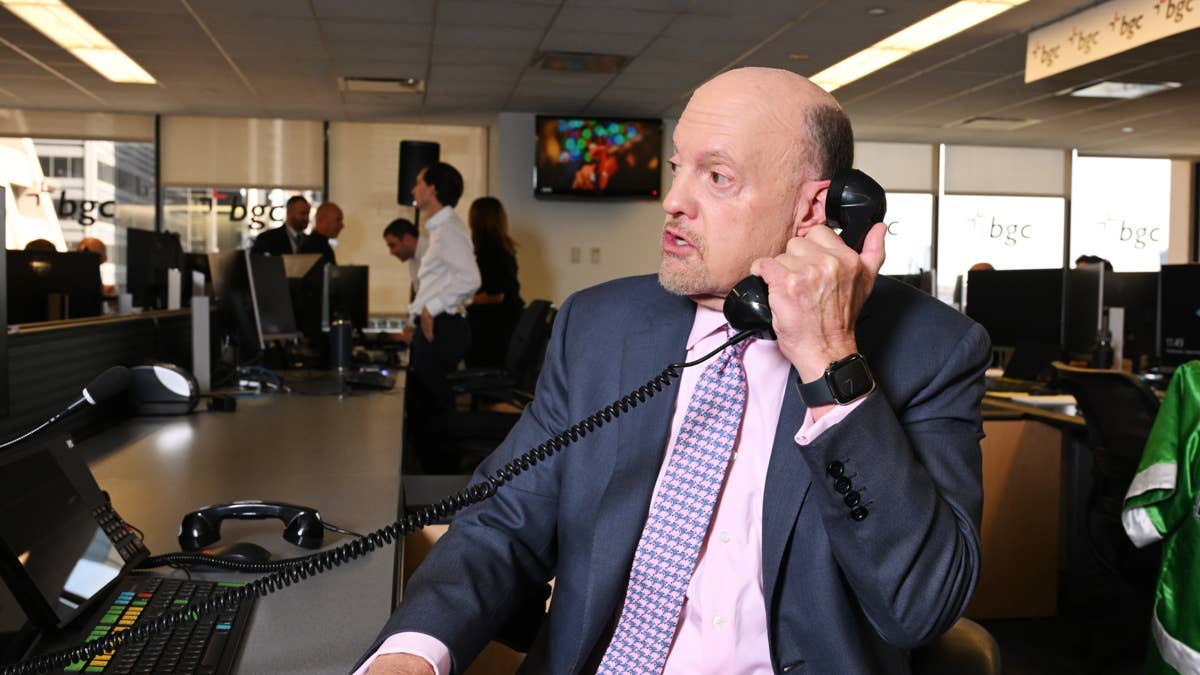 Jim Cramer argues rising oil prices are further straining American consumers’ already-overburdened budgets.
Slaven Vlasic / Getty Images
Jim Cramer says oil prices pushed stretched consumers too far
Cramer’s oil-price warning had everything to do with timing.
He laid out the case that many of the lower-income Americans were struggling to carry the pressure even before energy prices surged.
Inflation had already made daily life more expensive. Tariff-related price increases were still working through the economy.
More Wall Street:
- JPMorgan resets S&P 500 price target for the rest of 2026
- Vanguard challenges the S&P 500 as a one-stop strategy
- Goldman Sachs resets Broadcom stock forecast
Cramer also pointed to reduced health care cost protection and food-stamp cutbacks as added burdens for households.
He then called rising oil prices “the straw that broke the underclass’ back.”
Put simply, he said higher energy costs were the final hit for people already struggling to pay for basics. Oil does not just affect investors. It affects gas prices, transportation, delivery costs, food prices, and almost every household budget.
Related: Jim Cramer’s net worth: How much does ‘Mad Money’s’ stock-picking superhost make?
Cramer also connected that pressure to what major discount retailers have been saying. Walmart, Dollar General, Dollar Tree, and Five Below have all talked about a stretched consumer, and he said those companies are dealing in facts that investors cannot ignore.
“The lower-income consumer is more budget-conscious and perhaps navigating financial distress,” Walmart CFO John David Rainey recently said during the company’s Q1 2027 earnings call.
Dollar Tree CEO Mike Creedon tied the issue directly to gas prices and value-seeking behavior. “Customers are value-focused and definitely prioritizing affordability, convenience, and gas-saving trip efficiency,” he said.
Cramer warns investors the market’s bullish case is weakening
Cramer’s broader argument is that the support from the Federal Reserve cuts has faded away completely.
He said the stronger-than-expected jobs report was “awful for the bulls” because a solid labor market makes it harder for the Fed to justify cutting rates.
Cramer had been hoping for one or two cuts this year, which could have helped stocks keep moving higher. Instead, he said the data were strong enough that investors may even have to consider a rate hike, not a cut.
Cramer said he follows the old Marty Zweig rule: “You can’t fight the Fed.” When the Fed is cutting rates, it’s a green light for stocks. But when rate cuts are off the table, investors need to be less bullish.
He also pointed to other risks.
The SpaceXIPO could divert capital from the rest of the market. More hyperscaler stock offerings could do the same. Apple, one of the market’s key leaders, was also under pressure. Together, Cramer said these factors represent “more negativity” for him to handle.
Related: Veteran analyst pinpoints critical level for gold prices