
A year ago, a price target of 7,700 for the S&P 500 by the end of 2026 would have sounded aggressive to most strategists. By May, the index had already rallied 8% for the year, and the analyst behind that target found himself in an unusual position: his own forecast was starting to look conservative.
“I’ve been bullish, but not bullish enough,” Ed Yardeni told CNBC’s Squawk Box. The president of Yardeni Research raised his year-end target from 7,700 to 8,250, a level that sat 11.5% above the index’s close that Friday at 7,398.93.
The S&P 500 earnings number Yardeni called “phenomenal”
Yardeni’s reasoning came down to one word: earnings. “The earnings estimates of analysts have been phenomenal. I’ve never seen anything like it,” he said.
The first-quarter 2026 earnings season had just wrapped up, and Yardeni described it as “gangbusters.”
More stocks:
- JPMorgan has stark message for oil, stock investors
- SpaceX IPO gives Elon Musk net worth number that stuns Wall Street
- Cathie Wood buys $529.7 million of popular new stock
The scale of the upward revisions is what stood out to him. Analysts were estimating roughly 23% earnings growth for the S&P 500 across all of 2026, a figure Yardeni called “extraordinary.”
He raised his own 2026 and 2027 earnings-per-share forecasts to $330 and $375, up from $310 and $350, and lifted his revenue-per-share estimates by $100 for both years to $2,200 and $2,300.
S&P 500 target hike reflects “melt-up” stock market call
Yardeni has used the phrase “earnings-led meltup” to describe the current rally, distinguishing it from rallies driven primarily by sentiment or monetary stimulus. “We’ve never seen consensus earnings expectations rise so quickly for the current and coming years as they have in recent months,” he wrote in a note accompanying the target hike, according to Investing.com.
The 8,250 target was the highest among major Wall Street forecasters at the time, ahead of HSBC‘s 7,650, according to Fortune. Yardeni also raised the subjective probability he assigns to his “Roaring 2020s” scenario, in which the current decade mirrors the economic expansion of the 1920s, to 80% from 60%, while keeping his combined recession and bear-market odds unchanged at 20%.
The pattern behind Yardeni’s track record on these calls:
- This is not the first time Yardeni has revised a target upward after the market outran his own forecast. In December, he had floated the S&P 500 reaching 10,000 by the end of the decade as part of the same “Roaring 2020s” framework, and by May was suggesting that milestone “might arrive ahead of schedule,” Benzinga reported.
- The current target represents a sharp reversal from where Yardeni stood as recently as March, when he cut his S&P 500 targets for both 2025 and 2026, citing the risk that Trump administration tariff policy could trigger stagflation, according to Benzinga. At that point his best-case 2026 target had fallen from 8,000 to 7,200.
- Yardeni has previously argued that a bull market needs skeptics to keep running, noting that the departure of prominent bearish voices, including JPMorgan’s Marco Kolanovic and Piper Sandler’s Michael Kantrowitz from publishing year-end targets, could itself be read as a contrarian warning sign rather than confirmation of his thesis.
- Even Yardeni’s own framing carries a built-in caution. He has acknowledged that melt-ups are historically associated with the dot-com bubble of the late 1990s, where the same dynamic of accelerating earnings expectations and rising prices eventually reversed sharply, though he maintains the current cycle is different because the gains are tied to actual reported profits rather than speculative valuation alone.
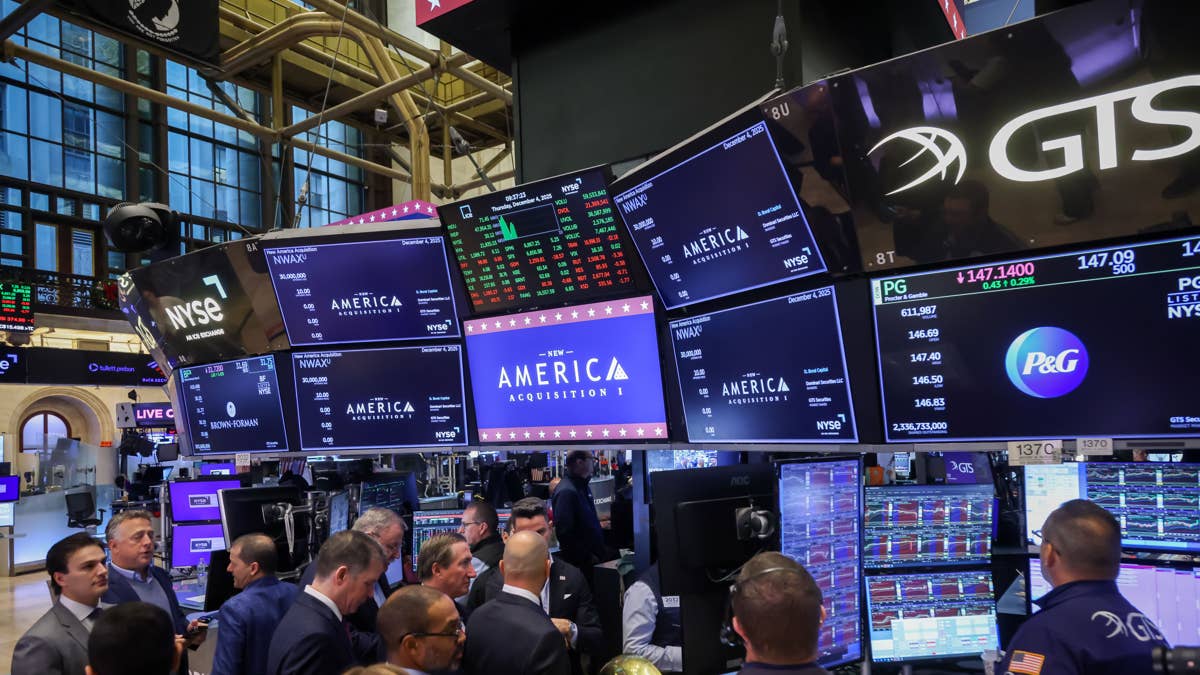 The first-quarter 2026 earnings season that prompted Yardeni’s revision was unusually strong by historical standards.
Nagle/Getty Images
The Q1 earnings season behind the S&P 500 rally
The first-quarter 2026 earnings season that prompted Yardeni’s revision was unusually strong by historical standards. Roughly 89% of S&P 500 companies that had reported by early March beat earnings-per-share estimates, a rate above both the five-year and ten-year averages. By the time the season wrapped in May, the breadth of the beats had only widened.
That breadth matters because it distinguishes this rally from earlier 2026 moves driven by a narrow group of mega-cap technology stocks. Yardeni’s framing has consistently emphasized that the earnings growth he is tracking extends beyond the largest companies, which is part of why he describes the current environment as a genuine “meltup” rather than a continuation of the same concentrated trade that has dominated headlines for much of the AI boom.
What it means for stocks as the S&P 500 keeps climbing
The path from Yardeni’s targets over the past 18 months traces a story of a forecaster repeatedly catching up to a market that keeps exceeding even bullish expectations. From 5,400 to 5,800 to a tariff-driven cut to 6,400, and now to 8,250, each revision has moved in the direction of the prevailing trend rather than against it.
That pattern cuts both ways for investors. A forecaster whose targets keep rising alongside the market provides confirmation for those already invested, but it also raises the question of how much of the good news is already reflected in current prices by the time a new target is set. Yardeni’s own answer is that as long as earnings estimates keep being revised upward at the pace seen in recent months, the market has room to keep validating even an aggressive target before the next one becomes necessary.
For now, the 8,250 target stands as the highest of any major Wall Street forecaster, but Yardeni’s own history suggests it may not stay that way for long if the earnings trend he has described continues. Each previous revision came not because his thesis changed, but because the market validated it faster than his numbers could keep up. Whether 8,250 represents a ceiling or simply the latest checkpoint in that pattern is the question investors will be watching as the rest of 2026 unfolds.
Related: JPMorgan doubles down on stock market message for 2026