
Driving into a gas station to fill your car’s gas tank is becoming less painful by the day,
But not painless. Not yet anyway.
Gas prices have fallen below $4 a gallon for the first time since the end of March in much of the United States and about 13% on average since peaking around $4.57 in mid-May, using data from AAA and GasBuddy
The possibility of a cease-fire between the United States and Iran taking effect over the weekend and the Strait of Hormuz reopening in the next month or so should mean this: Lower oil prices and lower gas prices are ahead.
The U.S. National Average, by GasBuddy’s calculation, was about $3.95 a gallon on June 18. AAA’s estimate was $3.999.
GasBuddy’s lowest state-wide average was $3.382 in Indiana. AAA’s lowest-priced state was also Indiana, with their estimate at $3.399.
The most expensive states, according to both AAA and GasBuddy, are still Hawaii, California, Washington, Alaska (all above $5 a gallon), and Oregon.
So how low could retail prices fall?
Perhaps to $3.50 in the next few weeks as crude oil works its way down to $68 a barrel, says John Kilduff, a veteran oil and gas trader in New York. Doesn’t matter if you’re watching GasBuddy or AAA Fuel Prices.
Crude settled at $76.60 a barrel on June 18. Kilduff picks $68 as a possible landing point because that’s basically where it settled on Feb. 27, just before the first missile attacks on Iran.
Related: Goldman Sachs quietly resets oil price forecast for 2027
But there’s also a good chance they could go much lower. AAA’s data shows the national price on Dec. 31, 2025, at $2.839. GasBuddy’s year-end price was $2.82.
So, in practical terms, this is what we’re talking about. At $3.50 a gallon, a 15-gallon fill-up might cost you $52.50.
Here’s how that would compare.
- Using the June 18 price of $3.96 a gallon, your cost would be $59.40. (It would be $84 in California.)
- Assuming the peak May price of $4.56 a gallon. Cost of a 15-gallon fill-up: $68.40. (About $91.60 in California)
- Assuming the price on Dec. 31, 2025 price was $2.84, the fill-up cost would be $42.60. (The California average was close to the national average, according to GasBuddy data.
So, yes, lower gasoline prices would be meaningful to anyone who needs a motor vehicle to go to work, take the kids to school, do routine shopping, take the family on a vacation.
Lower oil and gasoline prices, however, won’t cheer investors. They’ve already seen stocks of oil companies like Chevron, Exxon Mobil and Shell come down.
Will all this happen?
Probably to some degree. History says that a sudden price shock that hits a sharp peak, depresses demand, and then tends to fall quickly, Kilduff says.
If you want some history, look at what happened in 2022. Oil prices jumped after Russia invaded Ukraine. AAA’s average gas price shot up, peaking at $5.016 a gallon on June 14, 2022.
By September, the price had fallen 23.7% to $3.829 and ended the year at $3.195. That was down more than 36% from the June peak
Gas prices actually fell in 2023, 2024 and 2025. And, going into 2026, analysts had projected a glut of oil in 2026 and maybe lower gas prices.
What changed in 2026: the U.S.-Israel war with Iran.
And what happens in the next months will dictate whether Kilduff and others are right.
To start, the Strait of Hormuz must reopen. Before the war, about 120 tankers a day passed through the strait, distributing about 20% of the world’s crude oil to global markets.
In their June 17 Energy Weekly report, BofA Securities research estimated production lost since the start of the war has averaged 11-to-14 million barrels of oil per day for months.
It will take time to get the Strait open. “The backlog of stranded vessels and the need for crew changes and rest mean shipping patterns won’t return to normal for weeks if not months,” The Wall Street Journal noted on June 18.
Iran has to remove mines and move its naval vessels to the sidelines.
Lastly, most, if not all, countries located on the Persian Gulf have had to shut in production, or military attacks have damaged facilities. They also have to get their wells and processing facilities back up to pre-war levels. They can’t do that until ships are taking their oil, liquid natural gas and fertilizer components away. That could take time, experts told Fortune Magazine.
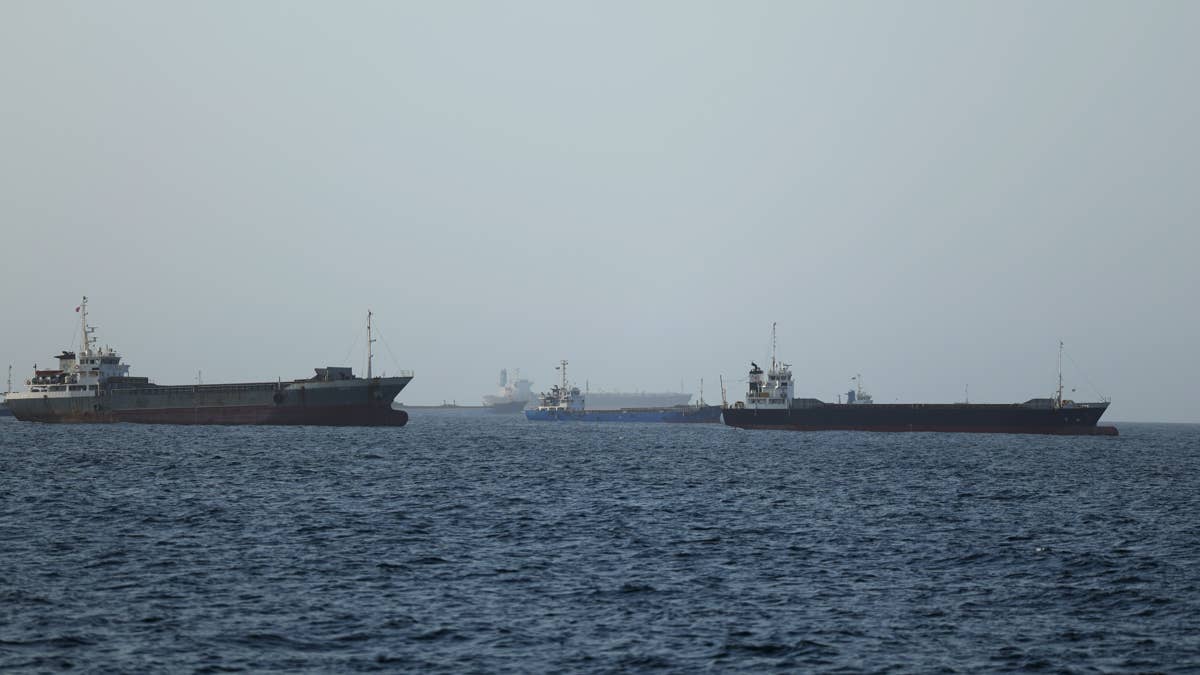 Ships waiting to transit through the Strait of Hormuz. Getty Images
Shady Alassar / Anadolu / Getty Images
The risks to this cheery scenario
In a word: Many, including:
Maybe the war won’t end. Israel and Hezbollah were fighting on June 18, and a meeting in Switzerland between a team led by Vice President J.D. Vance and Iranian officials to set up the negotiations was cancelled very abruptly because of renewed fighting between Israel and Iran’s Lebanese ally Hezbollah.
Russian oil exports are disrupted. Pulling more Russian oil from global markets would probably push oil prices higher, Kilduff says. This could happen as Ukraine continues to attack Russian oil production and distribution facilities. Ukraine was able to attack an oil refinery this week.
Restocking strategic reserves will take time and money. Many countries, including the United States and China, tapped their petroleum product reserves to cushion the blow of supply shortages and sharply higher prices. Once satisfied that global oil markets are stable, they may begin rebuilding their reserves. That could put upward pressure on prices, the BofA report argues.
A rising U.S. dollar. Carley Garner, a Las Vegas-based commodities trader (and a contributor to theStreet Pro, notes that the dollar is rising this year after a 9.4% decline in 2025.
A rising dollar reflects the effects of huge federal deficits on bonds and interest rates. If unchecked, rising rates would force weigh on oil-and-gas production, not to mention housing, retail sales and the economy.
Related: Dallas Fed president delivers oil markets reality check