
An iconic supermarket chain is closing stores in key markets, eliminating grocery store choices for local residents as companies close underperforming locations.
Grocery chains have faced economic challenges such as rising labor and product costs driven by inflation, fierce competition from discount big-box retailers like Costco, Walmart, and Target, and expanding grocery e-commerce services that take business away from brick-and-mortar supermarkets.
The result of these local supermarket closings has been the public’s higher reliance on regional big-box stores and the loss of local grocer conveniences.
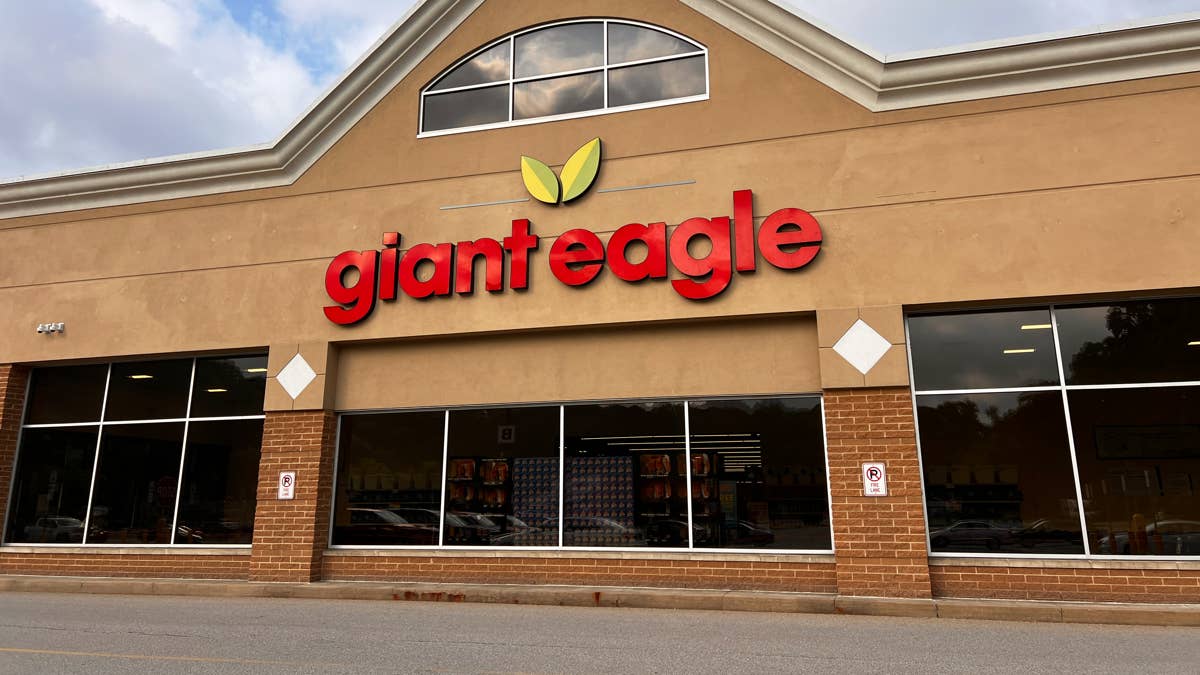 Giant Eagle closes store locations in Lancaster and Columbus, Ohio.
Giant Eagle closes Lancaster store
95-year-old supermarket chain Giant Eagle Food & Drug said it will close its Lancaster, Ohio, location, which opened over 15 years ago, sometime this summer, months after closing its location on East Broad Street in Columbus, Ohio, in April.
Lancaster is located about 31 miles from Columbus.
The company did not set a closing date for its Lancaster store at 1394 Ety Shops Way but said it expects it to close sometime in the summer of 2026. It also said it would shutter its pharmacy on June 17, according to the Lancaster Eagle Gazette.
Customer prescriptions transferred
Giant Eagle’s Lancaster store customers’ prescriptions were transferred to the Kroger pharmacy at 1621 N. Memorial Drive in Lancaster.
The grocery company said the store’s 62 employees may have the opportunity to work at nearby Giant Eagle stores, according to The Columbus Dispatch.
Closing difficult and necessary
“This was a difficult, but necessary business decision made after careful review of store operations,” said Dan Donovan, Giant Eagle senior director of public relations, said.
“We are grateful for our team members and neighbors who have supported the store over the years, and we look forward to continuing to serve customers at our nearby Central Ohio locations,” Donovan said.
Columbus Giant Eagle shuttered
Giant Eagle also closed its supermarket and pharmacy at 6867 Broad Street in the Columbus Blacklick area on April 11. The supermarket chain operated the location for 20 years and employed 95 workers, according to the Dispatch.
The supermarket chain subsequently closed its 1701 Lincoln Highway location in North Versailles, Pa., in Allegheny County on May 31, according to WTAE-TV in Pittsburgh.
Giant Eagle stores closing:
- Giant Eagle, 1394 Ety Shops Way, Lancaster, Ohio. Source: Lancaster Eagle Gazette.
- Giant Eagle, 6867 Broad Street, Columbus, Ohio. Source: Columbus Dispatch.
- Giant Eagle, 1701 Lincoln Highway, North Versailles, Pa. Source: WTAE-TV.
Team members will be offered jobs at other area Giant Eagle stores in Pennsylvania, the company said. Giant Eagle did not give a reason for the closing. It only said the closing was “difficult, yet necessary,” WTAE reported.
Giant Eagle, which was founded in 1931, operates over 200 food and pharmacy retail stores in Western Pennsylvania, North Central Ohio, northern West Virginia, Maryland, and Indiana.
Giant Eagle Sold GetGo
The supermarket operator on June 29, 2025, completed the sale of its 270-unit GetGo and WetGo retail chain locations to Alimentation Couche-Tard Inc. for $1.57 billion.
Giant Eagle sold GetGo and WetGo to focus on its core supermarket and pharmacy businesses
“The sale of the GetGo business marks an important moment in Giant Eagle’s history,” Bill Artman, President and CEO of Giant Eagle said at the time. “It is both a catalyst for investment into the communities we have served for more than 90 years and an assurance that one of the most valuable savings opportunities we provide to customers – our myPerks loyalty program – will remain with earning and redemption options at both Giant Eagle and GetGo.”
Big box retail stores have dominated the grocery sector in recent years, with Walmart, Costco, and Target capturing about 37% of the combined U.S. market share in 2026, according to Xwiz Analytics.
Walmart is the top grocery retailer in the U.S., capturing about 23.6% of the market with over 5,200 stores and about $276 billion in revenue, followed by Kroger, which holds 10.1% of the market with over 2,700 stores and $147 billion in revenue.
Big box retailer Costco steps up with 9.2% of the market, over 600 stores, and $97 billion in revenue, while supermarket chain Albertsons grabs 6.4% of the market with over 2,280 stores and about $80.4 billion in revenue.
A third dominant big-box retailer, Target, has 3.2% of the market, with over 1,950 stores and $27 billion in grocery revenue.
Related: Beloved beer brand reorganizes in Chapter 11 bankruptcy filing