
Wall Street has a new favorite trade: lending money to artificial intelligence.
NVIDIA, Alphabet, Amazon, and Oracle have all rushed into debt markets to raise hundreds of billions of dollars to fund data centers, chips, and AI infrastructure.
Investors have been lining up to buy, and the demand has been massive.
Now Elon Musk‘s SpaceX wants in on the action. But the company’s pitch comes with some serious questions that set it apart from the tech giants already in this trade.
Why big tech has flooded the bond market
To understand why SpaceX’s (SPCX) planned bond deal matters, and why it’s complicated, it helps to know what’s been driving this AI borrowing boom.
NVIDIA kicked things off in a big way. The chipmaker sold $25 billion worth of investment-grade bonds in mid-June, according to Bloomberg, drawing more than $85 billion in orders.
That’s more than three times the size of the deal. Nvidia had originally planned to raise about $20 billion, but strong demand pushed it higher.
Alphabet wasn’t far behind. According to a company statement, the Google parent raised $84.75 billion through a combination of stock and preferred shares, with plans to use the money to expand AI infrastructure and computing capacity.
Related: Berkshire doubles down on Alphabet under Greg Abel
Notably, Berkshire Hathaway agreed to invest $10 billion.
Amazon has been borrowing in currencies from Canadian dollars to euros. In early June, the company raised the equivalent of $10 billion in Canadian dollar bonds, the largest corporate deal ever in that currency, Bloomberg reported.
Amazon has now borrowed more than $82 billion since the start of 2025.
Oracle shared earlier this year that it planned to raise between $45 billion and $50 billion in 2026 through a mix of debt and equity, according to a company statement, to meet demand from customers including OpenAI, Meta, and Nvidia’s xAI.
These companies can do this easily because they’re all highly profitable. Nvidia alone is expected to generate more than $200 billion in free cash flow in its current fiscal year, according to Wall Street estimates.
These companies can service their debt with the cash their businesses throw off. Investors know that, which is why orders have been coming in multiples of the deal sizes.
SpaceX is a different story, and bond investors should know it
SpaceX made history with its initial public offering as a record-setting listing that turned Musk into the world’s first trillionaire.
After the IPO, SpaceX has been working to get investment-grade bond ratings, which it secured in June from all three major ratings agencies.
According to a Bloomberg report:
- Moody’s rated the debt Baa1, Fitch assigned BBB+, and S&P assigned BBB.
- Now, bankers are preparing to hold investor calls as soon as the week of June 23 to discuss a potential bond offering of at least $20 billion.
- The proceeds would refinance a $20 billion bridge loan that matures in September 2027.
- That loan makes up the bulk of the company’s $29.1 billion in long-term debt as of March 31.
But unlike Nvidia, Alphabet, or Amazon, SpaceX is not profitable.
The company lost nearly $5 billion in 2025. In the first quarter of 2026 alone, SpaceX posted a net loss of $4.28 billion on revenue of $4.69 billion.
More SpaceX:
- Former Tesla board member issues candid message on SpaceX stock
- SpaceX IPO gives Elon Musk net worth number that stuns Wall Street
- SpaceX acquires Anthropic and OpenAI rival in $60B deal
The losses more than quadrupled compared to the same period a year earlier. Much of the bleeding traces back to its artificial intelligence division, which lost $6.4 billion in 2025 while generating just $3.2 billion in revenue, according to the company’s S-1 filing with the SEC.
Strip out the rockets and Starlink satellite business, and the AI unit is a significant financial drag. That’s the business SpaceX paid dearly for when it absorbed Musk’s xAI earlier this year.
To be fair, SpaceX does have some large contracts lined up.
Alphabet’s Google has committed to paying the company roughly $30 billion for computing power through mid-2029, per Bloomberg.
And SpaceX holds an approximately $45 billion deal with Anthropic over a similar time frame.
However, days before the IPO roadshow, Musk posted on X that the Anthropic deal was actually a short-term arrangement that either side could cancel with 90 days’ notice, a detail not clearly spelled out in the company’s 300-plus-page prospectus.
“The company will likely want to establish a track record in debt markets soon,” CreditSight analyst Matt Woodruff told Bloomberg. “They will need money down the road for capital expenditure, so from that perspective, the sooner the better.”
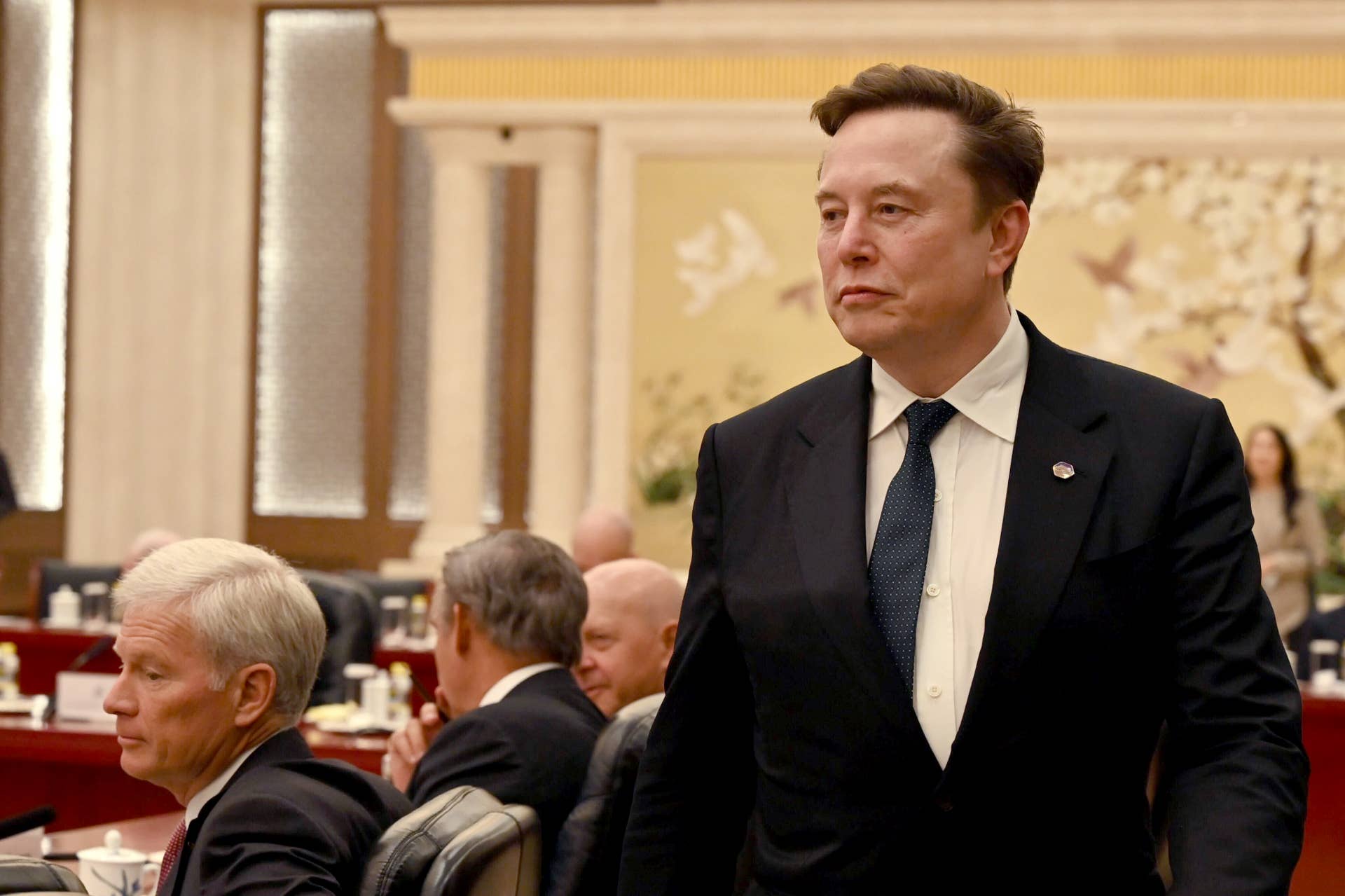 Elon Musk is raising debt capital to fuel SpaceX’s growth.
picture alliance/Getty Images)
When will SpaceX turn profitable?
SpaceX has said in its filing that capital expenditures will increase “substantially” in the future and that it plans to use “a range of debt and equity financing solutions” to fund those investments.
According to analyst estimates, between 2026 and 2030, SpaceX is projected to increase revenue from $35.88 billion to $177 billion.
Over the next four years, SpaceX could deploy approximately $276 billion in capital expenditures.
Notably, the company is projected to turn free cash flow positive in 2030, with a projected FCF of roughly $30 billion.
SpaceX bond investors will be weighing several factors: a company with a historic brand, massive contracts, and enormous ambitions, but one that still needs to prove it can earn more than it spends.
Related: Michael Burry makes a bold call on the SpaceX trade