
It seems like costs just keep going up and up. I know every time I go to the grocery store for a few things, I feel like I spend a fortune.
Apparently, I am not the only one having that experience: The consumer price index, which measures inflation, has gone up 4.2% in the last year, according to the U.S. Bureau of Labor Statistics.
And while most of that increase can be attributed to the increase in gas prices, food prices have also increased.
That increase in pricing has led some consumers to rethink how they shop, which is a worrying sign for large grocery chains like Kroger.
Shoppers’ grocery carts are looking different
Consumers aren’t shopping like they used to a year ago. According to a survey from AI planning firm RELEX Solutions, 61% of consumers have changed how much food they buy due to grocery prices.
Many have cut back on their spending habits at the grocery store, leading to fewer spur-of-the-moment snacks. But more concerning is that some consumers are also cutting back on essentials like beef.
What the findings say
- Nearly half of consumers have cut back on snacks and junk food
- Around 40% have cut back on beef
- 34% have cut back on alcohol
- 71% are cooking at home more often than they were a year ago
- Consumers still care about fresh groceries, with 68% willing to pay more
Meanwhile, over 70% of shoppers are worried that geopolitical events like increased tariffs could increase the costs of their groceries even more. Over half are stocking up during promotion, while 47% are switching to private-label products, the survey found.
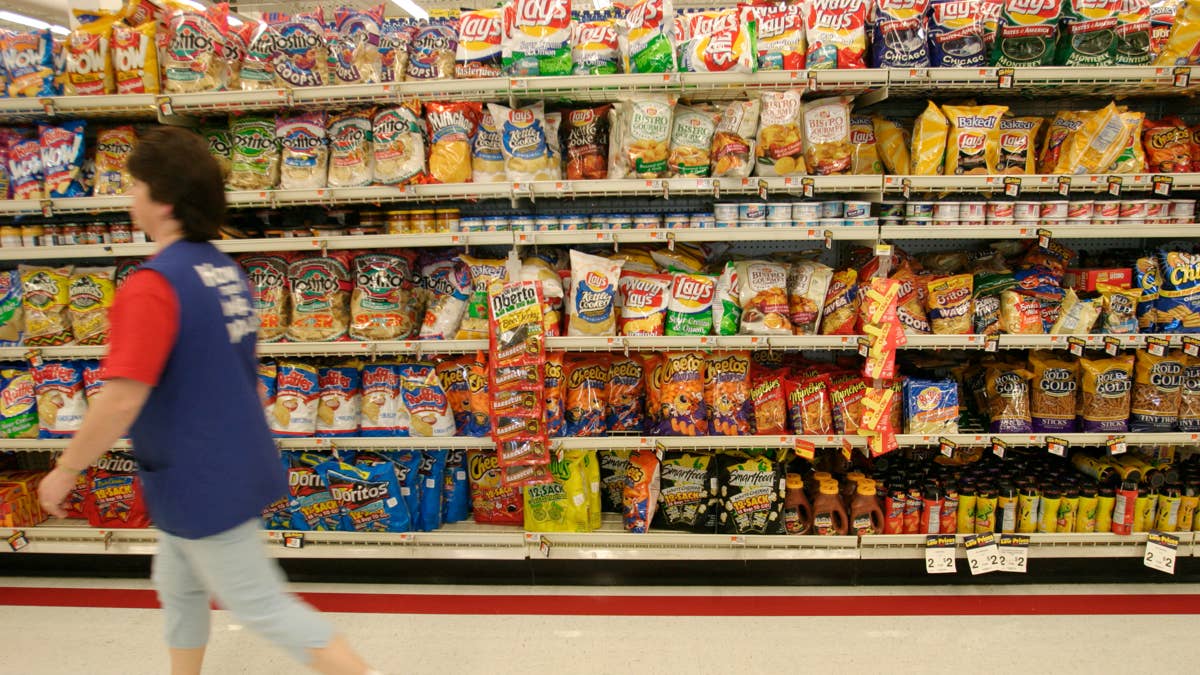 Shoppers are buying fewer snacks amid inflation concerns.
Grocery chains could struggle to respond
The survey findings are a worrying trend for large grocery chains like Kroger. The demand is inconsistent, as shoppers are responding to continuously changing news and outside events.
While shoppers are still spending in some areas like fresh produce, they are spending less in other areas. For grocery stores, this creates uncertainty around demand and making planning a challenge, said Laurence Brenig-Jones, VP of product at RELEX Solutions.
“Consumers are making highly individualized decisions based on price, health goals, value and household priorities,” he said.
More Retail:
- Struggling women’s clothing retailer shutters 171 stores
- Retail giant launches first new home brand in 5 years
- Discount retail giant wins as shoppers change how they spend
One sector that could benefit from this change in consumer habits?
Discount retailers.
The RELAX survey found that 40% shop at discount stores more, with nearly as many visiting multiple stores to find the best price.
And it could lead to further trends in grocery stores, with shoppers looking less for popular brands and more for in-store savings deals.