
The annual stress test modeled a sharp economic shock, including steep declines in commercial real estate and home prices, with unemployment surging to 10%, the Fed detailed in its results.
All 32 of the nation’s largest banks survived the hypothetical downturn, absorbing more than $708 billion in projected losses while maintaining minimum capital levels.
Within hours, J.P. Morgan confirmed a 10% increase in its quarterly dividend and authorized a new $50 billion stock buyback program starting July 1.
J.P. Morgan pairs a 10% dividend raise with a record buyback authorization
J.P. Morgan’s board intends to increase the quarterly dividend to $1.65 per share from $1.50, beginning in the third quarter of 2026, the company noted in a press release.
The proposed increase requires formal board approval, and the company has not yet provided specific ex-dividend or payment dates for the new payout.
Alongside the dividend, J.P. Morgan’s board authorized a new $50 billion share repurchase program with no set expiration date, effective July 1.
The timing and volume of buybacks will remain at management’s discretion, depending on market conditions and internal capital needs.
“Our fortress balance sheet, with significant excess capital and robust liquidity, enables us to be a pillar of strength, allowing us to consistently serve our clients and communities,” CEO Jamie Dimon said in the press release.
At the bank’s most recent closing price of about $333, the proposed quarterly dividend translates to an annualized yield of roughly 2%, noticeably above the current S&P 500dividend yield of about 1.1%, according to S&P Dow Jones Indices data.
What the Fed’s 2026 stress test found about big-bank capital
The hypothetical downturn featured sharp declines in real estate values, a stock market drop of about 58%, and unemployment reaching 10%, the Fed detailed in its results.
Despite total projected losses exceeding $708 billion, the industry’s aggregate common equity tier 1 capital ratio declined by only 1.6 percentage points and remained above regulatory minimums, the Fed reported.
More Federal Reserve:
- Warsh’s first Fed meeting resets interest rate-cut bets
- Hot May CPI sticks a pin in Fed rate-cut bets
- Goldman Sachs sends strong message on next Fed rate cut
The largest categories of projected losses included about $200 billion from credit cards, $160 billion from commercial and industrial loans, and $75 billion from commercial real estate.
“Today’s results underscore the strength of the banking system,” Federal Reserve Vice Chair for Supervision Michelle Bowman said in the June 24 announcement.
J.P. Morgan Chase entered the stress period with a common equity tier 1 ratio of 14.6% and posted a projected minimum of 12.6% under the severely adverse scenario, according to the Federal Reserve’s 2026 stress test results.
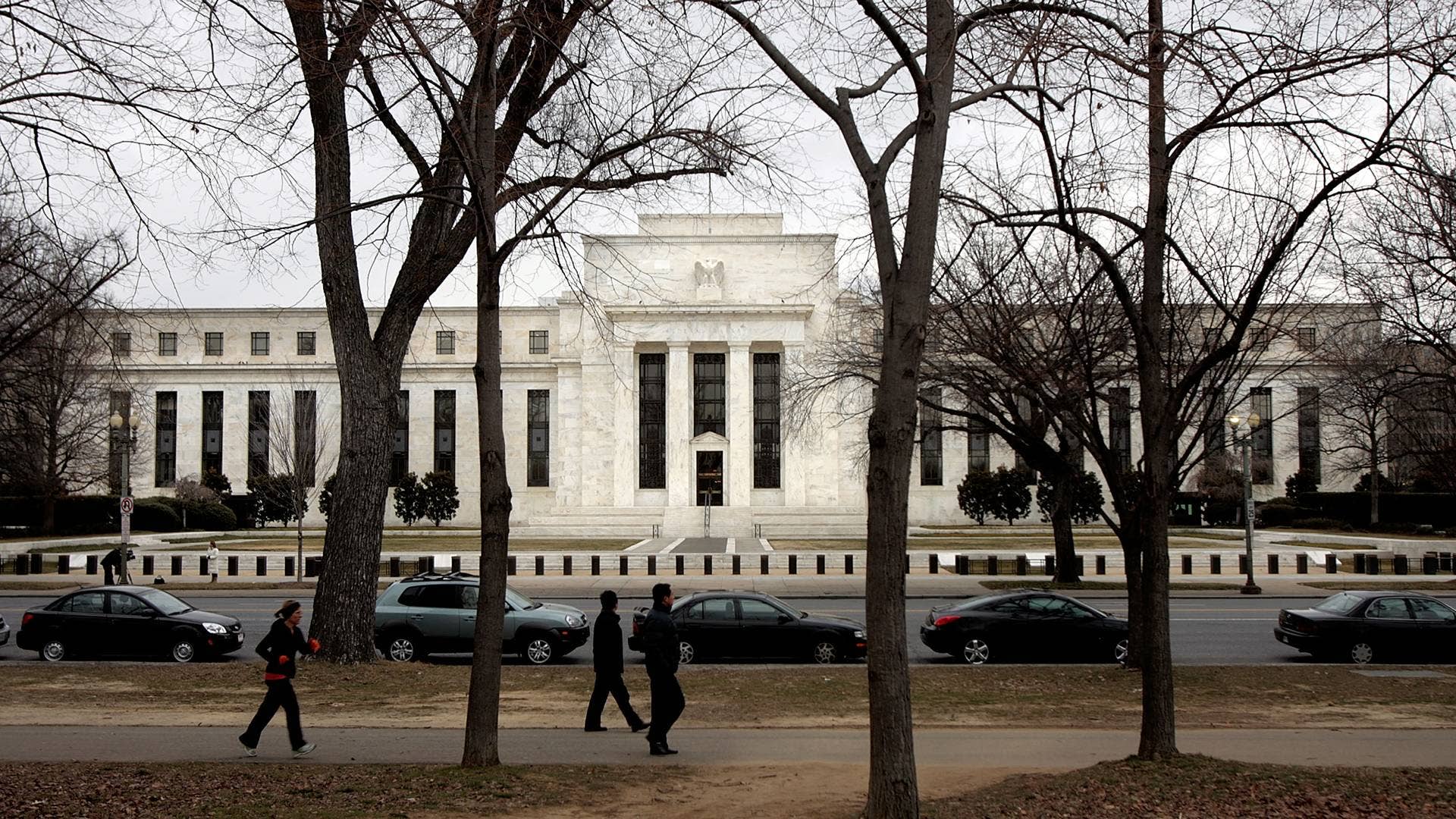 A Fed stress test shows major banks withstand severe recession with strong capital buffers, despite $708 billion in projected losses and market turmoil.
Chip Somodevilla/Getty Images
Wall Street’s biggest lenders race to raise dividends
J.P. Morgan was far from the only major bank to reward shareholders after the stress test cleared the way for capital returns across the industry.
Goldman Sachs raised its quarterly dividend 11% to $5.00 per share from $4.50, effective July 1, representing a 25% increase from the prior year’s level.
The firm’s stress capital buffer will hold at 3.4% through September 2027, Goldman disclosed in an SEC filing.
David Solomon said Goldman’s dividend hike reflects the firm’s strong business.
Our planned dividend increase reflects the strength of our franchise, our earnings power, and our confidence in our ability to support clients, invest for the long term, and deliver sustainable returns to shareholders.
Morgan Stanley boosted its quarterly payout 15% to $1.15 per share and reauthorized a $20 billion share buyback program without a set expiration date, the firm announced.
Citigroup raised its distribution 12% to $0.67 per share, while Wells Fargo increased its payout 11% to $0.50 per share.
BNY led the group with a 19% dividend increase to $0.63 per share from $0.53, the largest percentage hike among the major banks that have announced so far, the company confirmed in a press release.
Frozen capital buffers gave banks the confidence to act quickly
This year’s stress test results carried an unusual feature that gave banks more planning clarity than in any recent cycle: The outcomes had no immediate effect on capital requirements.
The Federal Reserve revealed in February 2026 that it would freeze each bank’s existing stress capital buffer through September 2027, while regulators revamp their supervisory stress-testing models to incorporate public feedback.
J.P. Morgan’s stress capital buffer stands at 2.5%, the regulatory floor, and its standardized common equity tier 1 requirement remains at 11.5% through at least late 2027.
That early certainty removed a key source of planning friction, allowing banks to commit to dividend increases and buyback programs with more confidence than in previous cycles.
Keefe, Bruyette, & Woods analysts led by Christopher McGratty described this year’s exercise as banks essentially “going through the motions,” noting that banks are likely to remain focused on the pending Basel III Endgame proposal, expected later this year, rather than on the stress test results themselves, CNBC reported.
What J.P. Morgan’s capital deployment signals for the road ahead
A $50 billion buyback authorization from a bank with a market capitalization of about $900 billion represents a meaningful commitment to reducing outstanding shares over the coming years.
J.P. Morgan’s first-quarter 2026 results already demonstrated the bank’s earning power, with earnings per share of $5.94 and revenue of $49.8 billion, J.P. Morgan reported in its first-quarter 2026 earnings release.
The bank’s next quarterly earnings report on July 14 will provide investors with a closer look at how these capital return plans fit into management’s broader strategy heading into the second half of 2026.