
Mexico’s national soccer team is making headlines during the 2026 FIFA World Cup, but not only because of what’s happening on the field.
One of the tournament’s more unexpected storylines has developed away from the matches, where fan enthusiasm appears to be turning into a notable commercial trend.
Historically, Argentina, Brazil, and Germany have dominated FIFA World Cup merchandise sales thanks to their global fan bases and decades of tournament success.
This year, however, another team appears to be capturing an unusually high level of consumer attention.
As Mexico advances to the Round of 32 undefeated, interest in the team has extended well beyond match viewership.
According to Adidas, that momentum has translated into strong merchandise performance, making Mexico’s official national team jersey the company’s top-selling national team merchandise line of the FIFA World Cup so far.
Team Mexico merchandise is selling at a surprisingly fast pace
The data show how quickly that interest has translated into purchasing behavior.
Adidas said Mexico’s primary green jersey has already sold through approximately 55% of available inventory. The black jersey has reached a similar level, while the white jersey has sold through around 35%.
The company also said demand is split evenly between Mexico and the U.S., with each market accounting for roughly half of jersey sales.
Mexico released three official jerseys for the tournament: green, black, and white.
The rise in popularity comes as Mexico enters the tournament with one of its most refreshed squads in recent years, with 13 players on the current 26-man roster making their World Cup debuts compared with the team’s appearance at the 2022 championship in Qatar.
That roster turnover, combined with strong tournament performance and host-nation visibility, appears to be supporting consumer interest.
Adidas (ADDDF), one of FIFA’s longest-running commercial partners and the World Cup’s official sportswear, match ball, and equipment supplier, said the jersey has evolved into more than team apparel.
“The jersey represents Mexico both on and off the field,” said Adidas Mexico General Manager Jorge Dionne in an interview with Expansión.
“The Mexico jersey is one of the most beautiful because the partnership has allowed us to incorporate Mexican motifs that fill us with pride. And the green jersey is likely the best-selling one in the history of the National Team; it is the one consumers automatically gravitate toward,” Dionne added.
While the figures were provided by Adidas, merchandise demand tied to national-team momentum is a recurring pattern at major international sporting events, particularly when strong performance aligns with cultural visibility and national identity.
Mexico’s growing influence during the tournament also appears to be extending beyond official team merchandise, with multiple retailers launching soccer-inspired collections and campaigns tied to Mexican identity and fan culture.
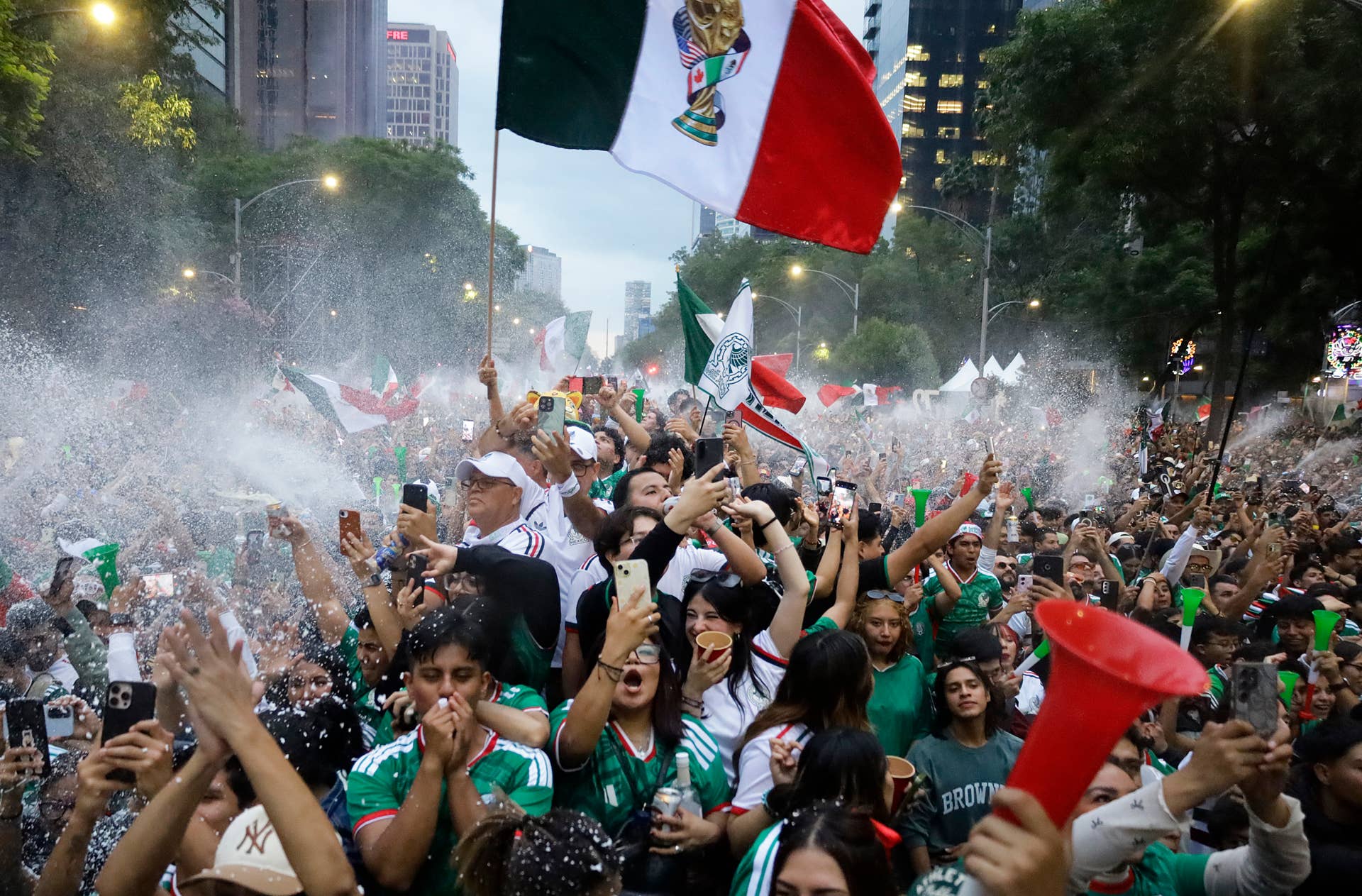 Team Mexico becomes Adidas’ top-selling national team merchandise line of the FIFA World Cup.
Gerardo Vieyra/NurPhoto via Getty Images
Why Mexico’s FIFA World Cup jerseys are resonating with fans
Strong performance alone rarely explains merchandise demand at this scale.
The FIFA World Cup remains the world’s largest sporting event by audience reach and commercial value, creating rare moments where sports, culture, retail, and national identity intersect.
The 2022 tournament in Qatar drew record attendance and global television audiences, reinforcing the event’s ability to drive sponsorship activity and consumer spending.
With more than 6.5 million visitors expected across host cities and billions of viewers anticipated worldwide, brands and retailers view the 2026 championship as one of the largest merchandising opportunities of the decade.
Mexico’s unusually high audience engagement is also contributing to stronger-than-average purchasing activity.
According to Statista, 92% of Mexico’s population is expected to follow the 2026 FIFA World Cup in some capacity, placing it among the most engaged host markets based on projected viewership.
That level of projected demand also helps explain why brands continue investing heavily in Mexico-related campaigns and merchandise strategies during the tournament.
“In Mexico, fans are already engaged, already watching across screens, and already looking for more ways to stay close to the action,” said WSC Sports Content Marketing Manager and Analyst Alex Margolin.
“That market needs instant highlights, extended replays, social-ready clips, personalized content, and sponsor activations that can move at the pace of the match.”
This cross-platform engagement creates more opportunities for merchandise sales because fans are interacting with the event across television, social media, retail channels, and live experiences simultaneously.
Here’s some of my previous coverage on the FIFA World Cup:
- Why the 2026 FIFA World Cup is a billion-dollar retail boom
- Why brands are spending billions on 2026 FIFA World Cup
- McDonald’s brings back Squishmallows for 2026 World Cup
Adidas began building momentum for the FIFA World Cup in October 2025 with the launch of the official match ball and continued expanding its merchandise campaigns ahead of kickoff.
“We want to remind the world what Mexicans are made of and support our federation,” said Adidas Latin America VP Marketing Ana Belén Fernández.
That effort evolved into the company’s “Somos México” (“We Are Mexico”) initiative, designed to deepen fan engagement while introducing the sport to younger audiences.
“We can connect with Latin culture and Mexican consumers, but above all, influence future generations to adopt the sport as a lifestyle,” said Fernández.
The campaign reflects a broader strategy across retail and sportswear, where brands increasingly use globally relevant moments to build long-term consumer relationships that extend beyond the tournament itself.
Related: Why brands are spending billions on 2026 FIFA World Cup