
The warnings worth taking seriously rarely come from the people who missed the last rally. They come from the ones who just won.
When a company spends three months printing money at a pace almost nothing in corporate history has matched, and then uses the same breath to tell you to stay careful, the gap between the result and the tone is the part that should get your attention. Confidence is cheap when times are good. Caution costs something when you are the one holding the record.
On paper, the middle of 2026 looks sturdy. Employers are still hiring. Households are still spending.
Money keeps pouring into artificial intelligence buildouts, and the stock market has spent much of the year near record highs. The economy has absorbed punch after punch, from an Iran war to prices that refuse to settle, and kept walking. That is the backdrop most investors carried into this week.
Then the largest bank in the country opened its books. On July 14, JPMorgan Chase (JPM) reported the most profitable quarter in its history, and its chief executive, Jamie Dimon, used the moment to warn that the ground under all of this is shifting.
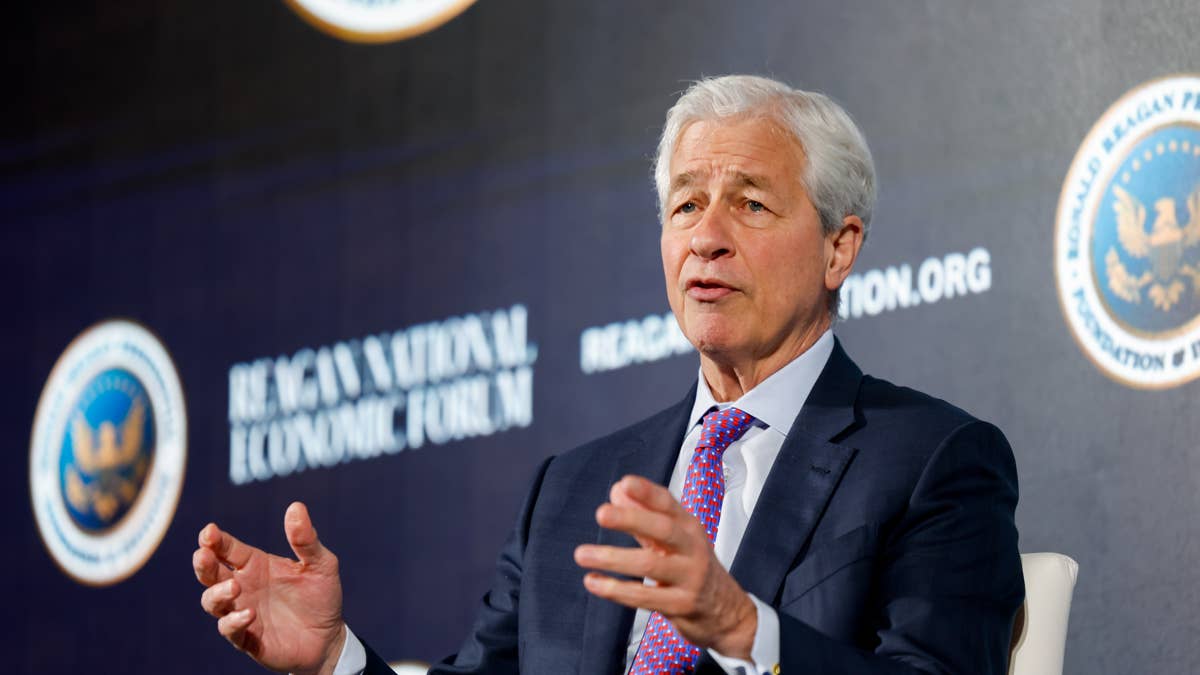 JPMorgan posted a record $21.2 billion profit; Dimon still warned of risks ahead.
What Jamie Dimon actually said about the economy
The numbers were not close. Net income jumped 41% from a year earlier to a record $21.2 billion, according to Bloomberg.
Adjusted earnings landed at $6.14 a share, ahead of the $5.79 analysts had penciled in, according to Benzinga. Managed revenue reached $58.02 billion against expectations near $50.2 billion.
More Investment Banking:
- Goldman bans the very bets JPMorgan wants to sell
- Vanguard sends wake-up call to every retiree
- Goldman Sachs quietly snags a corner of America’s retirement money
The strength was broad. Investment banking fees climbed 30% to their highest level since 2021, and the firm even nudged up its full-year outlook for net interest income, the profit it earns on the spread between what it charges borrowers and pays depositors, according to Benzinga.
Dimon could have taken a victory lap. He did the opposite.
In the earnings release, he called the economy resilient and credited tailwinds like AI-driven investment, fiscal stimulus, and lighter regulation. Then he turned.
Several risks are “shifting below the surface like tectonic plates,” Dimon said in the company’s securities filing, naming geopolitical conflict and war, sticky inflation, large fiscal deficits, and elevated asset prices.
He added that no one can predict how those forces play out, and that they could stay manageable or collide into something worse.
I have read enough of these letters to know the tell. The record is the headline. The warning is the message.
Related: Jamie Dimon spills beans on his next big JPMorgan deal
Why a record quarter still rattled the stock
Here is the part that should reframe the whole report. Despite the record, JPMorgan shares fell about 2.8% before the opening bell, according to Benzinga. A record profit that the market sells is worth a closer look.
Part of the reason is that not all of the profit came from banking. Reported earnings of $7.70 a share included roughly $1.56 of one-time items, among them a $4.6 billion gain tied to Visa (V) shares, according to Benzinga.
Strip those out and the beat is real but smaller. That gap between a flashy top-line number and a steadier underlying business is the sort of thing that makes traders sell first and read the footnotes later.
The rest is Dimon himself. His caution is not a one-day mood.
He doubled down on the same wary message at the Reagan National Economic Forum in late May, as TheStreet covered, and in his April shareholder letter before that. When a chief executive keeps flagging the same fault lines quarter after quarter while his own results shine, markets eventually stop treating it as background noise.
The quarter in numbers:
- Net income climbed 41% to a record $21.2 billion, according to Bloomberg.
- Adjusted earnings of $6.14 a share topped the $5.79 estimate, according to Benzinga.
- Reported earnings of $7.70 a share carried about $1.56 in one-time gains, according to Benzinga.
- Managed revenue hit $58.02 billion versus expectations near $50.2 billion, according to Benzinga.
- The stock still slipped about 2.8% in premarket trading, according to Benzinga.
What Dimon’s warning means for your money
Let me put the profit in terms you can feel. I ran the math against the calendar.
That $21.2 billion across roughly 91 days works out to about $233 million a day, or close to $2,700 every second the quarter was open. The single strongest earnings engine in American finance was running full tilt, and the man steering it still chose caution.
That choice matters for your wallet, beyond his shareholders. In my read, the risk that lands closest to home is the sticky inflation Dimon keeps circling.
If prices stay warm, the Federal Reserve has less room to cut, which keeps the cost of your mortgage, your car loan, and your credit-card balance higher for longer. For anyone waiting on cheaper financing to buy a house or refinance, that is the difference between this year and next.
There is a sliver of upside hiding in the same forecast. Higher for longer also means the yield on your savings account and short-term Treasurys stays fatter than it was a few years ago. You pay more to borrow, and you earn more to save.
Elevated asset prices cut the other way. A rich stock market feels wonderful in a 401(k) statement, right up until sentiment turns. Dimon’s whole point is that sentiment can turn fast, and that the pieces which look stable in calm weather are the same ones that move first when the ground shifts.
So watch the inflation reports through the rest of the summer, and watch whether the Fed blinks. When the bank earning $233 million a day tells you the ground is moving, the move is not to panic. It is to notice that the person with the best seat in the house just reached for the railing.
Related: J.P. Morgan’s stock price is flashing valuation warning