
Despite receiving $13.5 million in city grant money to keep grocery stores open in underserved neighborhoods, a popular discount chain is preparing to close another six stores.
The decision highlights a growing paradox across the industry: Even though inflation is driving more shoppers to discount aisles, foot traffic alone isn’t enough to keep discount chains thriving.
Former Family Dollar CEO Rick Dreiling explained this during an earnings call, according to InsiderMonkey. He noted that while store traffic was up, total spending dropped because low-income customers faced rising inflation and reduced federal benefits.
That pressure contributed to widespread store closures. Family Dollar closed at least 350 locations, Dollar Tree cut another 75 stores, and I recently reported on Save A Lot’s closure of 100 stores and exit from three states.
After facing heavy debt and competition from Aldi, Save A Lot wiped out $500 million in debt in 2020 and became a wholesale supplier. It transferred its stores to independent owners, passing along operational risks, such as rising rents, labor costs, and higher inventory prices, to local operators.
Now, that independent model is facing another setback in Chicago.
Save A Lot closes 6 stores, despite $13.5 million public investment
Retail group Yellow Banana is preparing to close six Chicago Save A Lot stores after several financial and operational setbacks, writes Supermarket News.
The unexpected death of Yellow Banana CEO Joe Canfield in April left the company without leadership qualified to manage the locations.
At the same time, the stores faced severe revenue drops due to federal cutbacks in SNAP (food stamp) benefits. SNAP money previously accounted for nearly half of the stores’ total sales, but revenue fell around 27% year over year. Consequently, Yellow Banana fell behind on paying for store inventory.
Save A Lot had stepped in for months to cover inventory costs, but has now officially severed ties with Yellow Banana. Employees have been notified of potential termination, with pay promised through the end of the month, a source familiar with the matter told Supermarket News.
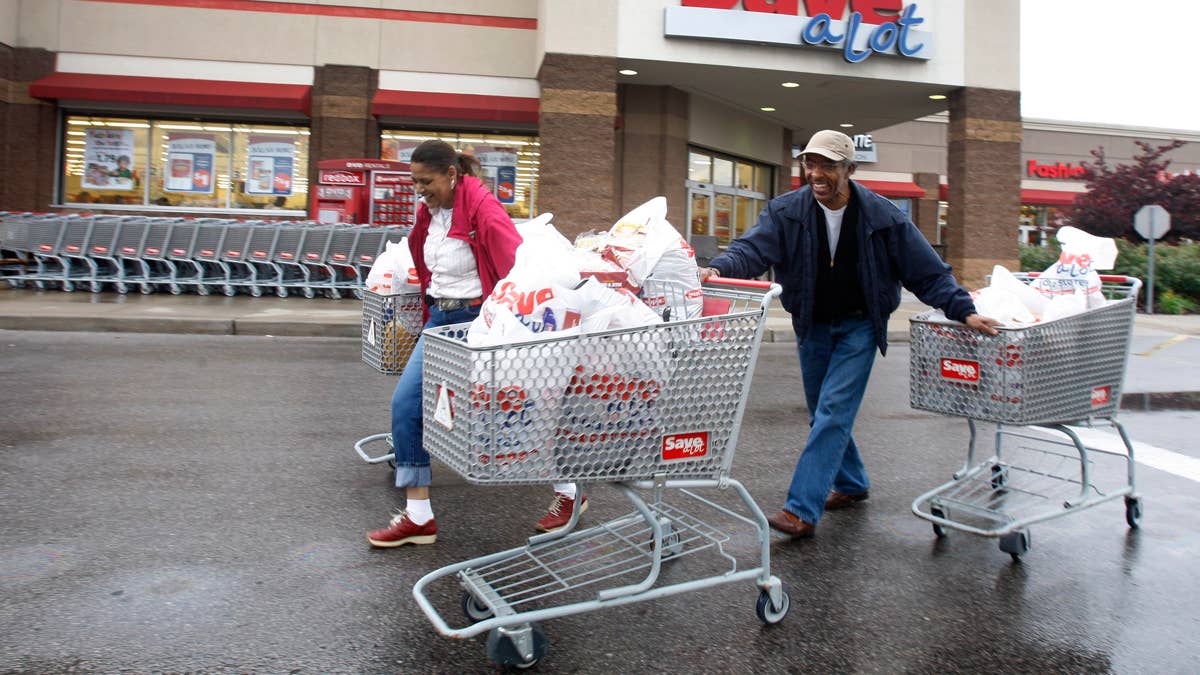 Save A Lot closes six stores, despite a $13.5 million public investment.
The collapse of a $26 million agreement
In July 2022, Yellow Banana confirmed the receipt of a $13.5 million Community Development Grant from Mayor Lori Lightfoot and the City of Chicago to upgrade Chicago stores, as well as to re-open a location in the Auburn-Gresham neighborhood that closed in 2020.
“The City’s grant, combined with other financing and funding from Yellow Banana, will bring approximately $26 million in investment into six locations in underserved communities throughout the City’s South and West Sides,” reads the official press release.
The $25.2 million project was designed to upgrade store operations to fit local community needs while keeping the Save A Lot name, reported the Chicago Department of Planning and Development.
The locations include:
- 10700 S. Halsted St., Morgan Park
- 2858 E. 83rd St., South Chicago
- 420 S. Pulaski Road, West Garfield Park
- 4439 W. 63rd St., West Lawn
- 7240 S. Stony Island Ave., South Shore
- 7908 S. Halsted St., Auburn Gresham
The project faced construction delays, community complaints, and city fines for failing to meet local hiring and diversity quotas. Yellow Banana had to pay more than $70,000 in penalties for failing to meet the minority, women-owned business and resident workforce requirements at the Gresham location, reported the Chicago Sun-Times.
“Since signing its redevelopment agreement in 2023, Yellow Banana closed all 38 of its Save A Lot stores outside of Chicago, racked up over $2 million in vendor lawsuits and municipal debt, and faced sanitation violations and complaints of expired food,” reported the Chicago Sun-Times.
Under the contract terms, the stores needed to remain open for 10 years for Yellow Banana to receive its full city compensation.
Save A Lot is 19.3% more expensive than Walmart
Despite marketing itself as a low-cost option for budget-conscious families, pricing comparisons reveal that Save A Lot is less affordable than major discount competitors.
A national price study by Consumer Reports comparing identical brand-name items against Walmart showed that Save A Lot is 19.3% more expensive than Walmart. In contrast, value rivals such as Costco (-21.4%), Lidl (-8.5%), and Aldi (-8.3%) undercut Walmart’s baseline prices, placing Save A Lot closer to traditional full-service grocers like Kroger (+14.8%) in price.
Despite the data, for some consumers, Save A Lot is not only the best grocery shopping option, but the only nearby option.
Related: Car dealer closes 40% of its stores, shares bankruptcy warning
What Save A Lot closures mean for consumers
In large urban environments, losing a store or two doesn’t make headlines because residents can go to another one. In less-crowded and lower-income neighborhoods, losing a grocery retailer is a more serious problem.
“When low-income households lack transportation and live beyond walking distance to the nearest supermarket, families often find themselves unable to purchase healthy food due to unavailability and high prices. Consequently, the residents of food deserts suffer adverse health outcomes,” according to University of Kentucky College of Law Professor Ramsi Woodcock.
Speaking of Family Dollar closures, Dominick Miserandino, CEO of RTMNexus, stressed how these types of closures could seriously impact certain communities.
“They might be the only store that serves the entire community in this area,” Miserandino told CBS News. “They might have been one of the few jobs in the community.”
Additionally, for many consumers, Save A Lot provides smaller, budget-friendly product sizes that match their immediate cash flow.
“It is disappointing to lose a grocery store that serves a large neighborhood,” county economic development manager Dianna Cantler told Mashed after the 2018 closure of a Save A Lot in Johnson City, Tennessee. “Once again, the North Side community will be a food desert, with nothing within a walkable distance.”
Save A Lot explores ways to provide resident access to quality food
For the stores to remain open and running past July, an investor would have to come forward.
“If there’s a solution that keeps them open and that means Save A Lot’s just the wholesaler and helping them to transition to a community-run grocery store, a municipal grocery, whatever it is … [even] if it has a different banner outside, [Save A Lot] will facilitate that,” the source told Supermarket News.
Some of these stores are located in food deserts, which means that consumers in the region would have difficulty obtaining groceries if stores permanently close their doors. Save A Lot says it is willing to help.
“We are committed to the well-being of the communities we serve. We will continue to engage with city and community leaders to explore ways to provide access to quality food and services for residents, and we are actively supporting impacted Yellow Banana team members throughout the transition,” a Save A Lot spokesperson told Supermarket News.