
Big purchases run on borrowed confidence.
Almost nobody shopping for a diamond has the training to price one. So you lean on numbers, and they arrive already packaged, usually inside a headline telling you the market is doing one thing or another.
That works fine when the packaging is neutral.
Here is the route a diamond statistic travels before it reaches you. A producer commissions consumer research, a trade publication writes it up, retail blogs recycle the write-up, and somewhere around step three the chain of custody quietly disappears.
What survives is the number. What gets lost is who paid for it.
That process is running at full speed behind a claim you have almost certainly seen. Natural diamonds are staging a comeback, buyers are trading up to bigger stones, and demand is healthier than the gloomy coverage suggests.
Every version of that claim traces back to a single survey. It was published by De Beers.
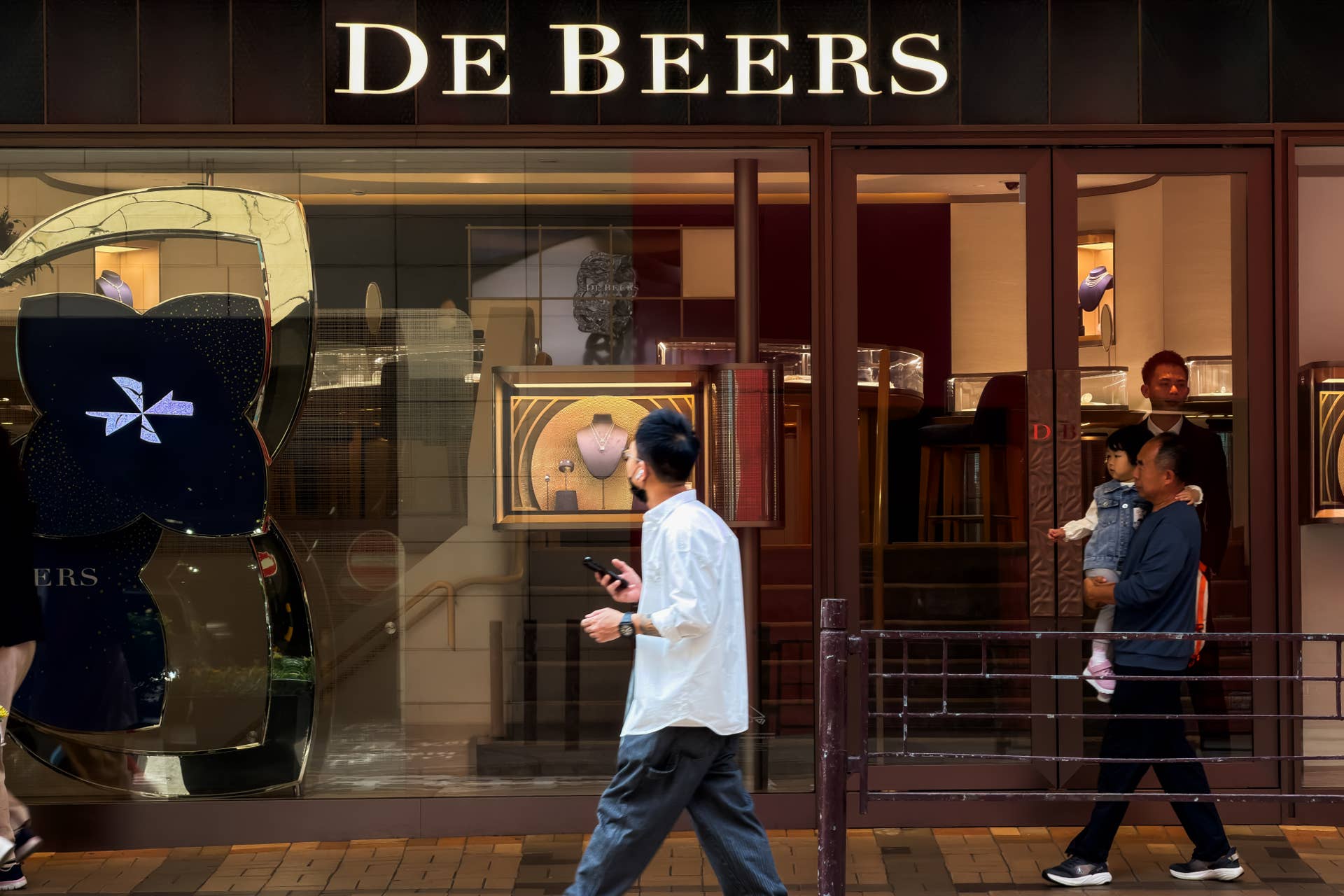 Natural diamond spending rose 25% in 2025 while engagement ring budgets fell.
Why the diamond market split into two different economies
Start with what nobody disputes. This is now two products with two unrelated cost structures.
Natural diamonds come out of the ground on a schedule a handful of miners control. Lab-grown diamonds come out of a reactor, limited mainly by how many reactors exist.
That gap has widened every year for a decade, as synthetic capacity expanded and production costs fell while natural prices held comparatively firm.
Related: World’s quietest metal just dropped a huge bullish signal
The bridal market has already picked a side. Lab-grown center stones accounted for 61 percent of all engagement ring purchases in 2025, a 239 percent jump since 2020, according to The Knot Worldwide and its survey of more than 10,000 US couples.
Natural diamond engagement rings showed no growth in total or center stone size over the same period, JCK reported.
Supply on the natural side is genuinely contracting, though not for the reason the comeback story implies. Global rough output is forecast to fall below 95 million carats this year, the lowest since 1987, as mine economics force closures, according to independent analyst Paul Zimnisky.
Mines are closing because the economics stopped working. That is a very different thing from a market tightening on strength.
What the De Beers study actually found about diamond buyers
The research everyone is citing is the US Diamond Acquisition Study, and De Beers Group published it on June 11.
More Retail:
- Trump’s tariff cuts may make popular luxury items cheaper
- Major retailers have jacked up prices due to tariffs
- Best Buy warns holiday shoppers of updated return policy
The sample is respectable and the findings are real. Here is what the company reported:
- The survey covered 18,500 US women aged 18 to 74, not the “tens of thousands” some write-ups claim, according to De Beers Group
- Natural diamond jewelry ranked first as most-desired luxury gift at 11 percent against 8 percent for lab-grown, per InStore Magazine
- Average spend reached $4,063 in 2025, up from $3,242 in 2023, according to Rapaport
- Gen Z spends $4,080 per piece against $2,250 for Baby Boomers, according to De Beers Group
- Point-of-sale data from 950 independent jewelers showed sales up 4 percent in Q4 2025 and 9 percent in Q1 2026, per InStore Magazine
Now the breakdown that almost never travels with those numbers. The overall acquisition rate, meaning the share of surveyed women who actually bought a natural diamond, was 9 percent in 2025, up from 8 percent in 2023, Rapaport reported.
Among households earning $150,000 or more, that rate went from 12 percent to 15 percent.
My analysis is that the second figure carries the first. The affluent cohort moved three points while the overall market moved one, which means most of the reported growth came from buyers who were already in the category.
That is a real recovery. It is just a narrow one, and “natural diamonds are back” is doing a lot of work to cover the difference.
De Beers also has a reason to want the first framing. Parent company Anglo American (NGLOY) has been trying to sell the business since 2024, posted a $3.7 billion loss for 2025 and took a $2.3 billion writedown on De Beers, its third impairment in three years, Rapaport reported.
The company cut 2026 production guidance to 21 million carats from a prior floor of 26 million, citing “challenging rough diamond trading conditions,” according to its own production report.
Independent analysts read the downturn as structural. The industry faces “a more fundamental crisis,” not a cyclical dip, senior analyst Joshua Freedman of Rapaport told News Anyway.
None of this makes the survey false. It means you weigh it against the filings, and the filings and the survey disagree.
The lab-grown price gap that costs buyers real money
There is a second number circulating that is out of date, and this one can cost you thousands.
You will still see claims that lab-grown diamonds run 20 percent to 40 percent below comparable natural stones. That was roughly accurate in 2016.
It is nowhere near accurate now. The per-carat gap reached 72.8 percent, up from 26.6 percent in 2019, according to appraisal and insurance data from BriteCo.
Retailers put it wider still. The discount runs 60 percent to 85 percent depending on size and specification, according to comparison-powered retailer Rare Carat, whose own pricing pages undercut the figure the trend pieces keep repeating.
Walk in believing the gap is 30 percent and you will badly misjudge what your money buys. On a $5,000 budget that is roughly the difference between a one-carat stone and a two-carat one.
There is also a tariff variable nobody was pricing a year ago. US duties on diamonds shipped from India reached 50 percent before an interim trade agreement cut the rate to 18 percent in early 2026.
What to check before you spend on a diamond this year
None of this settles the natural versus lab-grown question. That call depends on what you want the stone to do.
But I would run three filters on anything you read between now and December.
Ask who paid for the number. Producer-funded research is not worthless and it is not neutral either, and that matters most when the producer is mid-sale.
Ask how old the number is. The lab-grown discount has moved fast enough that guidance written two years ago is now actively misleading.
Ask whether the number describes your purchase. An average built from every US buyer says almost nothing about a specific stone in a specific quality bracket.
Then verify the stone itself. Free certificate lookup tools let you check a grading report against the listing before you pay, and Rare Carat runs one alongside its comparison pricing.
Watch two things through the back half of 2026. Whether Anglo completes the De Beers sale, and whether the engagement season pulls any middle-income buyers back toward natural stones.
Zimnisky sees the ubiquity of lab-grown rings creating its own counterforce. “People are starting to want the real thing again,” he told News Anyway.
He may be right. But the number that proves it will be the acquisition rate outside the $150,000 bracket, not the average ticket, and that is the figure worth hunting for when the next comeback story lands in your feed.
Related: 2 major jewelry brands close hundreds of stores in key market