
After surviving bankruptcy, the loss of its entire brick-and-mortar footprint, and years of ownership changes, one of America’s oldest retail brands is attempting another comeback.
Rather than reopening stores, the nearly 200-year-old department store is betting on exclusive merchandise as retailers increasingly rely on private-label brands to strengthen customer loyalty, improve profit margins, and stand out in a more competitive shopping environment.
Lord & Taylor revives its private label line
Regal Brands Global’s Lord & Taylor is bringing back its private label business with the launch of the Heritage Collection, marking the brand’s first in-house apparel line in nearly six years.
The debut collection includes 168 pieces, including dresses, tops, skirts, and women’s suiting, with prices ranging from $100 to $1,000. It is available worldwide through Lord & Taylor’s online marketplace and select luxury boutiques across Europe.
Related: Former retail giant closes more stores
For now, the collection will remain internally produced while the company searches for a licensing partner that could eventually expand the brand into additional categories, including shoes and socks, according to Regal Brands Global Chief Strategy and Brand Officer Sina Yenel, WWD reported.
“We’re expanding the Lord & Taylor name across new categories through a growing roster of licensing partners,” wrote Yenel on LinkedIn. “We’re building proprietary technology to power a truly global marketplace. And there’s more on the way that I can’t wait to share.”
Lord & Taylor’s bankruptcy and turbulent turnaround
Founded in 1826 as a small dry goods store in New York City, Lord & Taylor grew into what is widely recognized as the first department store in the U.S. and became known for its upscale merchandise and iconic Fifth Avenue flagship.
However, years of financial challenges ultimately led to widespread store closures, including the flagship location.
In 2019, fashion rental company Le Tote acquired Lord & Taylor for $75 million, including 38 of its remaining 45 stores. Just one year later, Le Tote filed for Chapter 11 bankruptcy following the COVID-19 pandemic, resulting in the closure of all Lord & Taylor stores and the discontinuation of its private label business.
Saadia Group bought the brand out of bankruptcy in October 2020 for $12 million, but lost control of the intellectual property in 2024 after defaulting on its loan agreement.
Later that year, Regal Brands Global acquired Lord & Taylor and repositioned it as an online off-price luxury retailer.
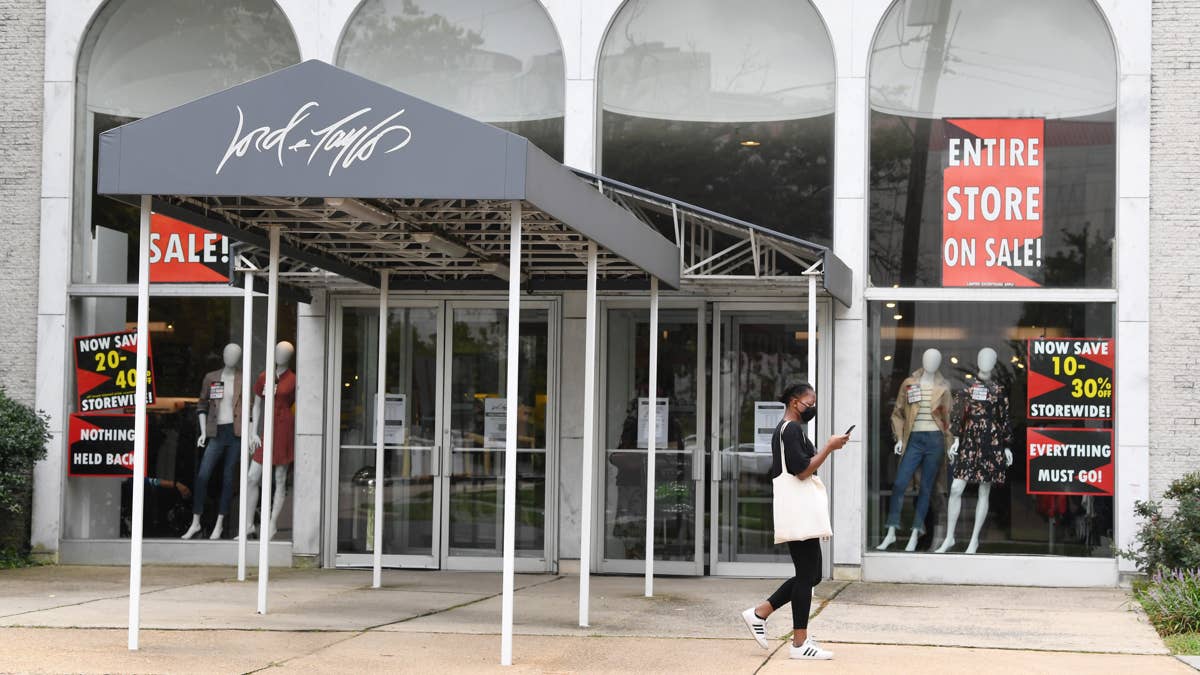 Lord & Taylor brings back its private label with the Heritage Collection.
Matt McClain/The Washington Post via Getty Images
Why Lord & Taylor is bringing back Heritage Collection
The launch comes as fashion retailers navigate slower industry growth, persistent economic uncertainty, tariff pressures, and more selective consumer spending.
According to McKinsey & Company’s State of Fashion 2026 report, industry growth is expected to remain in the low single digits, prompting brands to prioritize strategies that improve profitability while creating exclusive products shoppers can’t find elsewhere.
Here’s some of my previous coverage of retail strategies:
- After years of store closures, fashion retailer shifts strategy
- After closing nearly all locations, beauty brand gets lifeline
- Former retail giant closes more stores
Private-label brands have become an increasingly important part of that strategy because it gives retailers greater control over product design, pricing, inventory, and brand identity while often generating higher margins than third-party brands.
“Retailers have responded by expanding their private label offerings and investing in premium categories like organic foods, sustainable products, and high-end fashion,” said The Supply Chain Source Content Writer and Industry Expert Bekah Tatem. “Private label brands are now a key part of retail strategy, helping businesses differentiate themselves in a crowded marketplace.”