
It looks like Kevin Warsh may have to put his money where his mouth is.
The hawks circling over Wall Street suggest the Federal Reserve needs to raise short-term interest rates this week to stave off steeper inflation rates.
And while consensus suggests the policymaking Federal Open Market Committee will hold benchmark short-term rates steady July 28, there are Fed watchers who claim a rate hike is needed now to reduce inflation risk from the impact of energy shocks, tariffs, and rising artificial intelligence supply costs.
Citadel Securities, in a note obtained by Bloomberg, said it expects the Fed to surprise markets and households with a rate hike this week to strengthen Warsh’s credibility in his battle with inflation — a repeated pledge from the new Fed chair.
A surprise quarter-point hike to the Federal Funds Rate on July 28 would also show that policymakers no longer rely on signaling every policy move well in advance, Citadel Securities Head of Macro Strategy Frank Flight wrote to clients.
“The market may once again be underestimating the extent of the hawkish shift at the Fed,” Flight said. A hike this week “would emphatically end the forward guidance era” while underscoring the Fed’s independence, he said.
July Fed interest-rate hike could cool inflation
Since inflation risks remain elevated and the labor market is stable with the U.S. midterm elections less than 100 days away, affordability and the economy are top concerns for Americans of all political backgrounds and therefore critical to races in both chambers of Congress.
So the question becomes: Will a quarter-point hike to the Federal Funds Rate stave off more acute pain to wallets and portfolios in the months ahead?
The answer is yes, according to Rex Financial Managing Director Bill Birmingham.
A small, explicitly one-and-done increase could ultimately be a more dovish outcome for financial markets, Birmingham told TheStreet in an email.
“By acting preemptively, the Fed would validate the hike already embedded into its own year-end projections, reinforce its inflation credibility well ahead of the November midterm elections, and reduce the risk that investors price a prolonged tightening cycle into longer-term Treasury yields, which looks like it is happening already,’’ he said.
In effect, a July rate hike would “exchange some modest amount of front-end cost to stabilize term premium on longer dated instruments that matter more to housing, corporate finance, and equity valuations,’’ Birmingham said.
Fed’s Warsh doubles down on inflation risk
Warsh repeatedly told Congress earlier this month that the central bank is committed to the price stability side of its mandate, although he was mum on how that would be achieved.
The Fed’s twice-yearly Monetary Policy Report to Congress said the outlook of the future path of interest rates “is subject to considerable uncertainty.” It also described the U.S. economy as overall “expanding at a solid pace despite elevated uncertainty that owes, in part, to the conflict in the Middle East.’’
Here’s the tricky part:
- Lower interest rates support hiring but can fuel inflation. This risks fueling further inflation, potentially leading to an inflationary spiral.
- Higher rates cool prices but can weaken the job market. This increases the cost of borrowing and further stifles economic activity.
Fed holds interest rates steady thus far this year
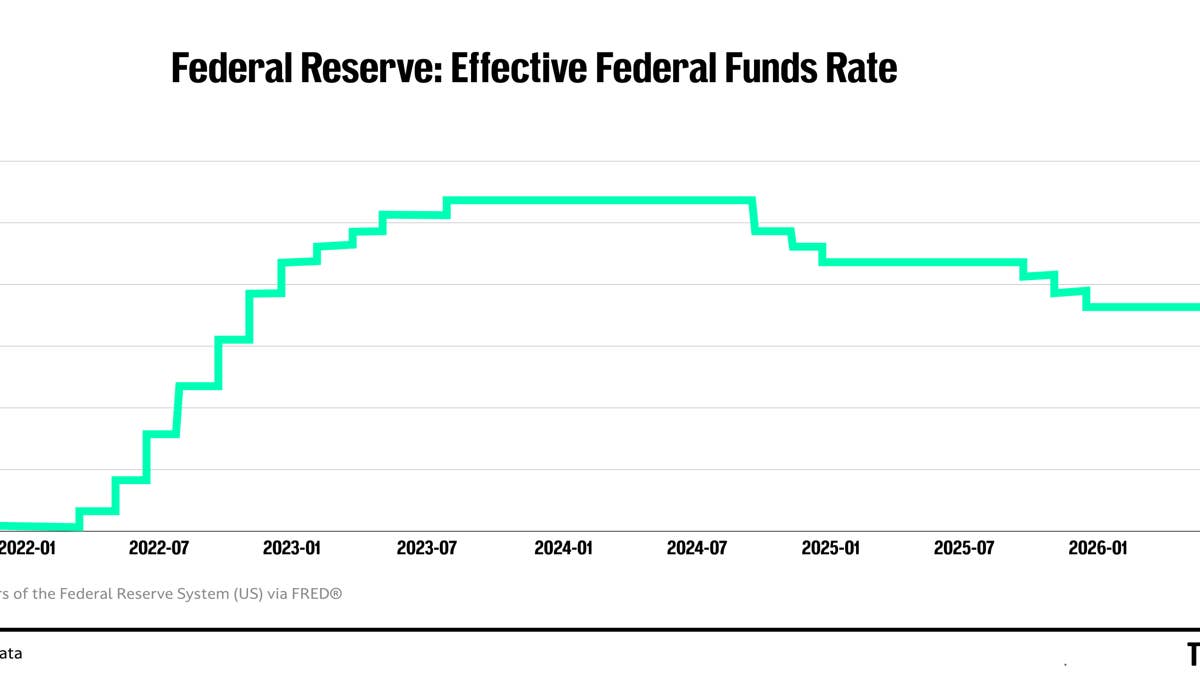
The rate-setting FOMC voted unanimously in June to hold its benchmark Federal Funds Rate target in a range of 3.5% to 3.75%.
But the minutes of the June FOMC meeting showed policymakers splitting their views on inflation risk and the impact on interest rates with a rising hawkish tinge to the “dot plot.”
Related: Inflation sparks Fed interest-rate debate as July decision looms
Fed Governor Christopher Waller and several additional voting members of the FOMC — including New York Fed President John Williams, Cleveland Fed President Beth Hammack, and Dallas Fed President Lorie K. Logan — have expressed hawkish concerns since the June FOMC meeting, citing rising prices and the potential for inflation to intensify price pressures.
Former Atlanta Fed President Dennis Lockhart told CNBC that a July rate hike would be “backing up their rhetoric with some action.’’
“I wouldn’t rule it out,’’ Lockhart said.
Inflation prompts traders to reset Fed interest-rate bets
As of July 28, the widely watched CME Group FedWatch Tool shows traders are pricing in higher probabilities of interest-rate hikes for the final months of this year, while expecting a 70.1% probability that rates will remain steady and a 29.9% chance of a quarter-point rate hike this week.
This is a marked change from a few weeks ago, when there was a near 90% chance of July rates holding steady.
- September shift: Traders now price in a 74.9% cumulative chance of at least one quarter-point rate hike happening by or during the September FOMC meeting.
- December tightening: By the end of the year, the CME Group FedWatch Tool leans heavily toward a half-point hike with a 37.5% probability of a 4.00% to 4.25% target rate, reflecting sustained inflation concerns.
Markets will focus on signals for September interest-rate decision
Generali Investments Senior Economist Paolo Zanghieri told TheStreet in an email that the FOMC will “most likely leave” the fund rate unchanged at its July meeting and extend the current pause in policy tightening.
“We see a growing risk of dissenting votes in favour of a rate increase, deepening the divisions within the Committee and keeping the possibility of further tightening later this year on the table,’’ Zanghieri said.
“Markets will focus less on the rate decision itself and more on the Fed’s guidance, particularly any signals regarding September and the balance between inflation risks and economic growth,’’ he added.
Related: Rising inflation turns July Fed meeting into rate-hike showdown