
For a growing number of Americans on GLP-1 weight loss medications such as Wegovy and Zepbound, staying on treatment has become a financial commitment that rivals a car payment or mortgage increase.
A national survey of more than 1,000 adults found that users of these drugs are making financial decisions that could affect them for decades, from pausing retirement contributions to taking on new debt to hiding costs from a spouse.
The findings come at a time when one in eight U.S. adults reports currently taking a GLP-1 medication, nearly one in five has taken one at some point, and list prices still exceed $1,000 per month before insurance or manufacturer discounts.
What users are willing to give up to stay on treatment reveals how prescription drug costs are rippling through household budgets.
GLP-1 users would rather take on debt than lose their progress
When forced to choose between their finances and their medication, a significant share of GLP-1 users are picking the prescription, according to a Trimi survey of 1,065 U.S. adults.
Forty-four percent of users said they would take on debt rather than stop treatment, and that figure climbed to 54% among those currently on the medication.
Women were far more likely than men to accept debt to continue treatment, at 49% compared with 32%. Another 48% of users said they would pause saving for retirement before they would postpone their GLP-1 treatment, according to the survey.
For a 35-year-old contributing $300 per month to a retirement account earning a 7% average annual return, even a two-year pause would cost close to $48,000 in lost growth by age 65, assuming monthly contributions compounded at 7%, based on standard compound interest calculations.
Affordability is a barrier, even as drugmakers roll out lower-priced options
The financial strain captured in the Trimi data aligns with broader national polling on drug affordability.
A majority of GLP-1 users, including 55% of those with health insurance, reported that the medications were difficult to afford, a KFF Health Tracking Poll published in March 2026 found.
Six in 10 U.S. adults overall said they were worried about affording prescription drug costs for themselves or their families, a record high since KFF began tracking the question in 2018.
Among the Trimi respondents, 58% of GLP-1 users said they had stopped or seriously considered stopping treatment because of cost, including 74% of those who had already lapsed and 51% of current users.
More Medicare/Medicaid:
- Medicare’s costliest gap threatens retirement savings
- Medicaid’s 5-year rule catches families off guard
- Medicare Advantage lawsuit could affect 2027 benefits, plan choices
For those who have not yet started treatment, cost is the dominant obstacle by a wide margin. Nearly half of people considering a GLP-1, at 47%, named price as the single biggest factor keeping them from beginning, well ahead of side effect concerns at 27%, the Trimi survey noted.
Nearly two-thirds of people who use or want a GLP-1 said the medication would need to cost $100 a month or less to feel affordable, and 37% set their ceiling at $50 or less, the Trimi report indicated.
Self-pay prices from Novo Nordisk and Eli Lilly currently start at $299 per month for Zepbound vials and $349 per month for Wegovy injections, with Wegovy HD and higher-dose Zepbound reaching $399 to $449 through manufacturer programs.
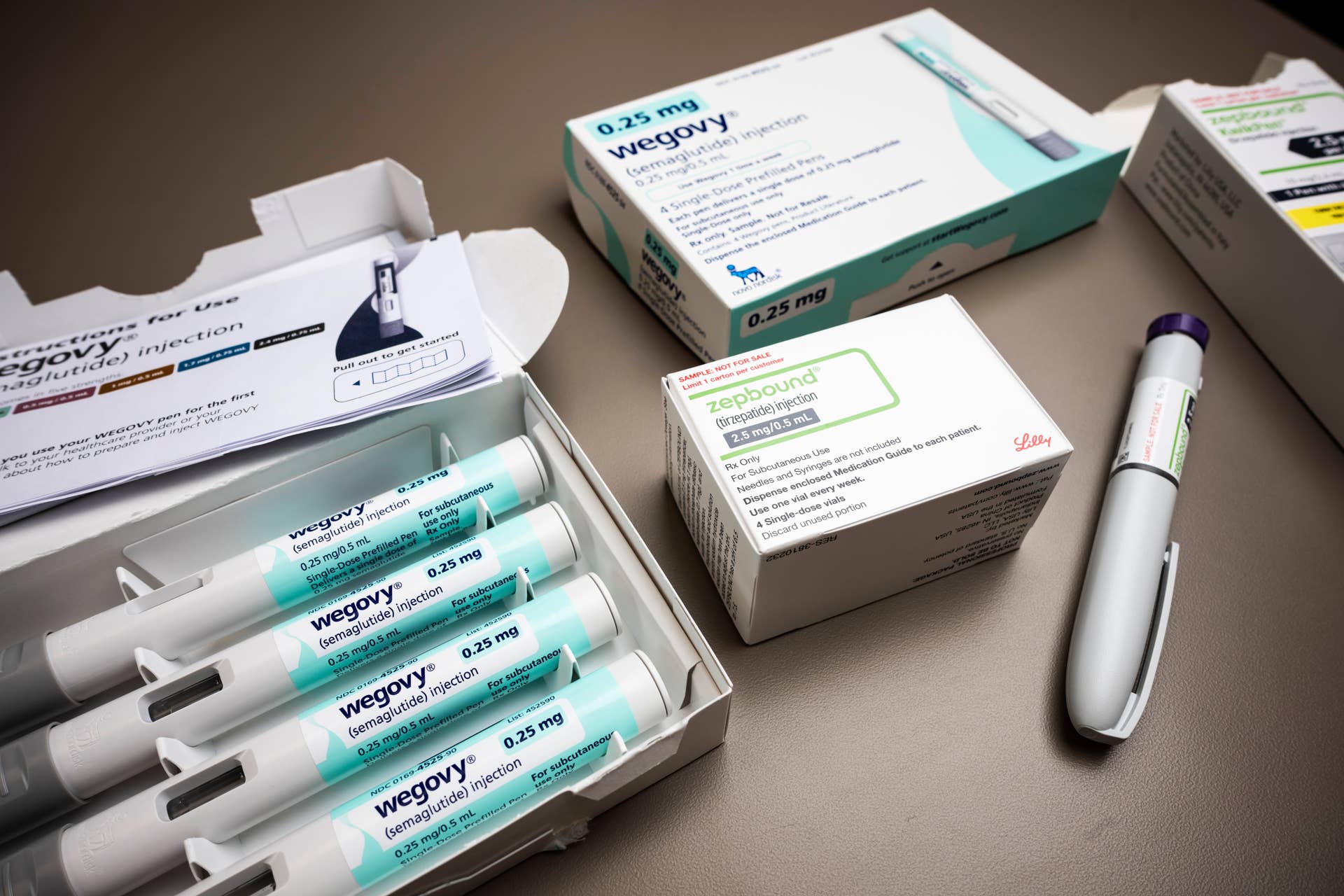 Despite cheaper options, GLP-1 affordability remains a major hurdle, as high prices force many to delay, stop, or reconsider treatment.
The Washington Post / Getty Images
Geographic and insurance gaps widen the GLP-1 divide
States with the highest obesity rates, including Mississippi, West Virginia, and Arkansas, also bear the highest income burdens for GLP-1 treatment, with annual out-of-pocket costs consuming more than 12% of median per capita income in some cases, a Health Management Academy analysis found.
In comparison, residents in higher-income states such as Massachusetts and Connecticut face burdens below 8%, according to the Health Management Academy.
Sharon Faust, chief pharmacy officer at Navitus Health Solutions, noted in a press release that affordability and sustained access remain key challenges for GLP-1 users.
GLP-1 medications offer meaningful health benefits, but this survey highlights trends and concerns related to medication cost and long-term accessibility to these drugs.
Insurance coverage adds another layer of difficulty, and only 19% of firms with 200 or more employees include coverage for GLP-1 medications when prescribed specifically for weight loss, KFF’s 2025 Employer Health Benefits Survey found.
That share rises to 43% among the largest employers, those with 5,000 or more workers, but still leaves the majority of working Americans without a covered path to treatment.
“Difficult tradeoffs exist for patients and plan sponsors alike,” Faust said in a statement accompanying the firm’s own 2026 survey of 2,000 GLP-1 users. “Without thoughtful benefit strategies, affordability challenges will continue to grow.”
GLP-1 users’ trade-offs when reshaping their finances around a prescription
The Trimi data shows a set of trade-offs users are already making: skipping a 401(k) contribution, putting the expense on a credit card, or stretching a dose to make it last.
Each move trades a lower cost now for a higher one later, whether that surfaces as a smaller retirement account, higher interest, or a treatment that stops working the way it should.
The clinical demand for GLP-1 medications is high. Whether the current pricing structure lets users stay on treatment without undermining the financial goals the drugs were supposed to support is the question no manufacturer discount has yet answered.
Related: Medicare’s new $50 GLP-1 deal has a catch most overlook