
Consumers consistently say they want healthier fast-food options, but when it’s time to order, many still choose taste, value, and convenience instead.
McDonald’s, for example, no longer even has a salad on the menu because customers simply didn’t buy enough of them to justify the expense. There’s often a disconnect between what people say they want and what they actually order.
“How Major Restaurant Chains Plan Their Menus,” an article that appeared in the American Journal of Preventive Medicine, showed the challenges of offering healthy options and why many chains don’t.
“Growing sales and increasing profits are the most important considerations, mentioned by 61% of respondents; health and nutrition were noted as important by 21%,” according to a survey conducted for the article.
Healthy options are generally not a priority.
“Restaurants may try to avoid losing groups with a ‘health seeker’ by offering healthier foods (low in fat and calories, more fruits and vegetables) (27% of chains), but operators believe demand for healthier foods is not widespread. Additional obstacles to including healthier menu items are the short shelf life of produce (46%), increased preparation time, low sales, and high labor costs,” the data showed.
It’s one thing, however, for Wendy’s to offer a salad to give mom or dad an option while the kids eat burgers and chicken nuggets. It’s another thing entirely to build a chain around healthy dining, a business model that has proven difficult for many operators.
Salad and Go ultimately filed for Chapter 11 after also facing inflation, consumer spending pressures, rapid expansion, and the recent lettuce scare.
The chain will close all its restaurants at the close of business on Aug. 5.
Salad and Go hit by lettuce woes
Even before the bankruptcy, the chain faced another blow, a nationwide lettuce recall that weakened consumer confidence in salads.
“Phoenix, Arizona-based drive-thru salad concept Salad and Go has filed for Chapter 11 bankruptcy protection and has shuttered all 70 of its locations, effective Aug. 5. The company cited consumer pressures, inflation, and overexpansion for the decision,” Nation’s Restaurant News reported.
In addition to closing, Salad and Go has removed its Facebook and Instagram pages. The company did share a statement on its shutdown.
“While Salad and Go earned the support and loyalty of a deeply passionate community, the business was ultimately unable to overcome sustained pressure on consumer demand, past strategic growth challenges, and rising costs,” the company said.
It was also hurt by the same lettuce scandal that damaged sales at Taco Bell, causing the chain to remove the produce from its menu.
“A cyclospora outbreak in July, in which Salad and Go was not implicated, weakened confidence across the industry and compounded these challenges,” Salad and Go added.
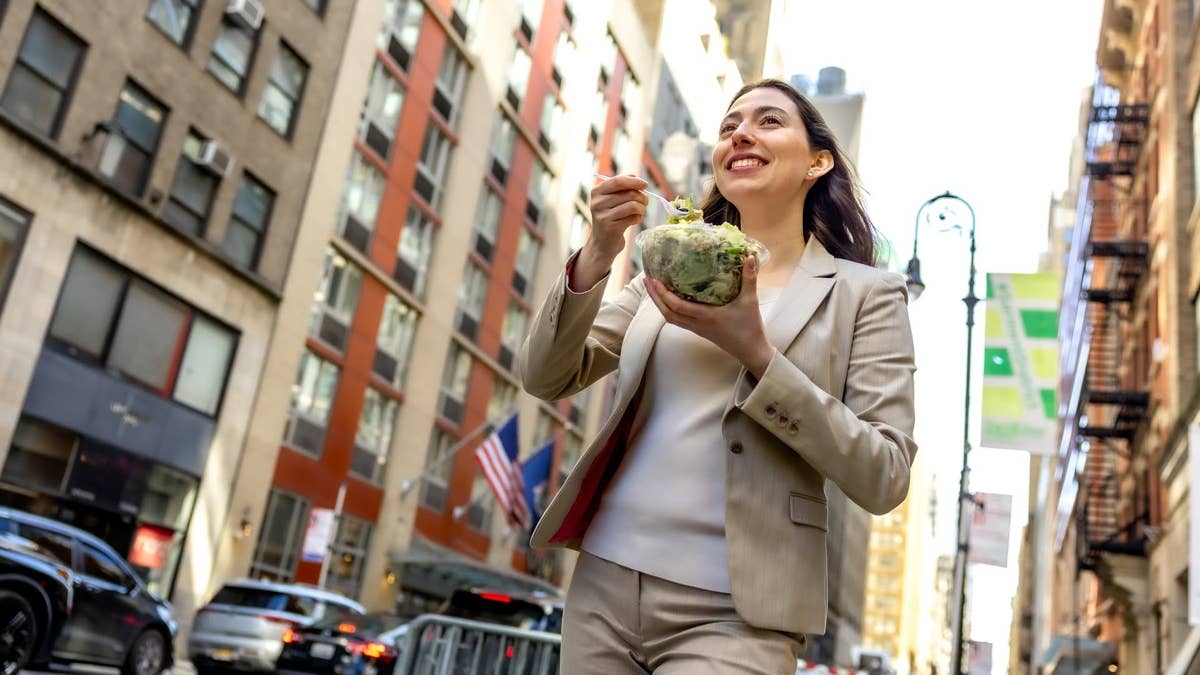 Salad and Go is closing all its locations.
Shutterstock
FDA issues cyclospora update
Taylor Farms de Mexico announced on July 17 that it is voluntarily removing all iceberg lettuce sourced from central Mexico from the U.S. market, according to the FDA. That includes products sold at Walmart and at various Taco Bell locations.
The FDA shared a list of impacted locations:
- Cases with Taco Bell exposure have been reported from nine states: IL, IN, KS, KY, MI, OH, OK, PA, and WV.
- Foodservice: Taylor Fresh Foods distributed recalled iceberg lettuce products from June 29 through July 16 in AL, AR, CT, FL, GA, IA, IL, IN, KS, KY, LA, MA, MD, MI, MO, MS, NC, NH, NJ, OH, OK, PA, SC, TN, TX, VA, and WI.
- Retail stores: Recalled Marketside-brand products were sold at select Walmart stores in: AL, AR, FL, GA, IN, KS, KY, LA, MO, MS, OK, TN, TX, VA, WV.
- Restaurants: Any Taco Bell locations that received recalled iceberg lettuce from Taylor Farms de Mexico. Taco Bell has indicated they are no longer using lettuce from Taylor Farms de Mexico as of July 17, 2026.
The FDA also shared what symptoms to watch for if you may have been exposed.
“Most people infected with Cyclospora develop diarrhea, with frequent bowel movements. Other common symptoms include loss of appetite, weight loss, stomach cramps/pain, bloating, increased gas, nausea, and fatigue. Vomiting, body aches, headache, and fever may be noted,” the federal agency shared.
Salad and Go’s founders saw this coming
Tony and Roushan Christofellis sold the drive-thru salad concept to private equity in 2021 and then watched the chain make changes that they believe led to its demise. They shared their thoughts in a Facebook post.
“The quality and integrity of the product declined. They removed all organics. They outsourced all of their proteins which are now cooked weeks before being served. They increased the shelf life of centrally prepped ingredients. They added preservatives and additives to their dressings. They coated their romaine with a preservative to make it last longer,” they shared.
Most importantly, the founders wrote, the new owners made a change that the Christofellis’ believed doomed the chain.
“They raised the prices of their salads from $5.74 to $7.75. They increased the price of their drinks from $1 to $1.75. With all of these changes making what we loved to eat every day now unrecognizable to us, we saw a big void open once again. Almost like it was before we started Salad and Go. To us, Salad and Go no longer existed,” they wrote.
The chain had already been shrinking rapidly, even before the shutdown and bankruptcy filing.
“Salad and Go named former Krispy Kreme CEO Mike Tattersfield to the role in 2025, and he closed over 40 restaurants in Texas and Oklahoma mere months into the job. Less than five months after that announcement, the drive-thru salad concept closed another 32 locations, exiting those states altogether, leaving a footprint in just Arizona and Nevada,” NRN reported.
Court documents on the Chapter 11 bankruptcy were filed in the U.S. Bankruptcy Court for the Southern District of Texas, Houston Division, but are not yet publicly available.
Restaurants can’t serve what doesn’t sell
“Most People Don’t Choose Healthy Meals at Restaurants” is the headline of a Consumer Reports article showing that most restaurant meals Americans eat are not healthy.
“Half of the meals Americans order at sit-down restaurants and 70% of the ones they choose at fast-food establishments would get a failing grade for nutrition, according to a new study from Tufts University published in The Journal of Nutrition,” the magazine reported.
That’s something you can’t blame solely on the restaurants.
“Both consumers and restaurants have responsibility here: Restaurants can’t serve what doesn’t sell, and consumers can’t buy what’s not on the menu,” Dariush Mozaffarian, M.D., dean of the Friedman School of Nutrition Science and Policy at Tufts University, told Consumer Reports.
Chains offering salad and other healthy options are also being hurt by the economy and consumers looking to spend less.
“Buying groceries and making salads at home is always cheaper than buying one prepared to order at a counter, as is grabbing a protein bar or yogurt on the way out the door. For convenience-seekers, whole meals can be picked up at the supermarket or even ordered online,” Bloomberg reported.
Some consumers are also trading down.
David Portalatin, the food-service adviser at market research group Circana, told Bloomberg that the proportion of lunches bought from restaurants, cafeterias and other food-service establishments “remained stable at 23% for the three months ended in September, signaling that dropping out of Sweetgreen might mean going to Chick-fil-A instead.”
Related: Online gaming company files Chapter 15 after $719M verdict