
Nike stock (NKE) has fallen sharply in 2026, and investors have been waiting for signs that CEO Elliott Hill‘s turnaround plan is working.
On Tuesday, Aug. 4, one of Wall Street‘s most-followed retail analysts said that wait will be longer and more costly than expected.
JPMorgan downgraded Nike and cut its price target. This note pushed the stock lower in early trading.
The call matters because it challenges the assumption behind many bullish Nike positions, suggesting the turnaround will start showing up in earnings soon.
If you own Nike, or you have been waiting for a cleaner entry point, the question now is how much further the stock has to fall before the risk starts to look worth taking.
Why JPMorgan cut Nike stock to a sell-equivalent rating
JPMorgan analyst Matthew Boss downgraded Nike to Underweight from Neutral.
He warned that the financial impact of the company’s turnaround decisions will pressure earnings through fiscal 2028, CNBC reported.
Underweight is JPMorgan’s lowest rating. In plain terms, the bank is telling clients to sell, or at least hold less Nike than the market average.
Boss also cut his price target to $40 from $47, Benzinga noted. From the Monday, Aug. 3, close, that implies about a 6% loss.
Boss lowered his forecasts, and his earnings estimates now track about 20% below consensus expectations.
Wall Street expects Nike to earn more in two years than JPMorgan does, and Boss believes the broader market is being too optimistic.
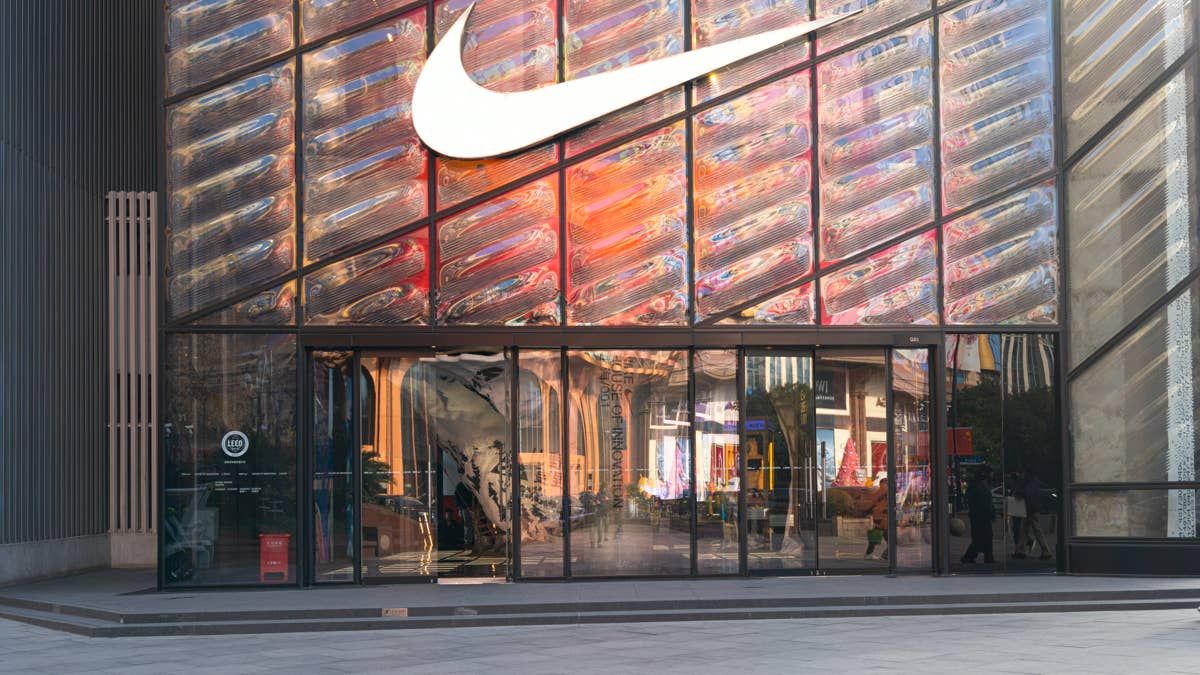 Nike faces overlapping revenue headwinds in China and North America as its “Win Now” turnaround runs longer than Wall Street expected.
Sergio Delle Vedove / Getty Images
The “Win Now” strategy that’s still draining Nike’s profits
“Win Now” is the name Nike gave its turnaround plan under Hill, who took over in late 2024.
The goal was to clear old inventory, rebuild wholesale relationships, and refocus the brand on sport.
Boss said the decisions Nike is making now carry a delayed bill.
He wrote that the moves made through the end of 2026 will linger and weigh on Nike’s profit and loss statement into the second half of fiscal 2027 and fiscal 2028, Investing.com reported.
The profit and loss statement is the report that shows whether a company made money after all its costs.
In simple terms, the cleanup work happening today keeps costing Nike money well into 2028.
JPMorgan set a December 2027 target of $40, based on about 21 times its calendar 2028 earnings estimate, and framed fiscal 2028 as a stabilization year rather than a growth year.
That reframing lowers what the stock is worth to investors betting on a fiscal 2028 rebound.
Nike’s $1 billion China problem is bigger than one bad quarter
Two operational decisions stood out in the note, and the first is in Greater China.
Nike is terminating its online distribution agreement with Topsports International Holdings in mainland China by January 2027, so it can control its own digital sales and push full-price products, Investing.com reported.
Related: Kroger stock slide reveals bigger grocery problem
The strategy makes sense over the long run, but the near-term cost is steep.
Boss estimated Nike is about to hit a $1 billion revenueheadwind as it revamps its digital marketplace in the region, which works out to roughly a 20% revenue drop there.
Nike plans to anchor its China marketplace around official flagship stores on Alibaba’s Tmall, JD.com, and Douyin starting in January 2027, Benzinga reported, alongside its own app and site.
Nike is giving up a large chunk of guaranteed sales to rebuild the business the way it wants, and revenue continues to fall.
China was already Nike’s weakest major market, with sales there down about 30% heading into this reset.
Store closures add a second revenue headwind in North America
Nike is reducing its U.S. store footprint by about 10% to cut overhead and lean harder into direct and digital sales.
The company closed roughly a dozen U.S. locations in July 2026 alone.
Fewer stores means less shelf space and fewer places to sell shoes, which pulls down revenue in the short term.
More Retail Coverage:
- Sportswear giant continues store closures nationwide
- Albertsons stock in hot water after sobering reveal
- 88-year-old retailer closing 75 stores, slows expansion
Boss said Nike will deal with the financial impact of the closures until they are fully annualized, likely around July 2027, according to CNBC.
Annualized means the full effect shows up across a complete year of results, so the closures will keep reducing revenue until the middle of 2027.
Stack the China reset on top of the store closures, and Nike is dealing with two separate causes of lower revenue at once, both self-inflicted and both slow to resolve.
How Nike stacks up against the rivals taking its market share
While Nike restructures, its competitors keep gaining.
JPMorgan resumed coverage of Adidas (ADS) and On Holding (ONON) with Overweight ratings in early July.
The bank argued that a slower Nike comeback extends the window for companies gaining market share to keep winning, Investing.com reported.
The contrast shows up in how analysts rate the group.
On Holding carries a Buy consensus with an average target near $52, according to TipRanks, while Nike now sits at Underweight at JPMorgan.
Boss also detailed how much ground Nike has lost to its closest rivals.
He noted that On Running and Hoka have closed their combined market-share gap to Nike from a 10-point advantage down to roughly 200 basis points, which leaves less room for error.
Nike’s stock reflects the pressure. Shares are down about 33% year to date and have fallen 41% over the past year, Investing.com noted.
Even the bull case has cooled. As recently as March, Barclays upgraded Nike and argued the stock had reached a fundamental bottom, then cut its target to $52 in July as the recovery slowed.
What JPMorgan’s Nike downgrade means for your money
For shareholders, the practical message is to prepare for a longer holding period than the bulls promised.
At a $40 target, the stock trades at about 21 times JPMorgan’s 2028 earnings estimate. That is a rich multiple for a company the bank expects to merely stabilize.
A few things worth watching before you act
- The stock already sits near the target. Nike trades just above both JPMorgan’s $40 target and its 52-week low of $40, so much of the downside the bank sees may already be in the price.
- November is the catalyst. JPMorgan expects Nike to lay out a three-year plan targeting double-digit operating margins by fiscal 2030 at its November investor day. A credible roadmap could force the bears to reconsider.
- The consensus still disagrees. With 12 buy ratings against just two sells, JPMorgan is going against a strong crowd.
If you are a long-term holder, none of this breaks the underlying brand. Nike still has global scale, roughly $9 billion in cash, and a dividend yield near 4%.
If you are just looking into the stock, the wider gap between JPMorgan’s $40 and Wall Street’s higher targets is the range to watch.
A weak fiscal 2027 would pull more analysts toward Boss’s view, while a strong November plan would validate the optimists.
Nike’s recovery is real in margins and wholesale, but the revenue engine will not fully reset until mid-2027 at the earliest.
Boss argues in his downgrade note that the stock may not reward buyers until the company proves it can grow again.
Nike reports its fiscal first-quarter 2027 results this fall, and that report will be the first hard test of whether JPMorgan or the consensus has the correct outlook.