
Home sales in July experienced their strongest annual gain of 2026 — up 7% — according to real estate technology company Zillow, which also predicted rising mortgage rates that could dampen expectations following the positive housing market development.
“Unless they reverse course, mortgage rates will be higher than last year in August, likely enough to push the typical mortgage payment above year-ago levels,” Zillow said in a statement.
The sales numbers for July stem from deals finalized weeks earlier, when mortgage rates were around 6.5%. However, a mid-summer oil price spike pushed borrowing costs back up, convincing a wave of prospective buyers to put their plans on hold.
“July was a strong month for existing home sales, but unfortunately it may represent the peak of what we can expect for the rest of the year,” said Mischa Fisher, chief economist at Zillow. “Closed sales in July mostly reflect offers accepted in June, when underlying pent-up demand for housing, combined with an improving rate environment, drove strong activity.”
“Unfortunately, the weak growth in newly pending sales in July and the worsening rate environment portend a weaker half of the year for sales growth, with flat to declining transaction volumes for the remainder of the year in some regions.”
Freddie Mac reports rising mortgage rates
The 30-year fixed-rate mortgage (FRM) averaged 6.69% for the week, up from 6.66% the previous week, Freddie Mac reported on August 6. The 30-year FRM averaged 6.63% at this time in 2025.
“While mortgage rates continue to influence affordability, the housing market is showing signs of adjustment, with listing prices modestly below year-ago levels and for-sale inventory improving from the limited supply seen in recent years,” Freddie Mac wrote.
On August 11, the 30-year FRM was 6.79%, according to Mortgage News Daily (MND).
“It ended up being a remarkably uneventful day for mortgage rates,” wrote Matthew Graham of MND. “Some lenders were slightly higher than yesterday. Others were roughly unchanged. The difference came down to whether the lender in question raised rates yesterday afternoon.”
“What does this mean?” Graham asked. “Lenders prefer to set rates once per day around 10 a.m. ET. But if the underlying bond market makes a big enough move, lenders can change rates during the day.”
“Bonds lost just enough ground yesterday for some lenders to raise rates. Contrast that to today where virtually every lender maintained the same levels throughout.”
Inflation rebound expected
The upcoming Consumer Price Index (CPI) report for July 2026 is expected to show a return to rising inflation, Morningstar predicted.
In June, the CPI fell 0.4 percent, seasonally adjusted, and rose 3.5 percent over the last 12 months, not seasonally adjusted, reported the Bureau of Labor Statistics (BLS).
More on mortgage rates:
- Americans face 3 major takeaways after mortgage rate news
- Cooler PCE inflation data can’t fix today’s mortgage rates
- Mortgage rate forecast resets after Fed decision
“[The CPI] is one of the most important pieces of monthly economic data as far as [mortgage] rates are concerned,” Graham wrote.
“There’s no way to know how it will impact rates ahead of time — only that a large deviation from expectations is likely to result in a larger-than-average move higher or lower.”
Zillow describes disappointing housing market
“The affordability edge that has been a silver lining to an otherwise disappointing home shopping season may disappear in the coming months,” Zillow wrote.
U.S. home values have risen 1.1% year over year, according to Zillow. Despite that gain, a buyer putting 20% down on a typical home in July saw their monthly mortgage payment drop by 0.9% compared to last year.
Unfortunately, the weak growth in newly pending sales in July and the worsening rate environment portend a weaker half of the year for sales growth ….”
But rising mortgage rates may soon negatively impact the housing market.
“This portends a weaker half of the year for sales growth, with flat to declining transaction volumes for the remainder of the year in some regions,” Zillow wrote.
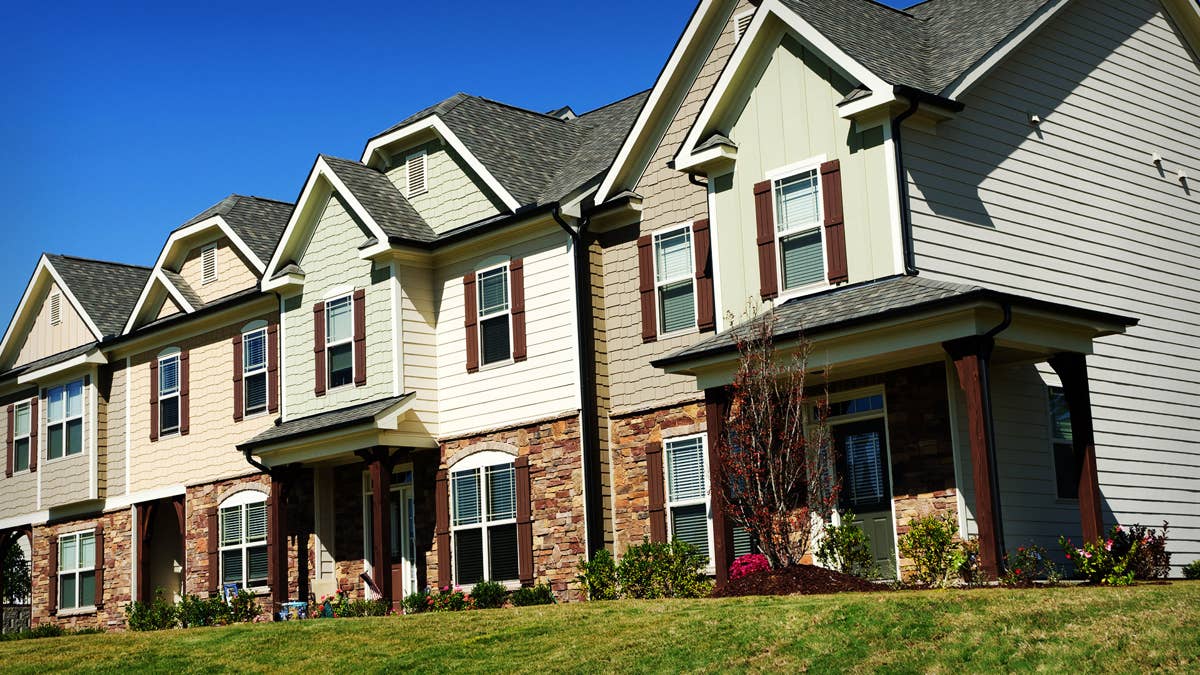 Zillow predicts higher mortgage rates during the second half of 2026.
Shutterstock
Zillow releases home value, home sales data
The following data reveal a snapshot of some key housing market indicators, according to Zillow.
- Core home value: The typical U.S. home is currently valued at $371,757.
- Closed sales activity: Zillow’s initial estimate shows 382,898 homes sold in July — a 7% increase year-over-year, though down 2.7% from June (figures subject to mid-month revision).
- New contract volume: Newly pending listings edged up 0.3% compared to last July, but dropped 7.7% month-over-month.
- Time on market: Homes typically spent 25 days on the market before going pending in July, slowing down by one day from last year and five days from June.
- Price drop frequency: Discounting shifted slightly, with 27.1% of active listings receiving a price reduction in July (down from 27.4% last year, but up from 25.7% in June).
- Above-list sales: Competition remained steady into early summer, with 30.8% of June sales closing above asking price — nearly flat compared to 30.9% a year prior and up slightly from May’s 30.2%. (Source: Zillow)
Related: Zillow warns 2026 housing market has officially peaked
