
There is a number making the rounds on Wall Street right now that would have seemed disconnected from reality 12 months ago: a $600 price target for a company that went public at $135 in June and briefly fell below that listing price within weeks of trading.
That kind of number does not get attached to rocket launches and satellite subscriptions.
Morgan Stanley just attached it anyway. The reason comes down to one acquisition. SpaceX (SPCX) bought AI coding platform Cursor for $60 billion in stock. The bank kept its base-case target at $300. It raised the bull case to $600.
The gap between those two numbers is where the entire SpaceX debate lives right now.
Morgan Stanley’s $300 base case and $600 bull case for SpaceX
Morgan Stanley’s $300 base case is built on what SpaceX is doing now. Rocket launches. Starlink. An AI division the bank estimates is worth about $12 per share.
Morgan Stanley considers that a discount to comparable neocloud companies, according to Investing.com.
More SpaceX:
- Morgan Stanley says SpaceX investors miss the bigger story
- Peter Schiff says SpaceX is a warning for hyped stocks
- SpaceX stock defies latest Wall Street forecasts
The $600 bull case is different. It does not assume things go well. It assumes things go very well, and all at once. Cursor needs to become a major recurring software business. Starlink needs to keep growing. Starship needs to lower orbital launch costs enough that space-based computing becomes real. Investors need to assign a premium multiple to the whole platform. That is a lot of dominoes.
SpaceX stock is down roughly 14.5% from its listing price. It climbed above $135 for the first time since mid-July in the three sessions before this report. The recovery suggests the market is at least reconsidering the post-IPO selloff.
Why the Cursor deal changes SpaceX’s AI story
SpaceX exercised its option to acquire Cursor in June for $60 billion in stock. The deal is expected to close before the end of August, according to The Information.
Cursor is an AI coding platform. It writes, edits, debugs, and reviews code. More than 50,000 businesses use it. Over 64% of Fortune 500 companies use it.
SpaceX and Cursor have been working together since April. The companies jointly trained Grok 4.5 using Cursor data and made the model available inside the platform. SpaceX already has distribution inside Cursor. What it is buying is scale and recurring revenue.
The Cursor brand may eventually be phased out from future software releases. The product would be divided among several SpaceXAI teams, The Information noted. SpaceX is absorbing Cursor into its AI stack rather than running it as a stand-alone product.
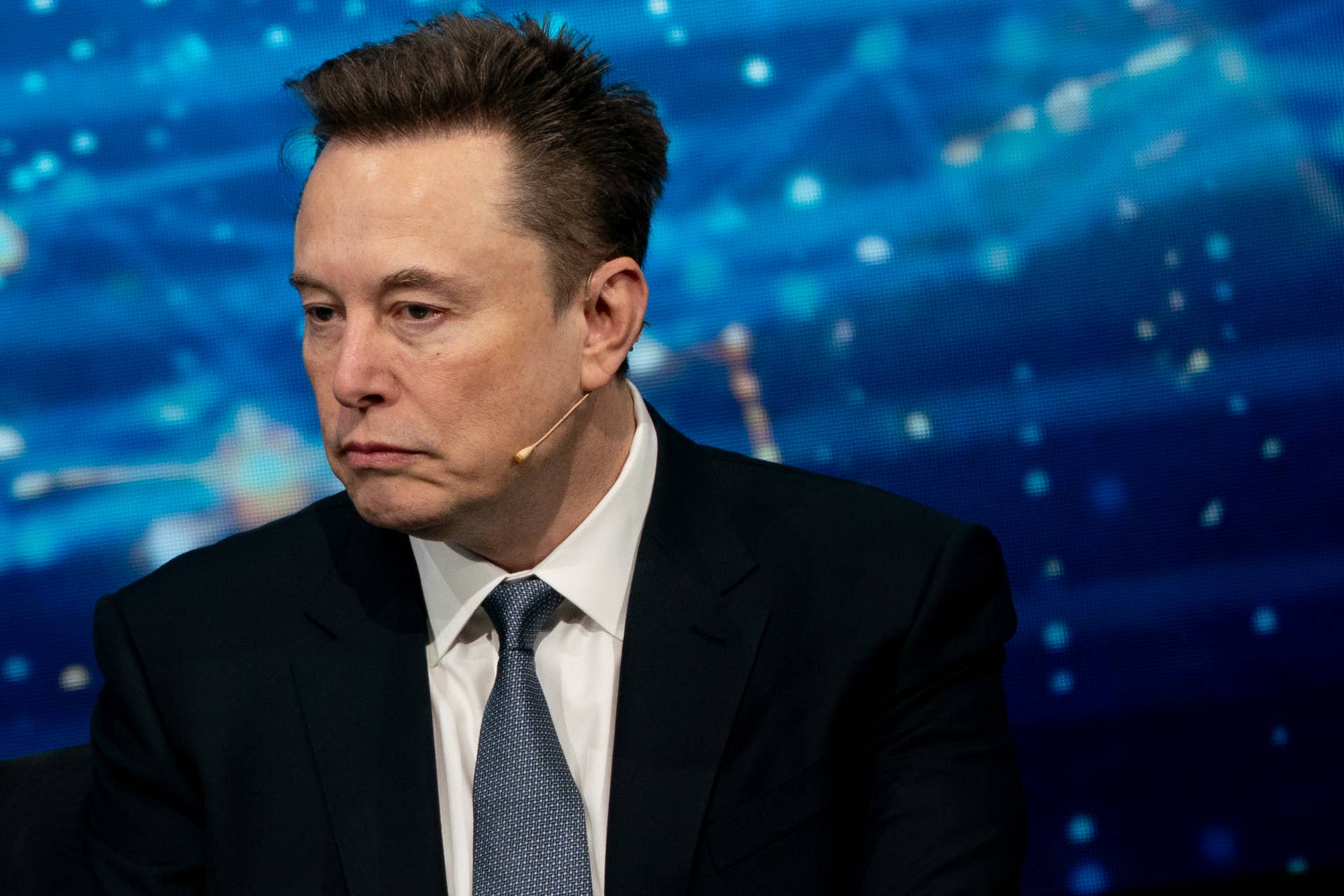 Morgan Stanley’s $300 base case is built on what SpaceX is doing now.
Stefani/Getty Images
How Morgan Stanley models Cursor’s revenue contribution through 2030
Morgan Stanley’s estimates for Cursor are specific. In 2026, Cursor is expected to add $2.5 billion to SpaceX revenue. That is about 10% of projected AI revenue for the year.
In 2027, that figure jumps to $13 billion, or roughly 19% of projected AI revenue, according to Investing.com.
Morgan Stanley’s Cursor revenue projections:
- 2026 revenue contribution: $2.5 billion, approximately 10% of SpaceX projected AI revenue
- 2027 revenue contribution: $13 billion, approximately 19% of SpaceX projected AI revenue
- Annual recurring revenue by end of 2026: $8 billion
- Annual recurring revenue by 2030: roughly $33 billion Source: Investing.com
If those numbers hit, Cursor would be one of the fastest-growing enterprise software businesses in the market. The open question is whether Cursor inside SpaceX grows the same way it would have as a stand-alone company.
What Arete’s $450 price target says about the SpaceX debate
Morgan Stanley is not alone. Arete bumped its SpaceX price target to $450 from $401. It kept a Buy rating. That represents roughly 224% upside from current levels, The Fly confirmed.
Three targets, three different answers. Morgan Stanley at $300. Arete at $450. Morgan Stanley’s bull case at $600. All three include launch revenue and Starlink.
What separates them is how much value each assigns to Cursor, orbital computing, and the AI business SpaceX is still building. That is a genuinely hard thing to model from the outside.
SpaceX is still a rocket company. It is now also a $60 billion software buyer. Morgan Stanley’s $300 target bets those two things fit together. The $600 bull case bets they fit together and exceed what either could do alone.
For investors deciding which number to believe, the Cursor integration and the first Cursor-specific revenue figures will be the clearest early signal.
The stock has been volatile since the IPO. It fell below its $135 listing price within weeks. It has since been trading in a range that shows real uncertainty about which version of SpaceX investors are buying.
A rocket business with satellite internet is one stock. An AI platform that also launches rockets is a very different one. Morgan Stanley’s note is a bet on the second version.
Related: T-Mobile’s CEO just dismantled SpaceX and Starlink’s big goal