
Betting against AI still looks like a dangerous game.
In particular, one fast-growing AI neocloud stock has surged more than 200% in 2026, as investors continue to pour money into companies facilitating the AI boom.
Demand looked relentless, and the market’s been pricing in plenty more growth, even though investors appear to be in “show-me” mode with regard to AI.
“Big Short” Michael Burry, though, is betting something has gone wrong.
He continues to lean further against AI, adding to his bearish positions involving Micron (MU), Oracle (ORCL), and the iShares Semiconductor ETF (SOXX), while increasing another short against one of AI’s hottest stocks.
Why is Michael Burry shorting Nebius after earnings?
Nebius’ (NBIS) earnings revealed a booming business, but Burry thinks there’s trouble beneath the headline growth.
“Nebius is what the top of a boom looks like,” Burry wrote in a Substack post after adding to his short position at $247.
For perspective, Nebius has been a tremendous wealth compounder over the past year and essentially functions as a neocloud.
More Manager Buy/Sells:
- Michael Burry increases his bet against popular chip giant
- Warren Buffett reveals he broke his own investing pattern
- Mark Cuban bets on MLB with Athletics minority stake
It’s basically an AI-focused cloud provider building potent data centers packed with pricey GPUs, renting the compute power to businesses training and running AI models.
Burry’s criticism centers on the pricing of Nebius’ compute contracts. Its management said it could potentially sell all of its 2027 capacity through one- to three-year agreements but is deliberately keeping some supply available for shorter-term customers.
Those short-duration deals could command nearly $40 million to $50 million per megawatt, sometimes more. Conversely, midterm contracts are priced around $20 million to $25 million per megawatt.
That’s the part Burry finds unusual.
Typically, longer commitments provide a supplier with stronger visibility and could justify more attractive economics. Here, customers are looking to pay nearly twice as much for immediate access to compute.
One way to look at it is from a scarcity lens, but Burry feels customers are attaching dramatically more value to AI capacity today than to the same capacity further out. In the commodities space, that relationship is often characterized as “backwardation.”
However, for AI infrastructure, Burry’s question is essentially: What is the market expecting to lose value so quickly?
“Power does not depreciate,” he wrote.
Moreover, Burry questioned Nebius on extending the depreciation life of its servers from four years to five. He wonders why Nebius is assuming its hardware will remain economically useful longer, even as contract pricing is expected to imply a sharp drop in the value of future compute.
Nevertheless, Burry’s short is essentially a bet that investors expect today’s AI boom to last a lot longer than the underlying assets could realistically support.
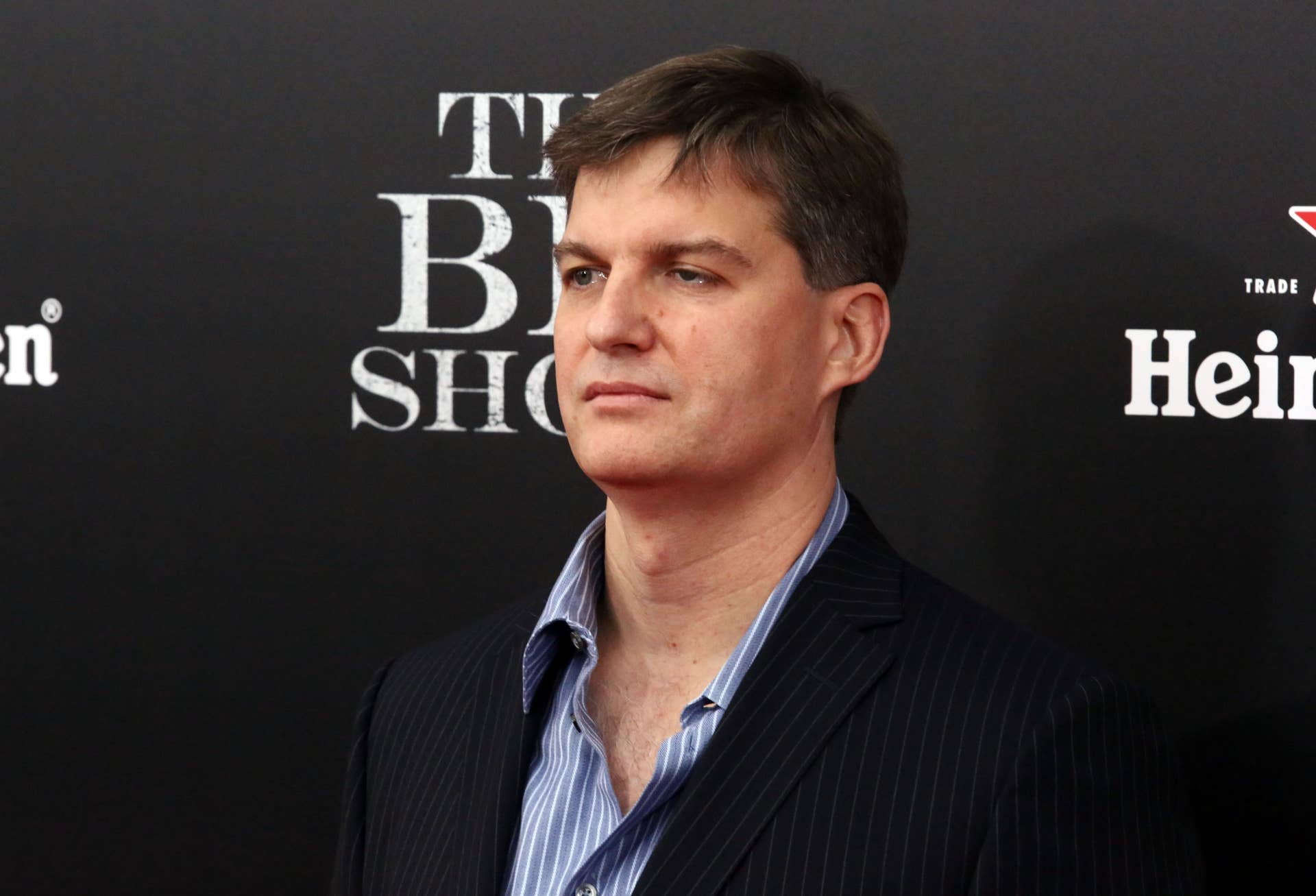 Michael Burry increased his Nebius short after questioning the company’s AI economics.
Astrid Stawiarz/Getty Images
What stood out in Nebius’ earnings?
- Revenue exploded 454% year over year to $582.3 million, while core Nebius AI revenue jumped 514% to $575 million, indicating that the company’s growth is now spearheaded by AI infrastructure demand.
- Annualized run-rate revenue reached $3 billion, up 598% from a year earlier and 56% from March, an unusually steep acceleration in compute demand.
- Profitability improved dramatically. Adjusted EBITDA swung to $236 million from a $21 million loss, while the margin climbed to 41%. Nebius AI itself generated a remarkably robust 50% EBITDA margin.
- Operating cash flow surged to $2.3 billion, giving Nebius stronger internally generated liquidity as it looks to scale up quickly.
- Nevertheless, the growth is highly capital-intensive, with quarterly capex of roughly $5.7 billion, nearly 10 times reported revenue. Source: Nebius Q2 Investor Relations Update
How has Nebius stock performed?
Nebius has clearly been one of the biggest winners of the AI infrastructure trade.
According to Seeking Alpha data, the stock surged almost 210% year to date and 244% over the past year, punishing the S&P 500’s respective 13.2% and 20.2% gains. Even over six months, Nebius is up nearly 189%.
Consequently, that tremendous momentum has driven its valuation expectations sky-high.
Nebius stock trades at 73.1 times trailing sales and 20.5 times forward sales, compared to the sector median of just 3.7 and 3.4 times, according to Seeking Alpha.
Perhaps the more interesting number is the forward price-to-cash-flow of 8.7 times (below the sector’s 20.7 times), which suggests investors are pricing in a dramatic cash-flow ramp.
What makes Michael Burry’s investing strategy different?
Michael Burry’s contrarian investing style often involves betting against red-hot stocks.
His approach involves working backward, identifying gaps between investor euphoria and what the company’s economics can actually support.
AI is the obvious example at this point.
In Scion Asset Management’s final reported 13F, Burry held put options tied to 5 million Palantir shares and 1 million Nvidia shares. These shares attracted an underlying value of nearly $912 million and $187 million, respectively; those figures weren’t the amounts Burry actually spent on the options.
That’s classic Burry, where he isn’t afraid of constructing asymmetric trades. Options allow him to strongly express his bearish view while defining the capital committed to the trade.
Of late, that same skepticism has deepened into the AI infrastructure boom.
Business Insider reports that Burry disclosed he was shorting Oracle at roughly $145, citing concerns about the tech giant’s ballooning debt load, long-term commitments, and off-balance-sheet obligations.
While the bulls are still enamored with the flashy headline figures, Burry is asking what those lofty sales cost to produce, how much capex is consistently reinvested, and who ultimately bears the risk.
“The fish have gotten very fat, very large, and easy to shoot,” Burry wrote while discussing AI companies and their liabilities.
And on Aug. 12, Burry recommended rewatching “The Smartest Guys in the Room,” the documentary about Enron, writing that he feels “history is repeating.”
However, he isn’t automatically bearish when everyone else is bullish.
Perhaps the best example is his June purchase of MercadoLibre stock at nearly $1,630, after it had dropped 39% from its June 2025 high, underscoring his disciplined buying approach.
He’s less interested in catching falling knives than in whether the market enthusiasm has moved too far away from the underlying economics.
Related: Nvidia’s biggest risk may be coming from inside its customer base