
There is a point where money stops compounding and starts collecting. Past a certain size, the marginal dollar cannot buy a better return. It can only buy things that were never for sale.
Sports franchises sit at the very top of that list. There are 20 Premier League clubs in any given season, maybe a dozen with real global pull, and almost none of them come to market by choice.
For most of the past 15 years, the smart money went American. NFL and NBA franchises kept resetting records while European soccer got written off as a vanity trap, a business with no salary cap, no meaningful revenue sharing, and a relegation trapdoor cut into the floor.
That consensus has quietly flipped. Apollo took control of Atlético Madrid this spring. Jim Ratcliffe bought into Manchester United in 2024. The capital that used to avoid the sport is now underwriting it.
On Friday, Aug. 14, the third-richest person alive joined them. Jeff Bezos is putting personal money into Liverpool Football Club, his first investment in a sports team, and the terms buried underneath the announcement matter far more than the price tag.
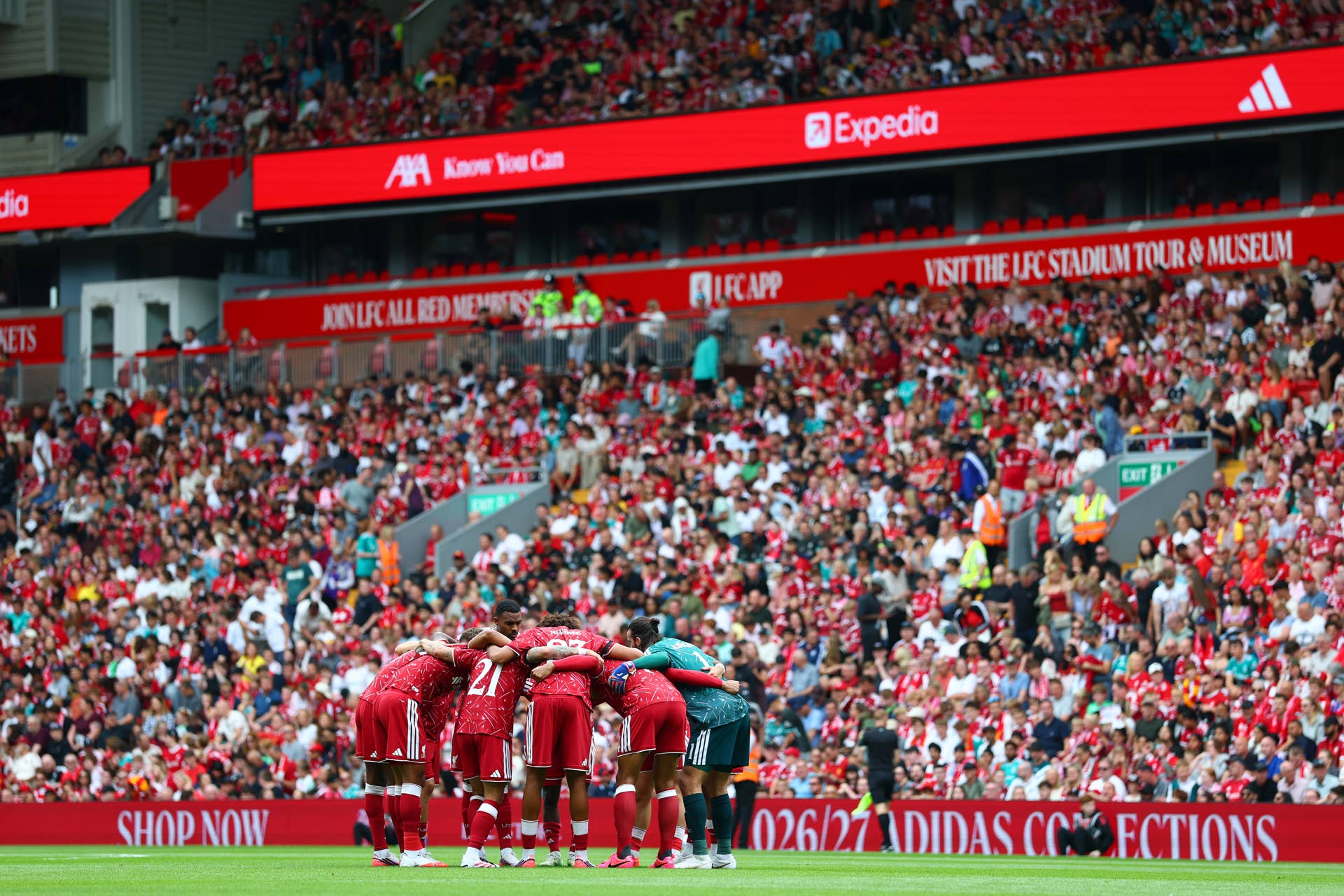 FSG agrees to sell a minority stake to Jeff Bezos-led consortium 1892 Holdings.
Chris Brunskill/Fantasista / Getty Images
Why soccer clubs became billionaire trophy assets
Scarcity explains part of the repricing. Media rights inflation explains the rest, and it is the part most investors underrate.
Live sports were treated as a subscriber-retention moat rather than a content line item. Owning the moat is one thing. Owning the thing everyone is bidding for the right to broadcast is another.
Related: Adidas’s World Cup soccer jerseys are an additional 30% off the sale price
Liverpool has been the cleanest demonstration of that math in world soccer. The club posted €836.1 million in revenue for the 2024/25 season, ranking fifth globally and becoming the highest-earning English club for the first time in the survey’s 29-year history, according to Deloitte.
When I ran FSG’s original outlay against the price implied by this deal, the return is the story. A £300 million rescue in 2010 has become an asset changing hands at more than 14 times that figure, and it happened in a sport American investors spent a decade calling uninvestable.
What the Liverpool stake actually buys
FSG has entered a definitive agreement to sell a minority equity stake to 1892 Holdings, a consortium “led and managed by Amit Bhatia,” with money from Bhatia and the Mittal Family Trusts, K5 Sports and the Saverin family office, according to a club statement.
More Sports Business:
- Rebel sports league facing Chapter 11 bankruptcy
- Disney’s big bet on the NFL is already paying major dividends
- Nike rival makes a surprise U.S. comeback
The stake is roughly 30% and FSG keeps majority ownership and operational control, per that same statement, which disclosed no price. Bhatia becomes vice chairman and joins an expanded board.
Bezos does not. He is the lead investor in the K5 Sports fund, and he will not take a board seat, according to CNBC.
Here is the clause that reframes everything. The investment group holds an option to become Liverpool’s majority shareholder at a valuation near $8 billion within the next 12 months, CNBC reported, citing a person familiar with the matter.
That is not a minority investment. That is a call option on an English institution, written at a fixed strike, with a year to decide.
The numbers around it:
- FSG bought Liverpool in 2010 for £300 million, about $476 million at the exchange rates of the time, according to Sportico.
- The consortium is buying about 30% at a valuation of just over $7 billion, a record for a soccer club investment that tops the roughly $5.8 billion enterprise value on Ratcliffe’s 2024 Manchester United stake, reported Sportico.
- Forbes valued Liverpool at $6.2 billion in its 2026 rankings, fourth among all soccer clubs, according to Forbes.
- Bezos previously explored ownership of the NFL‘s Washington Commanders and Seattle Seahawks without closing a deal, according to CNBC.
Timing deserves a mention. Liverpool finished fifth in the 2025/26 Premier League, lost Mohamed Salah, and watched Arsenal end a 22-year title drought. FSG is selling a third of the club at a record price off a disappointing season, which is usually the sign of a seller who thinks the number will not get better.
The Amazon connection investors should watch
Nothing here touches Amazon (AMZN) shareholders directly. This is Bezos’s own capital, moving through a private fund, into a private asset. He stepped back from the chief executive role in 2021 and serves as executive chairman.
The overlap is still worth logging. Prime Video holds UEFA Champions League packages in the United Kingdom, Germany and Italy, and its 11-year National Basketball Association deal is worth about $1.8 billion a season, which puts Amazon on track to spend roughly $3.8 billion on sports rights in 2026 and outspend every other streamer, according to SportsPro, citing Ampere Analysis.
Liverpool qualified for the 2026/27 Champions League. Its founder-chairman’s company sells those matches in three of Europe’s largest markets.
Amazon also walked away from live Premier League rights in the United Kingdom after the 2024/25 season, ceding the packages to Sky and TNT. Anyone reading this as Amazon buying its way into English soccer has the direction of travel backwards. The company left the broadcast side. The founder bought the asset.
What to watch over the next 12 months
The clock on that majority option starts once the deal clears regulatory approval, and the Premier League’s owners’ and directors’ test is the first gate.
Watch whether 1892 Holdings exercises it. A group willing to pay $8 billion for control of a club it just valued at $7 billion is telling you it expects the next media rights cycle, beginning in 2029/30, to reprice the entire league again.
And watch Anfield ticket prices. Liverpool already pulled back planned increases after fan protests, per Forbes. Control changing hands at these multiples eventually shows up on a matchday stub, which is the part of this deal supporters will feel long before any investor does.