
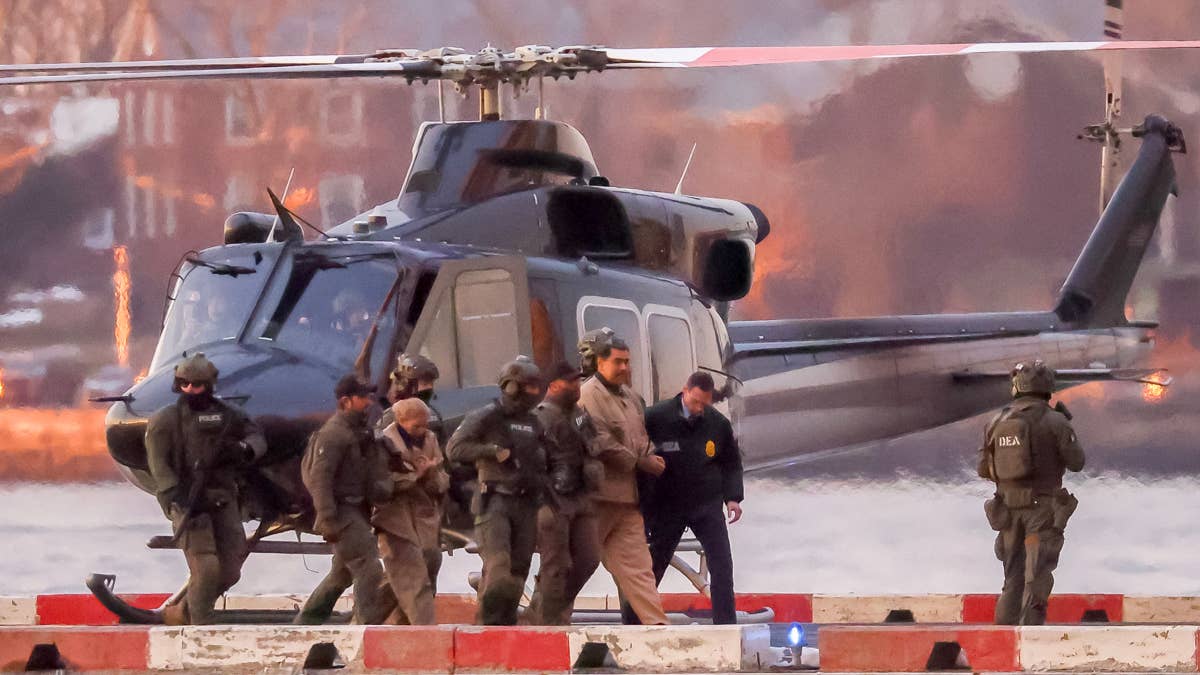
On Jan. 3, 2026, U.S. special forces captured Venezuelan leader Nicolás Maduro in a raid called Operation Absolute Resolve. One of the soldiers who helped plan that mission had also placed a string of bets on Polymarket predicting Maduro would be out of power within the month.
Master Sgt. Gannon Ken Van Dyke turned roughly $33,000 into more than $400,000 once the raid was confirmed, according to the Department of Justice. He was indicted in April on charges including theft of nonpublic government information and commodities fraud, and he has pleaded not guilty.
Van Dyke’s case became the public face of insider trading on prediction markets. New research suggests he was far from an isolated case, and that the platform he used may be structurally built to leak.
Polymarket lets anyone bet on the outcome of real-world events, from elections to military operations, with every trade settled on a public blockchain. That openness has fueled the platform’s rapid growth.
It is also, according to new research, the platform’s biggest liability.
556 Polymarket wallets show a similar betting pattern
The nonprofit Anti-Corruption Data Collective analyzed every settled Polymarket market through May 5, 2026, sorting bettors by behavior visible on the blockchain.
Wallets that staked at least $2,500 on a long-shot outcome, one carrying odds of 35% or lower, within a single hour were labeled “Orcas,” a nod to the whale’s precise hunting style.
Across the platform, ACDC identified 556 Orca wallets, according to its findings reported by Reuters. Within that group, 152 wallets concentrated their action on military and defense markets, collectively winning $8 million with an average win rate of 97.2%.
That figure dwarfs the roughly 52% win rate ACDC has separately documented across military markets broadly, itself about 3.5 times the platform-wide average. Notably, Van Dyke was not among the 152 Orcas, because he built his position more gradually than the pattern ACDC uses to flag insiders, a sign the true count likely runs higher.
Copycat trades may amplify the signal
The more troubling finding involves what happens after an Orca bets. ACDC found these wallets often attract fast-following wagers from larger accounts it calls “Whales” and from automated trading bots, both legal but capable of multiplying a single leak’s reach.
Hours before Israel’s June 2025 strikes on Iran, an Orca bet was followed by a bot wager of $200,000 and a whale wager of $100,000 on the same outcome, the research found. A similar rush of copycat betting appeared before February’s U.S.-Israeli strikes on Tehran.
Related: Jim Cramer tells investors to consider buying tumbling market giant
“It would be naive to think foreign-intelligence agencies aren’t monitoring these markets,” ACDC Co-founder David Szakonyi told Reuters.
Because trades settle on a public blockchain, every wager and every copycat that follows it is visible in real time to anyone who knows where to look, including hostile states watching for signals about U.S. military plans.
How Polymarket insider trading impacts defense stocks
While regulators focus on the national security threat, Wall Street is watching the public ledger for a different reason. Automated hedge fund algorithms constantly scrape blockchain data.
If a cluster of Orca wallets suddenly bets heavily on an impending military strike, quant funds can use that signal to front-run traditional equity investors.
A leaked military operation does not just settle a Polymarket wager. It often moves the entire defense sector. Traders armed with early warnings from prediction markets can buy call options on major contractors like Lockheed Martin (LMT), RTX Corp. (RTX), General Dynamics (GD), and Northrop Grumman (NOC) minutes before a strike becomes public knowledge.
The same applies to broader plays such as the iShares U.S. Aerospace & Defense ETF (ITA) or crude oil futures.
This creates a complex web of cross-market insider trading. The Commodity Futures Trading Commission oversees prediction markets, but any trader using nonpublic military information to trade traditional equity options falls squarely under the jurisdiction of the Securities and Exchange Commission.
A leak on a crypto betting platform could easily trigger a massive SEC insider trading probe in the stock market.
 New research says 152 Polymarket wallets won $8 million betting on military events with a 97.2% win rate, fueling insider trading concerns.
Regulators are racing to catch up
Congress is already investigating. The House Oversight Committee opened a probe into Polymarket and its regulated domestic rival Kalshi in May, demanding records on identity verification and suspicious-trading detection from both companies’ chief executives.
The Commodity Futures Trading Commission, which is pushing to formally regulate prediction markets, has brought a civil complaint against Van Dyke alongside the criminal case, one of at least three enforcement actions tied to the sector, according to CNBC.
More Defense:
- Jim Cramer says surging defense stock is a sensational buy
- Top defense contractor scores huge U.S. Army payday, stock jumps
- Why Rocket Lab is becoming a bigger defense player
Polymarket says it has referred dozens of suspicious wallets to authorities and hired outside blockchain analysts to flag unusual activity.
ACDC wants regulators to go further: mandatory identity verification for all bettors and a hold on payouts until flagged trades clear review. The group also argues markets tied to active classified operations may need to be banned outright, since verifying identity does nothing to stop someone who already knows the outcome.
Transparency built the risk it now exposes
Polymarket has marketed blockchain settlement as a safeguard, arguing public ledgers make manipulation harder to hide than opaque offshore betting markets. ACDC’s research complicates that pitch.
The same visibility that helps investigators catch bad actors after the fact also broadcasts their bets in real time, before the underlying secret becomes public.
That distinction separates prediction-market insider trading from its Wall Street counterpart. A trader who acts on leaked earnings data moves a stock price after the fact.
A trader who acts on leaked military plans can tip off the adversaries an operation is designed to surprise, while the bet is still live.
Prediction markets are on pace to handle tens of billions of dollars in wagers this year, and Congress, the CFTC, and the Pentagon are all now watching the same public ledgers that once served as proof of the industry’s transparency.
The open question is whether regulation can close that gap before the next Orca bet becomes the next leak.