
Wall Street used to cheer every big Pentagon production promise. These days, it waits for the number attached to it.
That habit showed up clearly on Monday, August 31. The Department of War signed seven-year framework agreements with General Dynamics (GD) and Lockheed Martin (LMT) to triple the production of the PAC-3 MSE interceptor and quadruple output of the THAAD system, according to the agency’s official announcement.
Shares of both companies barely moved, slipping less than half a percent apiece, Reuters reported.
That flat reaction is not a verdict on the deal itself. It is a sign of how investors have learned to read these announcements.
The Pentagon’s math: triple output, no price tag
The agreements set up multiyear procurement contracts covering components for both interceptor programs, with the government guaranteeing minimum annual purchase quantities, according to the Department of War.
That guarantee matters because it lets contractors and their suppliers commit to new facilities and larger workforces without waiting on a single annual budget cycle.
General Dynamics Ordnance and Tactical Systems will expand production of motor cases, seeker housings, midsections and shroud-deployment systems, the hardware that goes inside every interceptor Lockheed assembles.
Related: The winners in China’s missile leap
Under Secretary of War for Acquisition and Sustainment Michael Duffey said General Dynamics and Lockheed Martin have answered the call, framing the deal as a shift toward longer-term industrial partnership.
What the release does not include is a dollar figure. Total contract value, annual production targets and the timeline for reaching expanded capacity remain undisclosed, and funding still depends on Congress approving it through annual appropriations.
That caveat is not boilerplate. It is the entire reason the stocks did not move much. Investors have learnt to watch for numbers before making decisions.
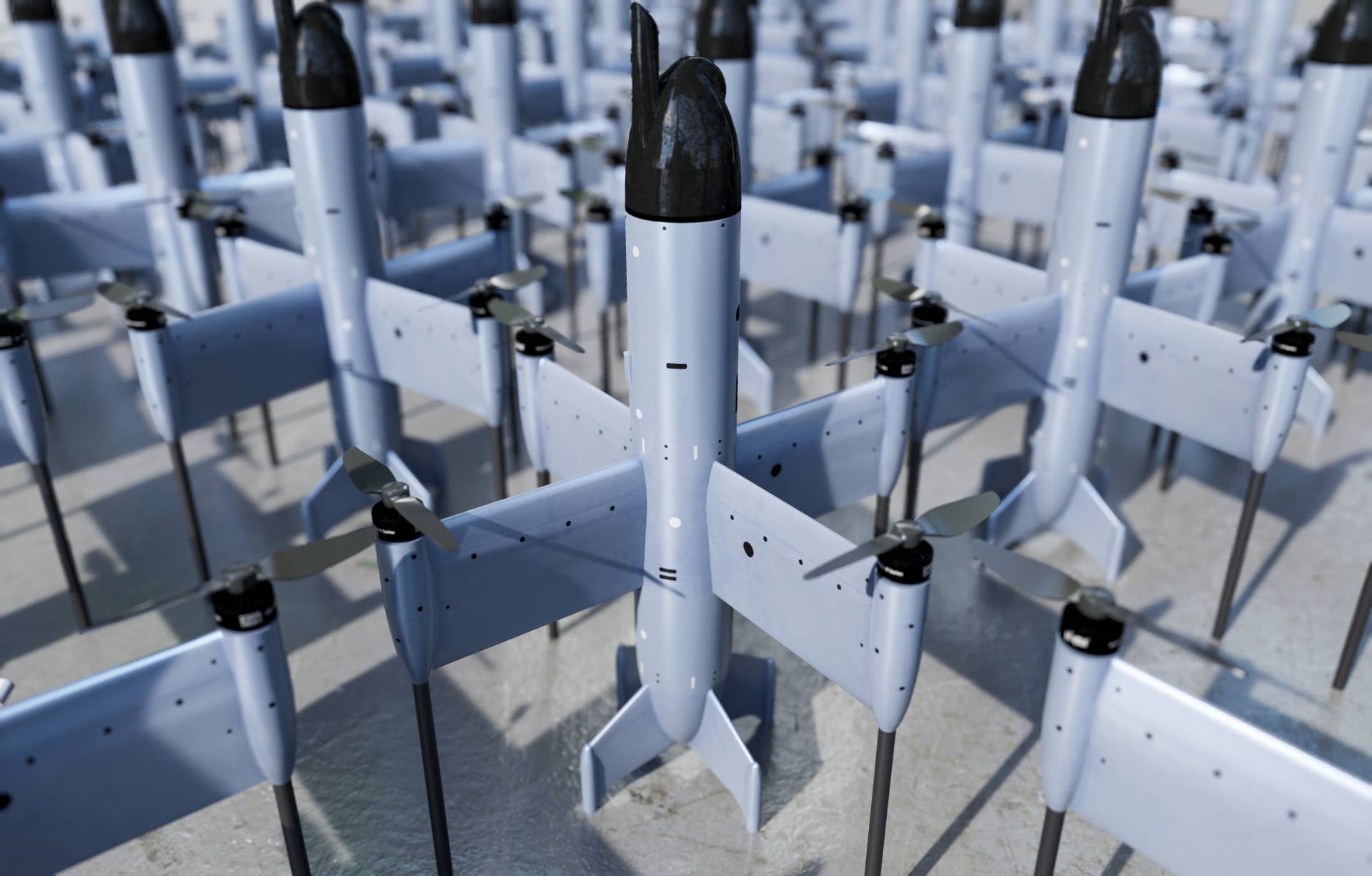 The Pentagon signed seven-year deals with General Dynamic and Lockheed Martin to triple PAC-3 MSE and quadruple THAAD interceptor output.
Investors have seen this script before
This is not Lockheed’s first quadrupling headline of 2026. In March, the company struck a separate framework deal to quadruple production of its Precision Strike Missile, and Morgan Stanley responded by holding its Equalweight rating and $675 price target rather than upgrading the stock.
The bank called that deal additive to an existing strategy, not a reason to change its view.
That pattern matters here. Big capability multipliers without attached contract values tend to get filed as confirmation of an existing growth story rather than treated as a fresh catalyst.
Meanwhile, General Dynamics has spent this year working through a stalled ammunition plant that the Army halted over performance concerns before lifting the stoppage ahead of earnings, a reminder that production ramps do not always move in a straight line.
As a result, Monday’s agreement reads to portfolio managers less like news and more like an installment.
The bigger question is whether guaranteed minimum quantities, once disclosed, will actually move revenue estimates or simply validate numbers analysts had already penciled in.
What GD and LMT actually sell investors
General Dynamics is a diversified defense and aerospace company spanning Gulfstream business jets, submarine construction, combat vehicles and the munitions unit now central to this deal.
Lockheed Martin on the other hand, is the world’s largest defense contractor by revenue. It carries a backlog near $194 billion, roughly two and a half times its annual sales.
Both stocks trade on steady, government-funded revenue rather than consumer demand cycles. That is why backlog size and contract visibility move these shares more than any single quarterly headline does.
More Defense:
- Top defense contractor scores huge U.S. Army payday, stock jumps
- Why Rocket Lab is becoming a bigger defense player
- The winners in China’s missile leap
Lockheed shares closed near $564 last week, while General Dynamics traded near $379, leaving both stocks essentially unchanged once Monday’s session settled at $561.11 and $371.35.
Lockheed is the prime contractor on both PAC-3 MSE and THAAD, which means it captures the full program economics while General Dynamics supplies critical subcomponents beneath it.
Investors weighing either stock are effectively underwriting the same missile-replenishment cycle from two different points in the supply chain.
Missile defense’s cost opacity runs deeper
The undisclosed price tag on this deal fits a broader pattern in Pentagon missile-defense spending. The Congressional Budget Office estimated in May that the administration’s separate Golden Dome missile-shield program could cost $1.2 trillion over 20 years, more than six times the $185 billion figure the White House has cited, Fortune reported.
Golden Dome officials disputed that estimate, but the size of the gap shows how often capability targets arrive well ahead of firm cost accounting across this sector.
For General Dynamics and Lockheed Martin shareholders, that gap is the real story behind Monday’s muted trading.
The interceptor deal adds demand visibility, not cash-flow certainty, and that distinction will only resolve as Congress works through fiscal 2027 appropriations.
Investors betting on this replenishment cycle are underwriting a multiyear defense buildout whose full price tag Washington has not yet agreed to write down, or perhaps, is simply not yet ready to disclose. Until those hard numbers hit the ledger, Wall Street will likely keep its applause on hold.
Related: Jim Cramer says surging defense stock is a sensational buy
