
Uber shareholders watched about 4% of their position vanish on September 8 over the debut of a competitor’s product that most of them will never ride in. The selloff had nothing to do with Uber’s performance.
Five weeks earlier, Uber posted second-quarter revenue of $14.19 billion, net income of $2.39 billion, and free cash flow of $2.79 billion.
Tesla’s Cybercab, a two-seat robotaxi, began carrying paying passengers in a geofenced section of Austin.
Tesla stock climbed roughly 4% to close at $368.16 in the same September 8 session, while the Invesco QQQ Trust finished flat, confirming the decline was stock-specific, 24/7 Wall St. reported.
The Cybercab behind the selloff drew a federal safety audit and analyst complaints about routing failures on its September 3 launch day, five days before the Uber selloff.
Uber’s $58 billion quarter got overshadowed by a fleet that fits in a parking lot
Uber’s Q2 gross bookings grew 24% year over year to $58 billion, powered by 3.9 billion trips across 208 million monthly active consumers. Non-GAAP operating income jumped 40% to $2.1 billion, Uber disclosed in its earnings release.
Trailing twelve-month free cash flow crossed $10 billion for the first time in the company’s history. Uber’s core mobility service accounted for $7.36 billion of second-quarter sales, while delivery revenue reached $5.25 billion, CNBC reported.
More on Uber:
- Bank of America resets Uber stock price after earnings
- Uber just hit an impressive 50M milestone
- Waymo and Uber make critical robotaxi move in major U.S. market
“We’ve added more first-time users over the past twelve months than in any period over the past five years,” Uber CEO Dara Khosrowshahi said in the earnings release.
Uber trades at a price-to-earnings ratio of about 16, with a market capitalization near $145.8 billion. Jim Cramer pointed to that multiple as a buying opportunity, calling Uber ‘one great long-term stock‘ during the August 17 Lightning Round, CNBC reported.
Tesla’s Cybercab drew a federal audit and Wall Street criticism on launch day
Hours after the Cybercab began charging fares in Austin on September 3, the National Highway Traffic Safety Administration (NHTSA) opened Audit Query AQ26002, covering about 1,000 vehicles.
NHTSA wants to know how Tesla self-certified a vehicle built without a steering wheel, pedals, or mirrors under federal crash standards designed for conventional cars.
Tesla has not filed for a Part 555 exemption, the alternative federal pathway Amazon’s Zoox pursued after a similar review that lasted four years.
NHTSA Administrator Jonathan Morrison said the agency backs autonomous development but needs to verify that Tesla followed the certification process.
<strong>NHTSA fully supports the safe development and deployment of automated vehicles. But as the federal regulator, we need to ensure that all of our laws are followed</strong>
According to CNBC, Wells Fargo analysts, in a research note titled “TSLA Cybercab Launch Event Underwhelms,” flagged that Tesla’s Austin robotaxi service is “facing early execution issues.” Riders separately posted videos and complaints about the issues, CNBC reported.
As of launch, only 45 Cybercabs were registered for commercial use in Texas, all within a limited area of Austin, state records showed.
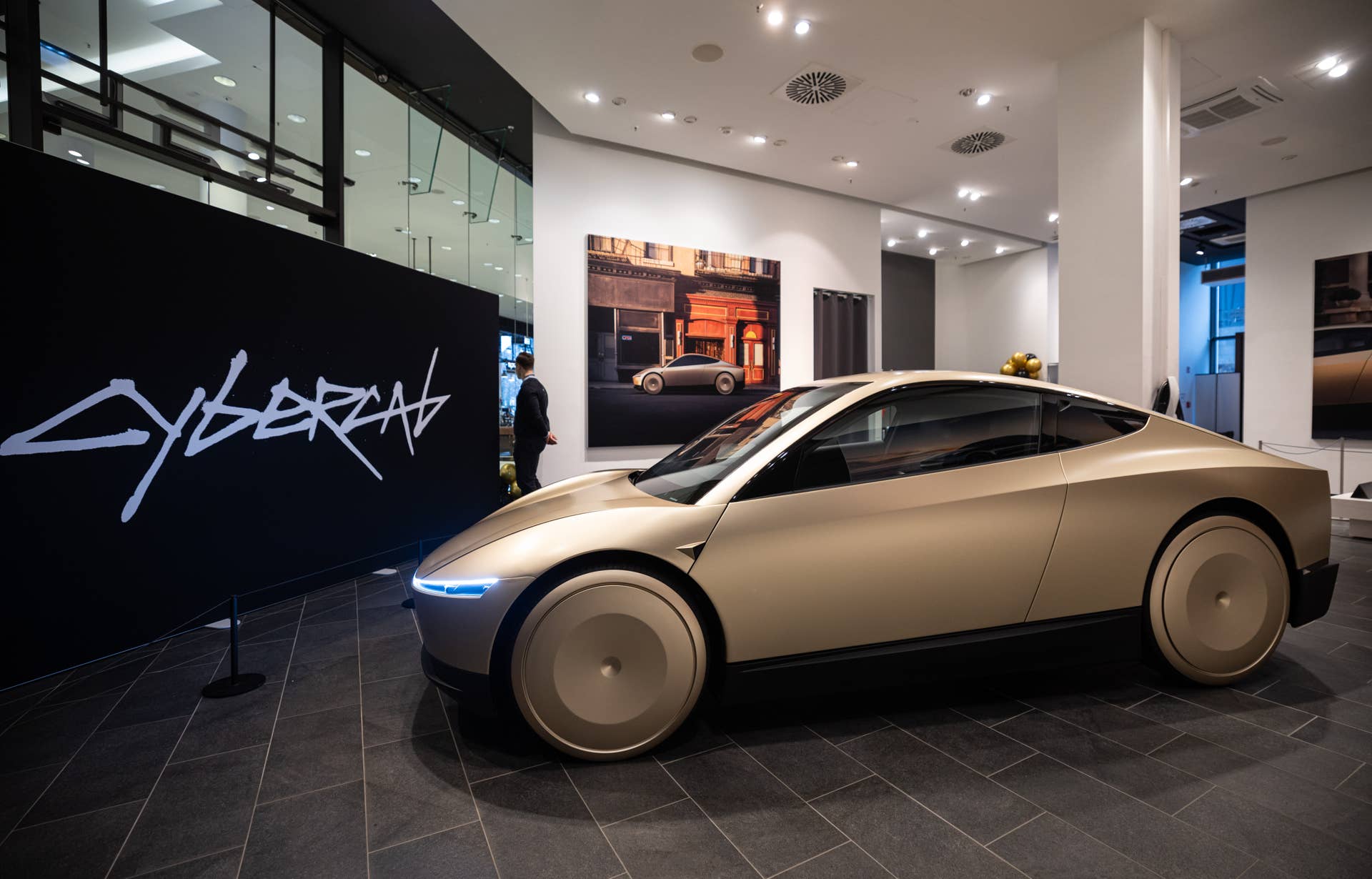 Tesla’s Cybercab launch faced federal scrutiny, limited Austin registrations, and Wall Street criticism as questions mounted over certification and early service issues.
picture alliance / Getty Images
Uber’s autonomous vehicle strategy runs wider than one competitor’s pilot
Khosrowshahi said during the second-quarter earnings call that Uber has committed more than $10 billion over multiple years to bring autonomous vehicles to market at scale, the earnings release showed.
The company plans to deploy autonomous vehicles in 15 cities by the end of 2026, drawing on more than a dozen AV partnerships including Waymo, Baidu (Apollo Go in Dubai and Abu Dhabi), and Rivian (San Francisco and Miami launches slated for 2028).
Khosrowshahi has consistently framed autonomous vehicles as a “net positive” for Uber’s platform, describing the approach as investing “from a position of strength” in the earnings release.
Autonomous trips currently make up less than 0.5% of Uber’s roughly 300 million weekly rides, Khosrowshahi said on the Q2 earnings call, according to CNBC. Tesla’s Austin fleet would need to grow by orders of magnitude before displacing any of that volume.
Uber’s position is built on being the platform autonomous vehicles operate through. That structure turns each new robotaxi entrant into a potential distribution partner.
Goldman Sachs frames the test Uber investors should watch
Goldman Sachs maintained a Neutral rating on Tesla with a $360 twelve-month price target following the Cybercab launch, below the stock’s $376.37 closing price on September 3.
The firm identified autonomous execution as the variable that determines whether Tesla earns its valuation premium, the research note indicated.
The competitive threat Uber investors priced in on September 8 remains unproven, Goldman’s analysis suggests. Tesla’s Cybercab has not yet cleared the regulatory, operational, or geographic tests that separate a pilot from a competitive platform.
The metrics that will separate Cybercab hype from competitive reality
Uber’s third-quarter earnings, expected in November, will be the first report covering the period after the Cybercab’s Austin launch.
Any measurable loss of ride volume or booking share to Tesla’s fleet would appear in those numbers first, Uber’s investor disclosures indicate.
On the Tesla side, Goldman Sachs’ research identified three execution milestones: resolution of NHTSA’s open Cybercab audit, expansion of autonomous operations beyond a single city, and fleet scaling that proves the vehicle can serve paying riders reliably across multiple markets.