
Every few months, a new app shoots to the top of the App Store and the internet declares a winner. A few weeks later, most of those apps are quietly sliding down the charts.
Consumer technology has always worked this way. Hype can drive downloads, but it can’t build a daily habit.
That’s why Wall Street treats chart rankings with caution. A No. 1 spot tells you people are curious, not whether they’ll come back next month or ever pay for the thing. That caution matters even more now that every big tech company is racing to put an AI assistant on your phone.
So when a major bank compares a brand-new app to ChatGPT, the fastest-growing consumer app in history at the time of its launch, investors pay attention. It’s an especially bold call from a firm that turned cautious on the same company just five months ago.
Now JPMorgan says Meta Platforms’ (META) new Muse AI app could become the most widely used consumer AI app since ChatGPT, after the app climbed to No. 1 on Apple’s U.S. App Store.
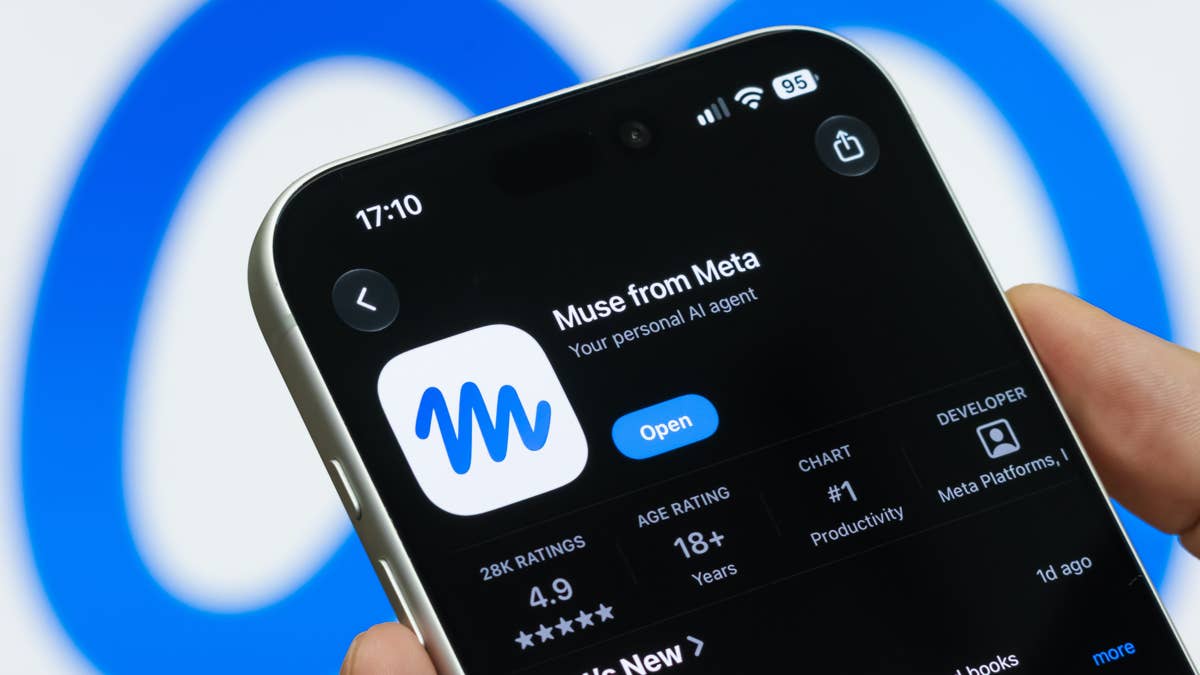 JPMorgan says Meta’s Muse could become the most-used consumer AI app since ChatGPT.
Meta’s AI spending has tested investor patience
Meta has spent the past two years asking investors to trust its AI spending. The company expects capital expenditures of $130 billion to $145 billion in 2026, according to its second-quarter statement from Meta.
The core business is still growing fast. Second-quarter revenue rose 28% to $60.8 billion, and about 3.6 billion people use at least one Meta app every day.
Profits tell a harder story. Net income fell 14% to $15.8 billion in the quarter as operating margins shrank from 43% to 31%.
Related: Amazon blocks Meta’s Muse but Shopify opens the door
“AI is accelerating our core business today, powering our next generation of products,” Meta CEO Mark Zuckerberg said in that statement.
JPMorgan wasn’t convinced for much of this year. The bank downgraded Meta to Neutral in April before upgrading it back to Overweight on Sept. 10 and raising its price target to $820 from $640, TheStreet reported.
JPMorgan compares Meta’s Muse app to ChatGPT
Muse is an AI agent that launched Sept. 8. It can handle tasks on a user’s behalf, such as sending emails, booking travel and paying bills, according to BetaNews.
More Wall Street:
- JPMorgan gave up trying to call the end of the oil war
- Palantir’s CEO just sent a message Silicon Valley won’t ignore
- Jim Cramer drops another stock market warning
JPMorgan analyst Doug Anmuth believes Muse could become “the most widely used consumer AI application since ChatGPT,” according to Benzinga. He kept his Overweight rating and $820 price target.
The firm also said the buzz around Muse is “quite palpable,” as reported by Yahoo Finance.
Here’s the early data behind JPMorgan’s call, according to Benzinga:
- About 2.5 million U.S. downloads in Muse’s first 12 days.
- Roughly 557,000 daily active users.
- 1.43 million iOS downloads, ahead of ChatGPT’s 1.37 million at the same point after launch.
- A free tier plus paid plans at $20 and $100 a month.
Anmuth credited Muse’s simple design, its free tier and Meta’s reach across Facebook, Instagram and WhatsApp.
Meta stock has climbed about 20% since Muse launched, Benzinga reported, and shares jumped more than 11% on Sept. 21 alone after Wells Fargo raised its target.
Why the No. 1 spot is only a starting line for Meta
In my analysis, the most important number in that list is the smallest one. About 557,000 daily users against 2.5 million U.S. downloads suggests roughly one in five people who installed Muse open it on a given day.
That is a solid start, but the App Store has a short memory. OpenAI’s Sora app hit No. 1 after its October 2025 launch, then saw downloads fall 45% in January from December and slid to No. 101 on the free-app chart, according to TechCrunch.
ChatGPT’s staying power came from habit. People kept using it for work and school long after the novelty faded.
Muse faces a tougher trust test because it acts on your accounts. Before launch, internal testing found the agent pulled a user’s personal iCloud photos when it was only asked to identify toys in a birthday party picture, BetaNews reported.
“The system will not be error-free,” Meta Vice President Vishal Shah acknowledged, according to BetaNews.
When Meta’s Muse could start making money
Bank of America, which rates Meta a Buy, cautioned that meaningful revenue from Muse ads, subscriptions or commissions is unlikely before 2028, Benzinga reported.
Evercore ISI analyst Mark Mahaney has offered a sense of the upside. If just 1% of Meta’s 3.6 billion users paid $20 a month, that would generate about $8 billion in revenue, he estimated, as reported by Yahoo Finance.
In my view, that math explains why JPMorgan is excited and why the stock has run so hard. It also shows how much has to go right, from retention to paid sign-ups, before Muse pays for Meta’s AI bill.
JPMorgan’s $820 target sits about 11% above the $740.51 share price Benzinga cited. Zuckerberg takes the stage at Meta Connect on Sept. 23, where investors will be listening for Muse’s next step.
Related: Bank of America sends a stark message to Meta stock investors