
Thanks to artificial intelligence, Wall Street has seen one of its largest investment booms.
Billionaire investor Stanley Druckenmiller sees a danger brewing below.
Druckenmiller is not shorting AI. But he still believes in the technology and America’s place in the AI race.
What worries him is what investors are paying for that promise and how much cash corporations have to spend to achieve it.
Tech corporations are spending huge amounts of money on data centers, new semiconductors, and the energy to run them. But such investments are increasingly colliding with another challenge: borrowing money is still costly.
Meanwhile, Druckenmiller recently warned of a possible profits bubble around artificial intelligence and claimed U.S. interest rates are still “a little low,” the Financial Times said.
The combination sets up a new stress test for the AI boom.
Companies need extraordinary earnings to justify extraordinary investment, while the capital needed to finance that investment isn’t getting cheaper.
Stanley Druckenmiller sees a new risk in the AI boom
Druckenmiller’s caution is important since he’s not an artificial-intelligence skeptic.
He’s more and more concerned about the investment cycle around AI, than the technology itself.
That’s a huge difference for investors.
Artificial intelligence may change the economy, but it may also leave some investors unhappy if profit expectations outstrip the enterprises that are eventually produced.
Druckenmiller said the creation of AI infrastructure might create an earnings bubble.
Thus, the question isn’t necessarily whether AI works.
It’s whether the future revenues can match the huge quantity of cash going into it
The bar keeps rising higher.
The largest IT giants are pouring money into semiconductors, data centers, networking equipment, and power infrastructure. But at the same time, ever more complicated finance structures are supporting growth.
The Financial Times reported that Big Tech companies are using guarantees to support as much as $300 billion in debt tied to AI data centers and chips.
The funding suggests the cycle of AI investment is sustainable.
But it is symptomatic of just how capital-intensive the race has become.
Related: Stanley Druckenmiller triples stake in airline giant
That’s an important difference, since transformational technologies and interesting investments are not always the same thing.
Revenues of AI firms may continue to climb. Companies may still embrace the technology. Demand for computer infrastructure might be high.
Investors might still lose money if the revenues generated by such enterprises eventually don’t justify the valuations and capital commitments made during the boom.
A little background also helps clarify Druckenmiller’s most recently revealed portfolio.
The Duquesne Family Office submitted its most recent Form 13F with the Securities and Exchange Commission on Aug. 14. The filing is as of June 30, so it provides more of a point-in-time view than a real-time look at Druckenmiller’s portfolio today.
That’s especially relevant when juxtaposing a quarterly filing with more recent commentary about his AI exposure.
The filing may indicate what Duquesne owned at the end of June. It can’t know exactly what Druckenmiller owns now.
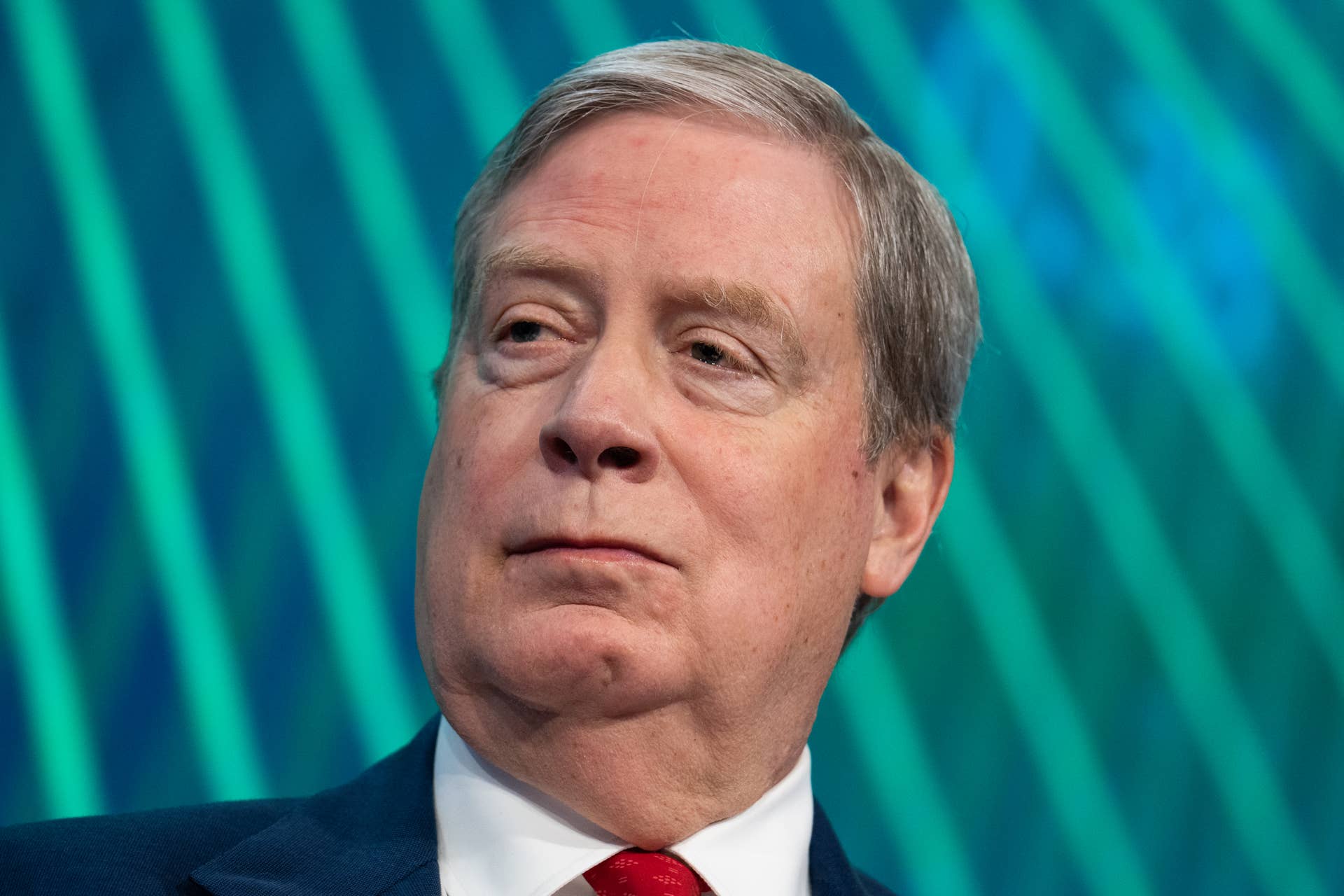 Billionaire investor warns AI investors face a new problem
Higher interest rates raise the stakes for AI investors
Druckenmiller’s second worry makes the AI investment equation difficult.
He believes U.S. borrowing prices are too low and has pushed back on the notion current monetary policy is especially tight.
That assessment comes just after the Federal Reserve boosted interest rates.
The Federal Open Market Committee lifted its target range for the federal funds rate by a quarter percentage point to 3.75% to 4% on Sept. 16.
The Fed stated the economy was growing well, domestic expenditure was resilient, and capital investment was strong. Policymakers also pointed out that inflation was still high.
The Fed’s implementation note confirmed the central bank lifted the rate it pays on reserve holdings to 3.90 percent and the rate it charges banks for primary lending to 4 percent.
The rate backdrop is important to AI investors for two reasons.
For one, the creation of AI infrastructure needs enormous sums of finance.
Second, pricey growth companies are mostly valued on earnings projected years from now, and rising interest rates increase the bar for them.
And we’ve already seen evidence of what a pricey business the AI race can be.
SoftBank has just raised more than $11 billion in one of the biggest high-yield bond offerings ever to fund its investment in OpenAI, the Financial Times reported.
Initial talks placed rates on the dollar-denominated notes at between about 9% and 10%.
That doesn’t imply all companies creating AI infrastructure incur the same cost of capital.
It does suggest the volume of the cash being mobilized and the price some investors are looking to get to give it.
More AI:
- Nvidia just made a move Wall Street wasn’t ready for
- Microsoft just took sides in AI policy fight
- OpenAI just disclosed something genuinely alarming
The link between AI investment and interest rates might get much more complex.
Chicago Fed President Austan Goolsbee has cautioned that if sustained inflation is being driven by hot demand rather than transient supply shocks, officials may need to react more strongly.
One source of this need may be the huge investment coming into artificial intelligence.
The increasing AI spending might push aggregate demand over sustainable levels, perhaps necessitating a more robust monetary-policy reaction, Goolsbee added.
It generates a weird feedback cycle.
The AI growth demands a lot of money.
That investment may boost economic demand.
Higher demand may result in more persistent inflation.
And stubborn inflation may keep borrowing rates high, making it more costly to fund the next stage of the AI growth.
Thus, Druckenmiller’s two cautions are not independent of one another.
Their paths gradually cross.
AI investors face a harder question
On Wall Street, the AI argument often hinges on a binary decision.
Either AI is a disruptive technology and AI stocks continue to profit, or the whole boom is a bubble ready to explode.
Druckenmiller’s thesis leaves up a more difficult option.
Some investments in AI might be disappointing. AI itself could be a huge success.
We have seen such scenarios previously with transformational technology.
New sectors may produce tremendous economic value, and there are times of over-investment, financing, and valuation in the process.
The stakes are particularly high for artificial intelligence, since the infrastructure it requires is so costly.
Big Tech’s backing of up to $300 billion in debt tied to AI indicates a shift in financial arrangements to meet that need.
Softbank’s multibillion-dollar bond offering is just another example of firms relying on debt markets to keep the AI investment cycle going.
Meanwhile, the Federal Reserve has upped its benchmark goal range to 3.75%-4% amid still high inflation.
That makes Druckenmiller’s warning more significant than yet another forecast that AI is in a bubble.
He’s asking a different question.
What kind of profit will all this investment eventually pay off?
If the profits expand fast enough, then the huge infrastructure build-out could make sense.
If they don’t, corporations and investors may find they have sunk too many resources into returns that take longer to appear than planned.
And increased borrowing prices leave less margin for mistake.
Druckenmiller is not giving up on artificial intelligence.
He’s asking what Wall Street will pay for its future.
Related: Billionaire Stanley Druckenmiller gets sharp response from Scott Bessent
