
Millions of Americans who own an S&P 500 index fund have a stake in the AI boom, knowingly or not. The fund holds Nvidia, Oracle, Micron, and Palantir because it weights companies by market value, and AI has made them heavy.
Michael Burry saw in 2008 what a government rescue is worth to ordinary shareholders. Washington stabilized the banking system, yet Lehman Brothers investors were still wiped out.
Now the “Big Short” investor says Washington has a deep stake in AI. In a Substack chat, Burry wrote that President Donald Trump’s team sees the AI buildout as the economy’s only real engine. “They cannot afford to let it fall,” he added, according to Stocktwits.
Yet Burry has been betting against the boom’s key players, and on Sept. 28 he sharpened those bets. He covered his short positions in Nvidia, Oracle (ORCL), Palantir (PLTR), Nebius (NBIS), Micron (MU) and CoreWeave (CRWV), Stocktwits reported, swapping all but CoreWeave into put options.
A put gains value when a stock falls, but unlike a short sale, it expires. Several of his run into late 2027.
“Fundamentally, I am moving timelines up,” Burry wrote, citing weekend research. He is betting on when, not just whether.
Burry separates political will from policy firepower
His two stances only appear contradictory. Burry thinks Washington wants the boom to survive but may lack the tools to protect it.
Burry argued the U.S. government is in its weakest position in modern history to fight a financial or debt crisis. Its remaining remedies, he wrote, are few and mostly blunt.
The spending data paints a calmer picture. Goldman Sachs Research expects AI investment to reach about 1.8% of U.S. GDP this year, a share it says sits “comfortably within the historical range” of past tech booms. By that measure, spending still has room to grow.
Meanwhile, President Trump’s own accounts sold between $5 million and $25 million each of Microsoft (MSFT) and Amazon (AMZN) stock on July 20, according to a CNBC analysis of his latest disclosure.
The accounts, whose trades CNBC says are made on his behalf, bought back smaller amounts days later. So the stake Burry describes is political and partly personal.
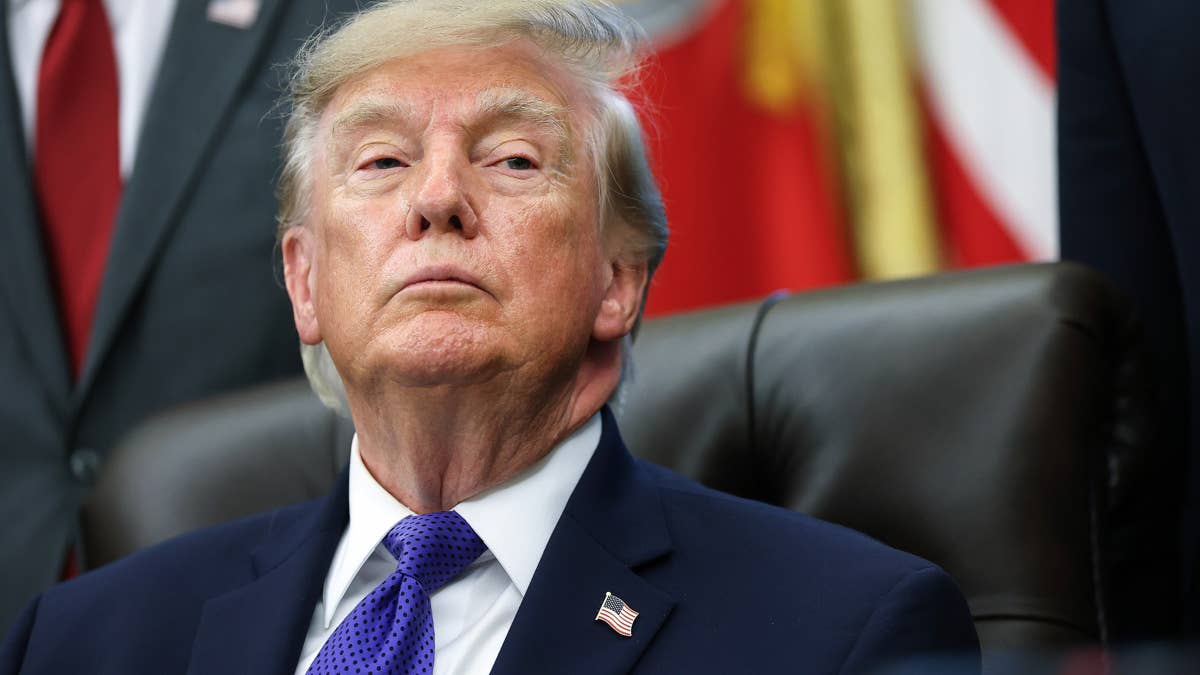 Michael Burry says Trump’s team cannot afford to let the AI boom fall, yet he just swapped his AI shorts for puts and moved his timeline up.
Credit markets are feeling the strain first
The 10-year Treasury yield sat near 5.17% last week, its highest level since 2007, according to CNBC. That makes borrowing costlier for data center builders and for Washington itself, which fits Burry’s warning about blunt tools.
A senior private credit investor told CNBC that financing for neoclouds, GPU rental firms such as CoreWeave, will get harder because they have less cushion.
Oracle shows how fragile that financing has become. It sent a force majeure notice, a legal warning of possible delays, on Project Jupiter, a New Mexico data center tied to OpenAI. Bankers and investors told Reuters the move unsettled lenders across the trillion-dollar AI infrastructure financing market.
Developer Blue Owl said financial commitments were unchanged. Even so, Washington can speed permits more easily than it can lower what lenders charge an indebted borrower.
Wall Street is on the other side of Burry’s bets
All five stocks he still bets against carry Buy or Strong Buy consensus ratings in S&P Global data compiled by Stock Analysis. Their results over the past 12 months, as of late September, show why analysts stay bullish and where Burry sees cracks.
- Revenue grew 21.6% at Oracle, the database giant turned AI landlord, yet its market value has halved in a year. Analysts rate it a Buy, with a $237.97 average target.
- Sales jumped 78.9% at AI software firm Palantir, but its shares cost about 99 times expected earnings. Analysts rate it a Buy, with a $195.57 target.
- Sales grew about sixfold to $1.4 billion at GPU cloud provider Nebius, yet net income was just $42.4 million. Analysts rate it a Buy, with a $276.26 target.
- Net income reached $192.9 billion at Nvidia, the top AI chip supplier, on sales up 83.4%. Analysts rate it a Strong Buy, with a $327.70 target.
- Sales grew 167% at memory chipmaker Micron, whose shares trade near seven times expected earnings. Analysts rate it a Strong Buy, with a $1,515 target.
Burry is not alone on the neoclouds. Rothschild & Co Redburn started coverage of both Nebius and CoreWeave with Sell ratings, TipRanks reported. Palantir’s multiple is central to his claim that its valuation outruns the business.
More Michael Burry:
- Michael Burry just put a date on Big Tech’s AI reckoning, and Oracle’s $664 billion lands in crosshairs
- Michael Burry’s blistering message on economic inequality
- Michael Burry sends stark warning on AI hyperscalers
The real question is who gets rescued
Micron reports earnings on Sept. 30, according to Stock Analysis, offering an early read on AI demand as borrowing costs climb. Burry put a date on large AI write-offs in 2028 or 2029 last week, yet most of his new AI puts expire before then.
Index-fund investors own cash-rich spenders and debt-funded builders alike, so the gap between a policy backstop and a shareholder rescue lands in retirement accounts.
The next phase of the AI trade may hinge less on who builds the most than on who can still borrow.
Related: Michael Burry keeps pointing at unloved stocks for a reason
