
McDonald’s (MCD) stock has been losing a ton of ground this year and bears a striking connection to the Treasury market, adding another layer to its slide.
Shares of the fast-food giant have moved inversely with the 10-year Treasury yield, raising questions about how investors value one of the most celebrated dividend stocks.
We’re also seeing pressure reflected in shareholder returns.
McDonald’s has dropped roughly 23% this year, while the S&P 500 has gained about 12%, based on Seeking Alpha data. That is a substantial gap for a familiar name investors often associate with resilience and reliable income.
Its long dividend tradition still matters. But investors have more to weigh when deciding what they are willing to pay for those payouts.
Meanwhile, sluggish restaurant demand and the costs of a business reset complicate the picture. For shareholders trying to make sense of the decline, the bond market offers a revealing clue, though it can’t explain everything.
Rising Treasury yields squeeze McDonald’s dividend appeal
McDonald’s stock and Treasury yields traced a striking pattern, exposing how rising interest rates can pressure even familiar dividend names.
Since early March, McDonald’s shares have tanked 32%, while the 10-year Treasury yield has risen 32%, Seeking Alpha reported. More recently, yields climbed 14%, rising in 19 of 23 trading sessions, while McDonald’s fell 14%, declining in 19 sessions.
Those matching moves suggest a relationship but do not prove that yields caused the entire sell-off.
More Restaurants:
- 52-year-old international restaurant chain closing all locations
- 46-year-old casual dining chain closes underperforming locations
- Classic burger chain has closed down all its restaurants
The income comparison helps explain the pressure.
McDonald’s forward dividend yield of 3.3% trails the Treasury yield of roughly 5.2% by 1.9 percentage points. Investors can earn more income from government debt without taking on McDonald’s business risks, although bonds can lose value before maturity.
McDonald’s offers potential dividend growth and share appreciation. But investors need confidence in those benefits.
That is where company challenges enter the picture.
CEO Chris Kempczinski has warned that flat industry traffic and accelerating inflation represent the new normal, according to the report. Weak customer demand makes profitable growth harder.
Meanwhile, the NEXT strategy includes an $8.5 billion franchisee support plan through 2036, requiring substantial near-term cash while anticipated margin targets stretch to 2030.
That creates a timing problem.
Investors face immediate Treasury competition while waiting years for turnaround benefits. A falling share price raises the yield but cannot resolve either concern.
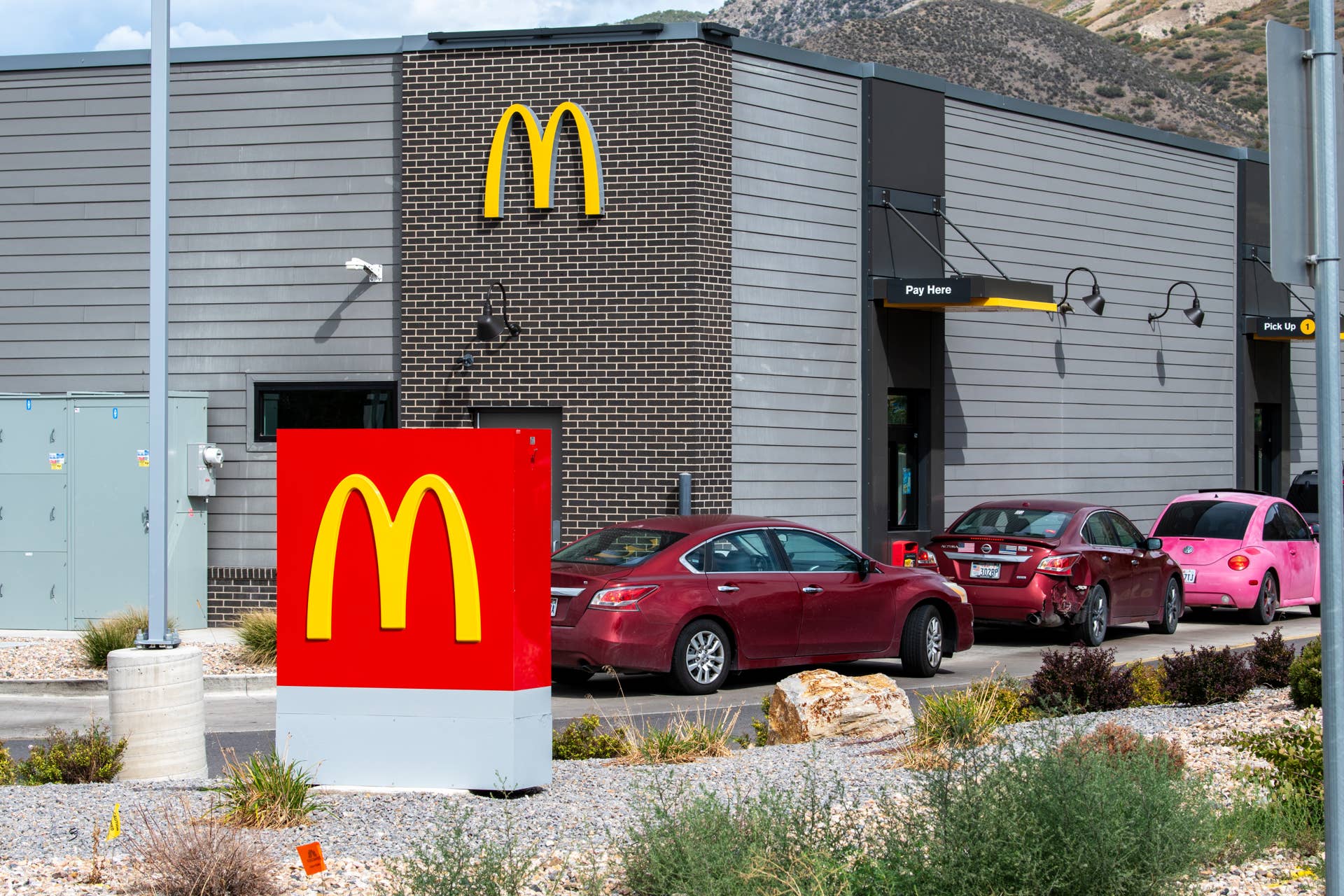 McDonald’s stock faces pressure as rising Treasury yields challenge dividend appeal.
McDonald’s dividend legacy meets a cheaper stock price
McDonald’s stock is a dividend heavyweight in every sense of the word, with a track record that puts the biggest income stocks to shame.
Seeking Alpha data shows 49 consecutive years of dividend payments and increases, while the typical consumer discretionary company has managed just 2.4 consecutive years of dividend growth.
Put simply, that means McDonald’s has given shareholders a growing income stream through decades of changing economic conditions. Its appeal extends beyond collecting a quarterly check to watching that check get bigger.
The stock’s drop has made that income more attractive for new buyers.
McDonald’s forward dividend yield stands at 3.3%, compared with its five-year average of 2.34% and the sector median of 2.74%. Put simply, a $10,000 investment will generate approximately $330 annually at the indicated payout rate, assuming the payout rate remains unchanged.
That yield is about 41% above McDonald’s historical average.
But the reason matters.
Dividend yield rises when a stock’s price falls, even if the cash payment stays the same. A higher yield does not necessarily mean the business is performing better.
Existing shareholders still face the damage from a roughly 23% year-to-date price decline. Their dividends provide income but cannot offset a loss that large.
McDonald’s dividend record remains a strength. The investment question is whether that dependable income, alongside future growth, sufficiently rewards buyers for the risks behind today’s lower price.
McDonald’s revamp tackles more than restaurant makeovers
McDonald’s is trying to rebuild customer momentum with a major revamp that reaches beyond cheaper meals or refreshed restaurants.
The NEXT strategy includes an $8.5 billion franchisee support plan through 2036, according to Seeking Alpha. On the company’s latest earnings call, CEO Chris Kempczinski explained the broader ambition.
“McDonald’s Next is not a remodel program. There is a remodel that is part of it, but it’s not at its core a remodel program.”
The priorities include better food, a stronger customer experience, and simpler operations. That last point matters after overloaded restaurant teams contributed to slower service and weaker satisfaction.
“We don’t have a strategy problem, we simply didn’t execute at the level we needed to in the second quarter,” Kempczinski said.
Management is responding by offering more digital options, personalized deals, and fewer operational distractions. The fast-food giant’s aim is to efficiently rebuild repeat visits without overwhelming employees.
Kempczinski also argued that the investment burden could be manageable as franchisees enter their normal remodeling cycle.
“We’re going to be able to self-fund much of the sales growth improvement ideas through productivity opportunities,” he said.
For investors, that is the promise to test: whether simpler operations can help fund improvements and generate profitable traffic, rather than merely adding costs.
Related: 12-year-old taco restaurant chain closes restaurants
