
Gold has had a strong run. Central banks kept buying. Retail investors came back. The metal held up through geopolitical flare-ups, inflation scares, and a lot of uncertainty about where the economy was headed.
But the rate picture is shifting. The Federal Reserve kept raising rates into the fall, the dollar strengthened, and the argument for holding a zero-yield asset got harder to make. Wall Street is starting to update its math.
What Wells Fargo changed and why
Wells Fargo Investment Institute trimmed its 2027 year-end gold price target to between $5,200 and $5,400 per troy ounce, according to Investing.com. The previous range was $5,400 to $5,600.
The bank still sees gold moving higher over the period. It just no longer sees it moving as high as it previously did.
Two things drove the revision. The Federal Reserve is expected to keep raising rates, and the U.S. dollar is growing stronger. Neither development is good for gold.
Gold pays no interest and no dividends. When rates go up, investors can get real returns from cash or Treasuries without taking on commodity risk. That makes gold harder to justify holding, especially at elevated prices. The Fed raised rates in September and signaled more increases are coming, CNBC reported.
The dollar is important for a different reason. Gold trades in dollars globally, and a stronger dollar makes the metal more expensive for buyers in other currencies.
That cuts into demand from outside the United States, which is a large piece of the overall market. Countries that buy gold in their own currencies, including India, China, and Turkey, feel that squeeze directly. When the dollar runs, gold demand in those markets tends to soften.
Wells Fargo is not turning bearish on gold
Cutting a target is not the same as calling a top. Wells Fargo still expects gold to be higher in 2027 than it is today. The bank just thinks the climb will be harder than it previously expected.
A few things support that view. Central bank buying slowed in the first quarter of 2026 but has since picked back up. Gold ETF flows turned positive in July and got stronger through August, according to the World Gold Council.
That is a signal that retail investors are returning to the market after stepping back earlier in the year.
More Gold & Silver:
- Robert Kiyosaki has a bold call on gold and silver
- Peter Schiff sees something big in gold and silver
- BofA sees lost year taking shape for gold
Central banks have been treating gold more seriously as a reserve asset. Several have been reducing dollar exposure and adding gold instead.
That shift did not happen overnight, and it is unlikely to reverse quickly. If the pattern holds, it provides a floor under prices, even when rates are working against the metal.
There is also the question of what central banks are moving away from. The dollar has been the dominant reserve currency for decades. But a growing number of countries are looking to reduce that dependence.
Gold is one of the few alternatives that does not carry counterparty risk. That gives it a structural argument that goes beyond what the Fed does in any given quarter.
Geopolitical risk is still part of the calculation
Wells Fargo flagged a list of factors that could keep gold supported regardless of what the Fed does. Geopolitical tensions. Concerns about government debt and deficits. The risk that currencies lose purchasing power over time. General market uncertainty. Persistent inflation.
Gold gets bought in bad times. That has been true across a lot of different rate environments.
The problem is that safe-haven demand is not reliable. Gold dropped sharply during the early weeks of the Covid pandemic before recovering. It has sold off during past rate cycles when investors needed liquidity quickly. The safe-haven story depends on the stress being the right kind of stress.
What tends to work for gold is slow-burn anxiety, the kind that builds over months and not the kind that triggers a sudden rush to cash.
When investors are broadly unsettled but not yet in full panic mode, gold holds up. When a crisis hits fast and people need to raise money immediately, it often gets sold alongside everything else.
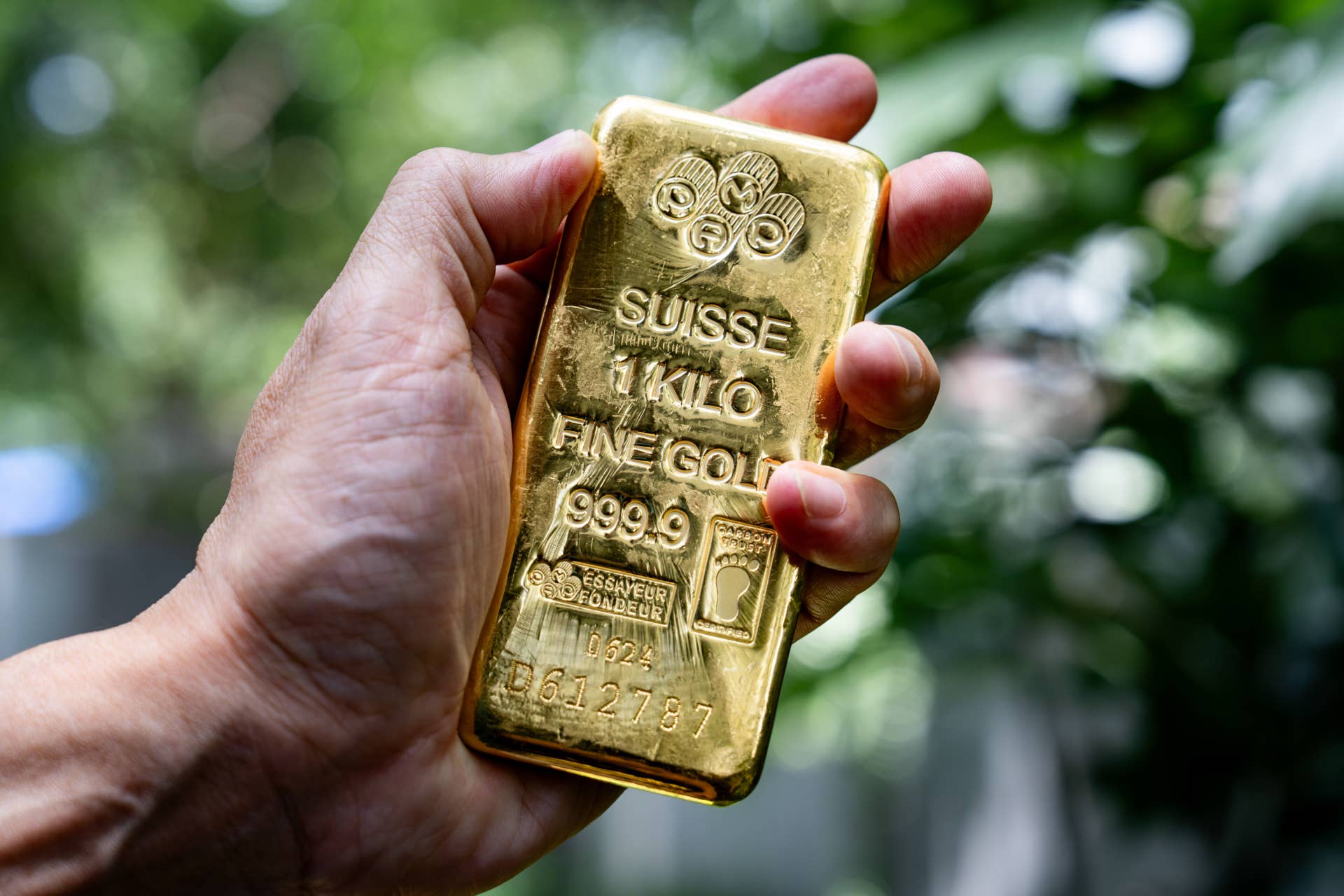 Wells Fargo Investment Institute trimmed its 2027 year-end gold price target to between $5,200 and $5,400 per troy ounce.
Slower growth adds another complication
Wells Fargo sees U.S. economic growth slowing. Higher borrowing costs are starting to bite. Consumer purchasing power is under pressure. Fuel costs remain elevated. The fiscal support that propped up spending in earlier years is fading.
The bank also expects geopolitical disruptions and continued business investment in technology to keep inflation from cooling quickly. That is the setup for a difficult macro environment heading into 2027.
For gold, slower growth can be a positive. Uncertainty tends to push investors toward the metal. But if rates stay high at the same time, the two forces work against each other and the outcome is harder to call.
Wells Fargo’s revised forecast is essentially an acknowledgment of that tension. The bank is not saying that gold falls. It’s saying that the easy part of the trade may already be over.
What the target cut signals for investors
A $200 reduction in a price target that still sits above $5,000 is not a dramatic shift. But it is a signal worth paying attention to.
Gold does not generate income. The longer rates stay elevated, the more that matters. Holding gold means giving up whatever yield investors could be earning elsewhere.
At current rate levels, that is not a small amount. A six-month Treasury bill is paying well above 5%. That is real competition for a metal that pays nothing.
Investors who hold gold through ETFs or funds also absorb management fees and may not track spot prices exactly. Physical gold comes with storage and insurance costs.
None of that changes the case for holding some gold as part of a diversified portfolio. But Wells Fargo’s revision is a reminder that the conditions that drove gold to current levels are not as favorable as they were, and that betting on a one-way rally from here carries more risk than it did 12 months ago.
Related: Top Wall Street firm resets gold price target for 2030
