
For months, the stocks that once traded at a permanent premium to the rest of the market have been getting cheaper instead. Now JPMorgan thinks that an unusual stretch is running out of road. The bank is telling clients the worst of the valuation damage may already be behind the Magnificent Seven.
The call matters because it touches nearly every major index fund in the country. When a strategist argues the discount on Nvidia (NVDA), Microsoft (MSFT), Apple (AAPL), Amazon (AMZN), Alphabet (GOOGL), Meta (META) and Tesla (TSLA) has largely finished resetting, it changes how investors should think about the next leg of the market.
What JPMorgan says on the Mag-7 valuation reset
JPMorgan Equity Strategy, led by Mislav Matejka, said the Magnificent Seven’s 12-month forward price-to-earnings multiple relative to the broader market has fallen to near one standard deviation below its historical median, putting it at a 10-year low, according to TradingView.
The bank framed this as part of a broader pattern rather than something isolated to these seven names. The group has been de-rating alongside other parts of the technology sector, and JPMorgan said that adjustment had largely run its course.
More Wall Street:
- Wall Street’s AI trade faces its biggest valuation test
- The next Wall Street shift is already underway
- Wall Street sends strong 4-word verdict on the stock market
This is not a brand new position for the bank. JPMorgan had already argued back in March that the de-rating may have become excessive. That call came as the group’s valuation bottomed out during a broader selloff tied to Middle East tensions and tariff fears that sent investors rotating out of high-multiple names.
The strategists were careful not to dismiss the reasons behind the discount entirely. Some multiple compression is justified by real changes in the companies’ business models, including greater leverage and falling free cash flow as AI-related capital spending rises. But the bank still expects earnings strength at the hyperscalers to keep supporting performance.
The spending behind the de-rating
The capital spending JPMorgan is referring to has been climbing fast. Combined capital expenditures from Microsoft, Alphabet, Amazon and Meta are projected to reach roughly $725 billion in 2026, up from around $410 billion in 2025, CNBC reported.
Other estimates put the number even higher. Goldman Sachs has projected the four largest hyperscalers will spend roughly $725 billion on capital expenditures in 2026. That is an amount roughly equivalent to nearly all of their combined operating cash flow.
Michael Hartnett at Bank of America put a number on it. Hyperscalers would spend about $670 billion on capex in 2026. That is 96% of their cash flow. In 2023 it was 40%, Benzinga reported.
That spending has not slowed even as investors grew nervous about it. Amazon raised its own 2026 capital expenditure forecast to $220 billion, citing healthy AWS demand and ongoing capacity constraints. Hyperscalers are not backing away from the buildout even as investors scrutinize the impact on cash flow and valuations.
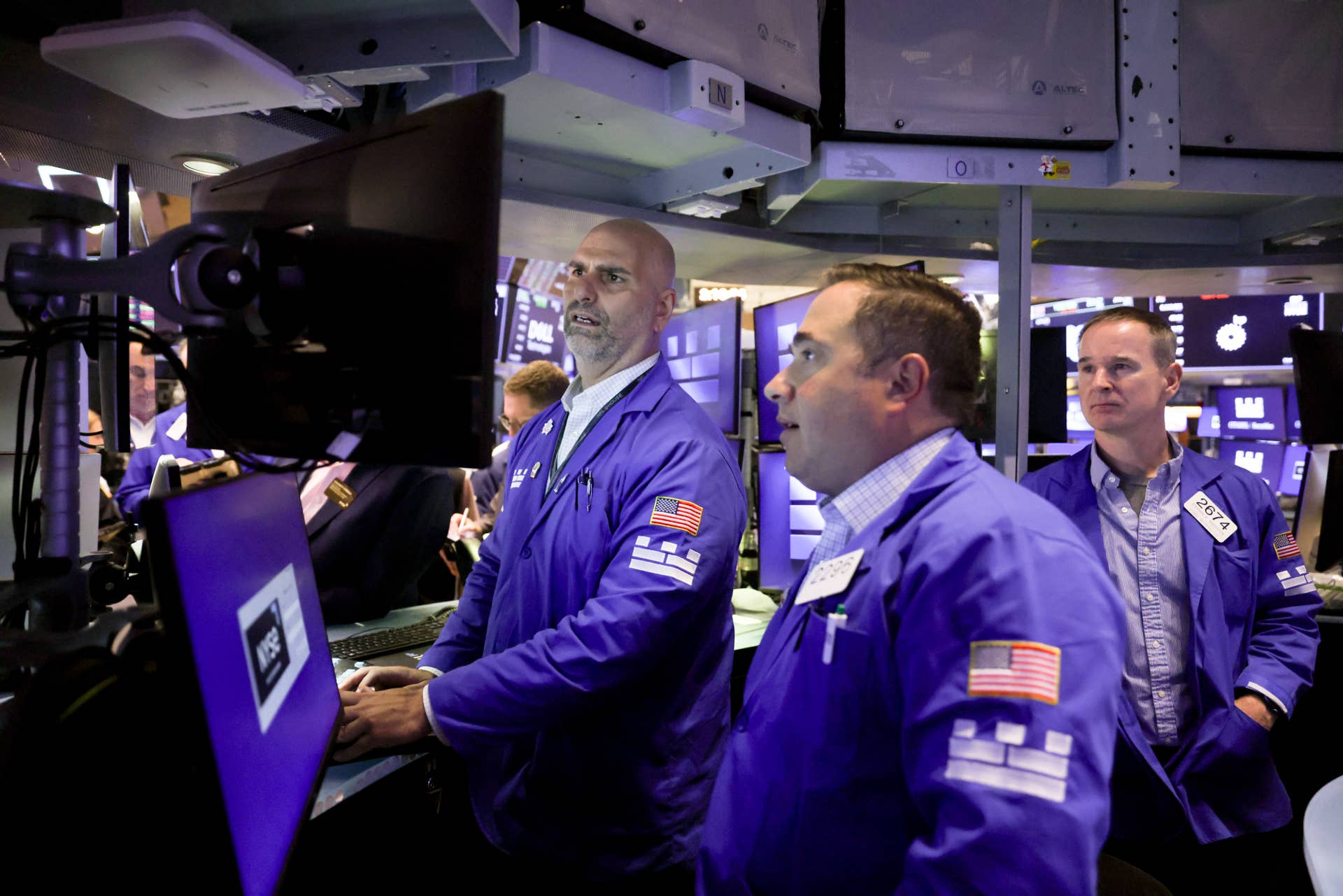 JPMorgan thinks that an unusual stretch is running out of road. The bank is telling clients the worst of the valuation damage may already be behind the Magnificent Seven.
How the Mag-7 has performed through the reset
The de-rating JPMorgan described has been visible in real losses. The Magnificent Seven shed roughly $2.3 trillion in combined market value during June and fell more than 13% during one stretch from mid-May, according to TheStreet.
Individual names within the group have diverged sharply. Microsoft shares were down as much as 20.7% year to date at one point in July, and 31% from their 2025 peak, as heavy AI-related capital spending put pressure on free cash flow, TheStreet reported.
That pressure led some investors to favor AI infrastructure suppliers over the hyperscalers themselves. Micron Technology posted margins near 85% amid the heavy data center spending coming from Big Tech. That trade reflected skepticism about the hyperscalers themselves rather than the AI buildout broadly.
The group’s size makes all of this hard to ignore for any broad market investor. The Magnificent Seven made up roughly 33.7% of the S&P 500 as of mid-April. Swings in these seven stocks carry outsized weight over the index as a whole. A 10% move in any one of them moves the index in a way that no other single stock can.
What it means for investors
The earnings picture still favors the group. JPMorgan has the Magnificent Seven growing earnings at 20% in 2026. The rest of the S&P 500 is at 11%. That 9-point gap is why the bank is not abandoning the trade despite the spending concerns.
JPMorgan is not calling for a repeat of the second half of 2025. That rally was too narrow. Seven stocks carried an entire market. The bank does not expect that again.
JPMorgan’s message boils down to a simple distinction. The valuation discount that built up over recent months looks mostly priced in now. But the capex, leverage and free cash flow pressures driving it have not disappeared. Earnings strength will be increasingly important in determining whether these stocks can hold their ground from here.
Related: Morgan Stanley sends a blunt Tesla message to investors
